
Here's our summary of key events overnight that affect New Zealand, with news all eyes are on the US Fed.
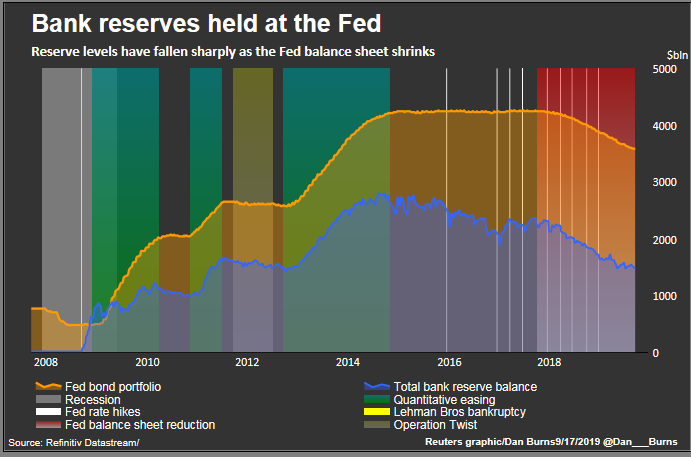
The US Fed announced its rate review decision at 8am today. However no-one expected them to make any rate changes today and they didn't. They emphasised their new favourite word; patience. So future rate hikes may be on hold. And there is a growing expectation that the Fed will not drain its stimulus reserves as much as expected as it 'normalises' its balance sheet.
The S&P500 rose strongly on the announcement and is up +1.6% in mid-afternoon trade. Some stronger earnings reports also are helping.
This weekend US non-farm payrolls for January will be reported and markets expect a modest increase of +165,000 following the rather unusual December result. Today the ADP survey was released and that indicated a gain of +213,000 which is an historically average level. Most of the growth is coming from mid-sized companies, those that employ 50-500 people. The weakest contributors are employers who have staff levels under 20 - they are really struggling.
We were expecting the advance estimate for US Q4-2018 GDP today but that has been indefinitely delayed as a consequence of the shutdown. GDPNow suggests it may come in at +2.7% pa when it is released. That is higher than analysts forecasts of +2.6%.
And there was more evidence today that American residential real estate markets are in the doldrums. Pending home sales data for year-on-year contract signings fell -9.8% in December, making this the twelfth straight month of annual decreases.
By most measures, the US economic expansion is slowing, and relatively quickly.
Mexico reported its Q4-2018 GDP result today as scheduled but that wasn't strong; up +1.8% when a +2.0% result was expected and the Q3-2018 was +2.5%.
In Europe, the British are making a pigs-ear of their Brexit negotiations - and it seems the EU has had enough. The British prime minister is trudging back to Brussels to try and renegotiate an orderly separation but the nost senior EU officials look like they will have none of that. It could be humiliating. A hard, disorderly Brexit is now the most likely outcome for March 29. Britain seems tone-deaf to the idea that it is just another mid-sized economy and no longer a real player in international affairs. Even its neighbours are ignoring it now.
The official EU business climate survey results took another dip in January, matching the lower consumer sentiment. The strong confidence improvements we saw in 2017 have now all been wiped out and the next challenge will be to keep business sentiment from going negative (consumer sentiment has never been positive).
Back in Washington, the US and China opened a pivotal round of high-level talks aimed at digging out from their months-long trade war amid deep differences over Chinese practices on intellectual property and technology transfer. The American continue to send conflicting signals. The talks got off to a rough start.
In China, they have decided that some of their stimulus support will be targeted at 5G development, and the car industry. And their rival to the World Bank, the AIIB, has suddenly about-faced and now says future investment will concentrate on Chinese projects rather than in other Asian countries. New Zealand was one of many countries that took an equity stake in this development bank, but it is just an instrument of the Chinese government when it really counts.
In Australia, and in advance if the release of the Hayne Report this weekend, banks are jockeying for position, with Westpac reportedly trimming mortgage rates as their housing credit crunch bites. They see a market-share opportunity. But for some big property developers, the change is existential.
The UST 10yr yield is basically unchanged today to be just on 2.73%. Their 2-10 curve is still just under +15 bps. The Australian Govt. 10yr yield is at 2.25% and up +2 bps. The China Govt. 10yr yield is down -2 bps at 3.14%, while the New Zealand Govt. 10yr yield is unchanged at 2.35%.
Gold is up another US$1/oz to US$1,310 and that is a seven month high.
US oil prices have risen today, up about +US$1/bbl to just on US$54.50/bbl while the Brent benchmark is just on US$62/bbl.
The Kiwi dollar starts today holding at the 68.4 USc level. On the cross rates we are a little lower at 95 AUc, and holding at 59.8 euro cents. And that has the TWI-5 still at 72.5.
Bitcoin is only marginally higher today at US$3,444. This rate is charted in the exchange rate set below.

The easiest place to stay up with event risk today is by following our Economic Calendar here ».

We welcome your comments below. If you are not already registered, please register to comment
Remember we welcome robust, respectful and insightful debate. We don't welcome abusive or defamatory comments and will de-register those repeatedly making such comments. Our current comment policy is here.