
The USA is changing - has changed - and is a different place with different values to the ones we had come to assume. To help us keep things in perspective, we have asked Henry Thomson for help understanding these changes, and to do so in the style of a "Letter from America". We hope this becomes a regular column. Here is his first correspondence.
After six weeks under a stay-at-home order designed to contain the COVID-19 pandemic, the view from America is uncertain. Most Americans live in states that have so far managed the pandemic well, and although the virus casualties are tragic the direst predictions of overwhelmed health systems and associated mortalities have not been realised. But the economic costs of the pandemic and lockdowns are tremendous, unprecedented and unclear. As we stay home and count the human and social cost of COVID-19, we have one eye on the economy and wonder what its trajectory will look like when we emerge from the immediate crisis.
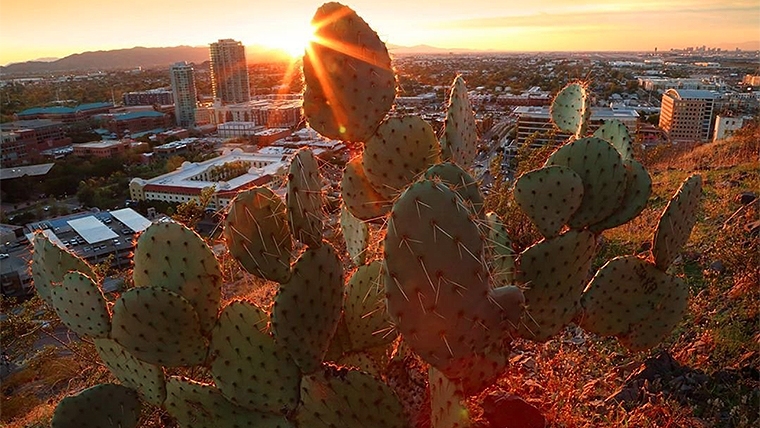
In Arizona, the pandemic shutdown has amounted to a six-month extension of Spring Break: schools and universities didn’t resume in-person classes but moved hastily to online instruction in mid-March and subsequently extended this directive through the rest of the school year. Students will not be back in classrooms and lecture halls until August, at the earliest.
At the end of March, our governor issued a statewide stay-at-home order that he extended yesterday until May 15. These sorts of measures rolled out around the same time across practically the entire country – only the sparsely populated Great Plains and parts of the Mountain West have been spared – but their severity has varied.
In New York City, residents are instructed to leave their homes only for essential business. Given the seriousness of the public health crisis there, most are probably like my good Kiwi friends who live in Manhattan and more than happy to adhere. In Minnesota, where I lived for five years (go Gophers!), the stay-at-home order has been almost as strict, though allowances are made, including for hunting and fishing. Here in Arizona and in other parts of the West, swathes of the economy have remained open. This includes not just essentials like hospitals, grocery stores and funeral homes but construction, manufacturing, banks, hardware stores and professional services. Most bars and restaurants are open for delivery and takeaway, and fast food joints are doing a roaring trade. The In-N-Out Burger near my home has doubled its drive-through capacity to cope with demand, and cars are still backed up onto the street most evenings.
The onset of the pandemic has given unusual prominence and importance to state governors and city mayors, as they have made the most consequential decisions in response. Doug Ducey is a Republican who was CEO of the Cold Stone Creamery ice cream empire before being elected state Treasurer in 2011 and Arizona Governor in 2014. I had not heard of him when I moved to the state, and before the COVID-19 pandemic he had a solid but hardly ostentatious profile as a moderate, cautious executive. His signature achievement over the last few years was to build up a $1 billion state rainy day fund; a policy that was heavily criticized at the time but is now looking prescient as state revenues are set to crater. During the crisis, Ducey has proven a remarkably effective communicator, teaming up with the Democratic Superintendent of Public Instruction to announce school closures and giving interviews and detailed PowerPoint presentations to explain policy changes.
The effectiveness of what Ducey calls a “later timing, lighter touch” stay-at-home order has come as a relief.
The curve of new infections has been flattened, the state’s intensive care wards have ample capacity, and only 30% of our ventilators are in use. A new blitz of 60,000 COVID-19 tests is about to begin statewide; the University of Arizona, home of the Wildcats, has plans to test all faculty, staff and students; elective surgeries have resumed at hospitals; and next week even retail stores will begin to reopen. It feels like we can start to hope for a return to life as usual. My general appreciation for our state’s response to the pandemic is shared by most Americans: In surveys at the start of April reported on FiveThirtyEight.com, around 70% of respondents approved of their governor’s handling of the coronavirus outbreak.
Indeed, it is hard not to be struck by the matter-of-fact response of my colleagues, friends and neighbors to the COVID-19 crisis. For all the talk of Americans’ rugged individualism, hard-nosed capitalist self-interest and love of personal liberty (let alone the pursuit of happiness), we have stayed home and made do with scarcely a murmur of dissent.
At the university where I work (go Sun Devils!), faculty made the transition from in-person to online instruction on three days’ notice, and by all accounts disruptions to our students’ studies have been minimal.
My neighbors have dealt admirably with the challenges of working from home while juggling a double duty taking care of their school-age kids. There are rumors of shut-ins at local bars that had to be closed down by the cops, and a couple of weeks ago there was a protest against the lockdown by some folks in pickup trucks at the state capitol trying to create a traffic jam. But these are isolated incidents.
In general, Americans have taken it all in their stride: The little things like canceled pick-up basketball games and happy hours; and bigger things like missed school and college graduations, holidays and visits to family, the NCAA college basketball finals, and going out to our favorite bars and restaurants. There have even been some positive aspects to the lockdown. Even in my suburban college town, I have never seen so many people outside, and our own evening strolls are often pleasantly extended by long chats with neighbors and encounters with their dogs. I finally have an excuse to indulge my love for fast food and am gradually testing every burger available from a drive-through window in the city (let’s not talk about the lockdown’s effects on the waistline). And recently I read that they are going to re-open some drive-in movie theaters. In my more fanciful moments, I imagine how our neighborhoods could be revitalized if many of us kept working from home when this was all over. Our suburban strip malls could reinvented as piazzas.
But there is a sinister undertone as the first phase of the coronavirus crisis passes. A colleague from Philadelphia lives near one of the largest emergency hospitals in Pennsylvania. He can predict the next day’s infection and mortality statistics from the ambulance sirens that accompany his work from home.
The warning signs of the impending economic fallout from COVID-19 and the lockdown are not as palpable, but they are there. As you readers will know, weekly unemployment claims jumped from around 200,000 nationally to almost seven million at the end of March, and last week were still running at over four million. This trend is reflected in Arizona, where in a state of 7.3 million over 130,000 initial claims for unemployment insurance were filed in the week ending April 4 – thirty-four times as many as in the same week in 2019 – and last week the figure was still 53,000. There are relatively generous benefits available – in Arizona, the maximum weekly unemployment benefit has been increased with federal support from $240 to $840 – but state bureaucracies are overwhelmed by the volume of claims and people don’t know when they will see their money. The incidence of late credit card payments has skyrocketed. Air travel has basically ceased, as the number of travelers decreased from two million per day in April 2019 to 100,000 in 2020.
Our state governor has described the process of re-opening Arizona’s economy as “turning up the light.” But we simply don’t know whether advanced industrial economies can be temporarily shut down, placed on life support with surges of liquidity from government and central banks, and started up again a few months later. It has never been tried, and for good reason: it imposes tremendous social and economic costs.
Many are comparing the current pandemic to a wartime situation, and indeed the strong government action and social solidarity are similar to what we see during inter-state conflicts. But during wars, economies are often stimulated by massive government spending and increases in output.
Our government-mandated lockdowns and compliance today are linked to a dramatic reduction in economic activity because many people are not allowed to go to work.
So we wait to see what happens when the government puts their finger on the dimmer switch and turns it up: Will the economic situation become brighter? For whom and how fast?
Henry Thomson is originally from Amberley, North Canterbury and is now an Assistant Professor of Political Economy at Arizona State University. His research focuses on the political economy of authoritarian rule and transitions to democracy. You can read more about his research here and follow him on Twitter @HenryRThomson
We welcome your comments below. If you are not already registered, please register to comment
Remember we welcome robust, respectful and insightful debate. We don't welcome abusive or defamatory comments and will de-register those repeatedly making such comments. Our current comment policy is here.