
By Chris Trotter*
Tucker Carlson is Fox News’ most persuasive voice. Mild-mannered, wide-eyed, and softly-spoken, he is a much deadlier proposition that his tiresomely stentorian colleagues. So persuasive is Carlson, that some Republicans are already talking him up as a potential presidential candidate in 2024.
It is, therefore, a very big deal that Tucker Carlson, with the backing of Fox News and the Hungarian Prime Minister, Victor Orban, has recently been broadcasting live from Budapest. Tucker, as New York Magazine’s Jonathan Chait wryly paraphrased, has seen the future – and it is illiberal democracy.
No more than the Labour and Green parties right here in New Zealand, does the Democratic Party in the United States fully grasp the danger represented by illiberal democracy and the authoritarian regimes it is bound to usher in. At either end of the Pacific Ocean, the Centre-Left is displaying a singular incomprehension of cause and effect.
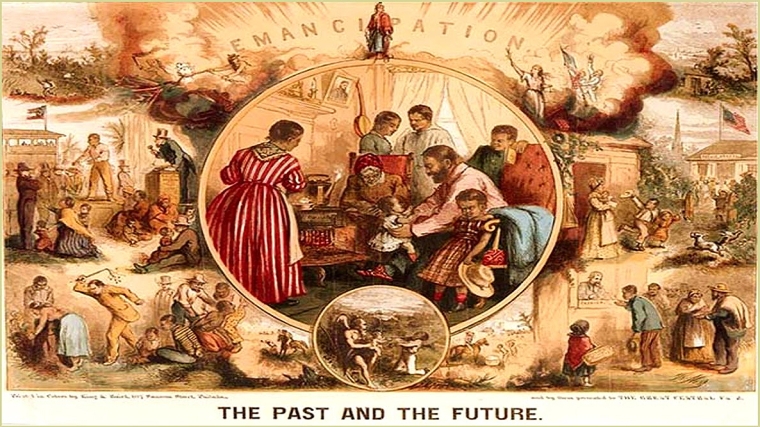
Two powerful forces are driving the surges of right-wing populism which, for more than a decade, have been transforming the politics of the West. The first, as always, is the actual, or feared, impact of adverse economic conditions. The second is composed of citizens fearful that their once dominant position in society is being challenged by “subordinate” minorities. “Bottom rail on top!” – as African-Americans colourfully described the social inversion inherent in Abraham Lincoln’s emancipation of the slaves.
The period in American history known as “Reconstruction”, which lasted, roughly, from 1869 until 1877, was an heroic effort to ensure that the bottom rail remained, if not on top, then at least not on the bottom. It offers historians (and social reformers) a powerful lesson in the dangers of legislating “against the grain” of entrenched power.
For eight remarkable years, the federal government of the United States attempted to give practical effect to the equality now constitutionally guaranteed to the freed slaves of the defeated Confederacy. Nowhere on earth had such an attempt been made to politically, economically and socially empower a formerly servile population. During the two terms of President Ulysses S. Grant, former commander of the Union army, African-Americans were elected sheriffs and judges, won seats in state and federal legislatures, established schools and hospitals, and with assistance from the frankly socialistic Freedman’s Bureau, set up their own farms and businesses. “Bottom rail on top!”, indeed.
The only problem with the Reconstruction project was that it could only be carried out under the protection of federal bayonets. Without the US army of occupation billeted across the South, the constitutional guarantees to African-Americans weren’t worth the paper they were printed on. In the fatal compromise thrashed out between the Republican and Democratic parties to resolve the bitterly disputed presidential election of 1876, the Republicans held on to the White House – but only at the price of withdrawing federal troops from the solidly Democratic South. It required less than 20 years for all the gains made by African-Americans since 1869 to be undone. By 1900, all-white city councils and legislatures were erecting statues to the military heroes of the lost Confederate cause all over the Jim Crow South.
The bottom rail was, once again, on the bottom.
As he was praising Orban’s regime, did Carlson detect in the Hungarian Prime Minister’s success in constructing a democratic system in which the “right” people always win, an all-too-audible echo of the American South’s elaboration of an outwardly democratic system in which the “white” people always won?
Orban has taken over the news media, suborned the Judiciary, redrawn electorate boundaries to the advantage of his party, and made it appreciably more difficult for his opponents to both cast a ballot and have it counted. By his very presence in Budapest, Carlson was signalling his endorsement of this debased form of democracy.
It is a form already familiar to Americans living in the 30 (out of 50) states already controlled by the Republican Party. By choosing to go to Budapest, Carlson was signalling to Republicans that if, by 2024, their party has reclaimed both Congress and the White House, then an American version of Orban’s illiberal democracy will be introduced across the entire country. Such an outcome would further signal that, finally, the Southern inventors of Jim Crow democracy had their vindication, and “Dixieland” its long-delayed victory.
And the lesson Labour and the Greens should draw from this jaunt down the backroads and interstate highways of American political history is – what? Simply, that if progressive change has to be imposed and enforced by the naked power of the state, then the political reaction will likely be strong enough to undermine progressivism and democracy in equal measure.
If we think of the He Puapua Report as the blueprint for an “Aotearoan Reconstruction”, then we must also ask ourselves how it might be enforced. Are we sufficiently evolved politically to accept its radical changes without demur? Or will Pakeha, contemplating the imminent loss of their power and privilege, shout like those good-ole southern boys: “Hell, no!”? Confronted with such open resistance, who could the Government rely upon to fix bayonets?
Such questions are jarring. Only seldom are New Zealanders asked to confront the deep fissures running through their society. Since the crushing of Māori military resistance in the Land Wars, there has never been the slightest doubt as to the state’s ability to prevail over its internal enemies.
New Zealand’s long-lived and deeply-entrenched democracy further strengthens the state by furnishing its political rulers with a popular mandate for their policies. By first obtaining the permission of the electorate, even a radical programme of reform can be accepted. Introducing such a programme without a popular mandate, however, is a much riskier proposition. In buoyant economic circumstances a government might get away with it – just. But, should the economy turn sour in the midst of unpopular reforms, the party responsible will soon find itself in serious trouble.
Hard times and unmandated reforms are the classic catalysts for populist surges. Whether these surges draws their energy from the left or the right of politics is largely determined by the ideological complexion of the incumbent government. There are occasions, however, when the severity of the economic downturn and the radicalism of the government’s reform programme produce in the minds of voters fears that can only be called ‘existential’. Convince voters that both their economic security and cultural ascendancy are fundamentally threatened, and the party presenting the most convincing promise to eliminate such threats will win not only power, but be given a mandate to smash those deemed responsible for putting the welfare of “the people” at risk. In these circumstances, the rights of minorities fare very badly.
Labour and the Greens are whistling in the dark by dismissing all such considerations as “culture wars” distractions. Given that the wars are of their own making, this is a little hard to swallow. It was Labour who commissioned He Puapua – and then kept in secret. It was Labour and the Greens who promoted laws on “Hate Speech”, and defended giving nearly $3 million to the Mongrel Mob. While unemployment continues to fall, wages continue to rise, Covid-19 is kept at bay, and the National Party remains a moribund hulk, the culture wars Labour have started will smoulder rather than blaze. Let Covid breach the border, and the economy crash, however, and New Zealanders won’t need Tucker Carlson to teach them how to whistle “Dixie”.
*Chris Trotter has been writing and commenting professionally about New Zealand politics for more than 30 years. He writes a weekly column for interest.co.nz. His work may also be found at http://bowalleyroad.blogspot.com.
We welcome your comments below. If you are not already registered, please register to comment
Remember we welcome robust, respectful and insightful debate. We don't welcome abusive or defamatory comments and will de-register those repeatedly making such comments. Our current comment policy is here.