

Here's my Top 10 links from around the Internet at 10:00 am today in association with NZ Mint.
Bernard will be back with his version tomorrow.
As always, we welcome your additions in the comments below or via email to bernard.hickey@interest.co.nz.
See all previous Top 10s here.
1. Monetary mystification
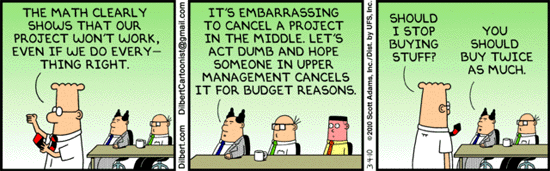
The markets are wrong when they cheer QE says Joseph Stiglitz.
He says the danger now is that politicians and markets believe that monetary policy can revive the economy.
Unfortunately, its main impact at this point is to distract attention from measures that would truly stimulate growth, including an expansionary fiscal policy and financial-sector reforms that boost lending.
Stiglitz full view is here »
Both the critics’ fears and the optimists’ euphoria are unwarranted [with more QE]. With so much underutilized productive capacity today, and with immediate economic prospects so dismal, the risk of serious inflation is minimal.
Nonetheless, the Fed and ECB actions sent three messages that should have given the markets pause. First, they were saying that previous actions have not worked; indeed, the major central banks deserve much of the blame for the crisis. But their ability to undo their mistakes is limited.
Second, the Fed’s announcement that it will keep interest rates at extraordinarily low levels through mid-2015 implied that it does not expect recovery anytime soon. That should be a warning for Europe, whose economy is now far weaker than America’s.
Finally, the Fed and the ECB were saying that markets will not quickly restore full employment on their own. A stimulus is needed. That should serve as a rejoinder to those in Europe and America who are calling for just the opposite – further austerity
But the stimulus that is needed – on both sides of the Atlantic – is a fiscal stimulus. Monetary policy has proven ineffective, and more of it is unlikely to return the economy to sustainable growth.

2. Crumbly cookie problems
Economists often like to talk about the "deadweight costs of redistributive taxes" - puts most people to sleep however.
But the ever-innovative Eric Crampton at Offsetting Behaviour has made it somewhat more engaging with the help of the Muppets. Actually, it was the Muppets that caught my attention first; its a good hook for me. He's got two Muppet vids, so double value. Makes the point well.

3. Hedge fund managers storm navy ship in Ghana
I'm not making this up - you couldn't. But it does show that there is no free pass when sovereign nations default on overseas debt. In another case relating to the 2001 Argentine default, about 60,000 Italians are going to get to sue in international court for their US$1 bln.
An Argentine naval vessel crewed by more than 200 sailors has been seized in Ghana as part of an attempt by the US hedge fund Elliott Capital Management to collect on bonds on which Buenos Aires defaulted in 2001.
A Ghanaian court ordered an injunction and interim preservation order against the ARA Libertad, a 100-metre long tall ship, following an application by Elliott subsidiary NML Capital on Tuesday.
The hedge fund, run by the US billionaire Paul Singer, has been closely monitoring the course of the Libertad, according to sources familiar with the firm.
Elliott had been waiting for the ship to stop in a port where it would have a chance to enforce legal judgments previously awarded by UK and US courts. The hedge fund declined to comment.
Argentina slammed the interception of the Libertad as a “trick which these unscrupulous financiers” had pulled, adding that it “violates the Vienna Convention on diplomatic immunity”.
4. When junk is gold (or cash is trash)
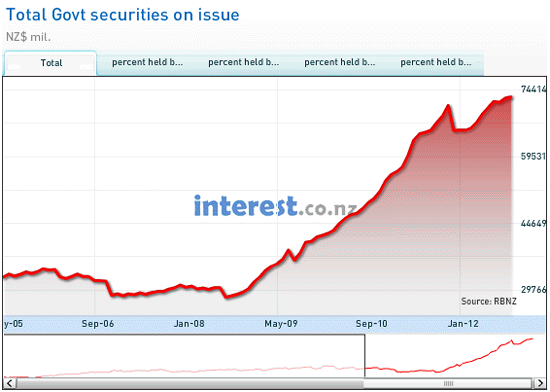
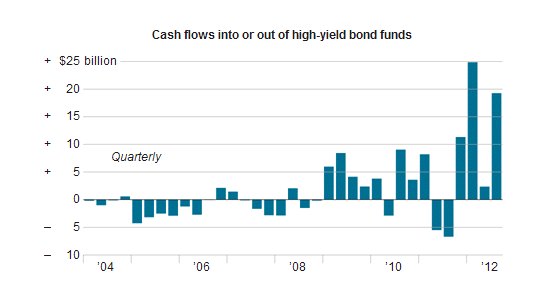
We are living in a time of 'financial repression' - interest rates are artificially low in an effort to spur growth through higher credit uptake. But families and firms are deleveraging and bank accounts are awash in cash. This is true in New Zealand and around the world.
But artifically low interest rates are exactly that - artificial.
People won't tolerate them for long, and they will take action to chase yield. But higher yield currently only exists at the dodgy end of the market. We have our own junk bond king feasting on low yields (Graeme Hart and Reynolds) and he is playing a very risky game. So do yield chasers. Just to emphasis the frustration with low yields, this chart shows a trend in the US. Do you think it will work out?
5. Greener on this side? II
How will they pay for their promises? Aussie politicians have made big-spending promises an art-form but the bureaucrats who need to administer their budgets can't see how it can work. Haven't checked recently but I don't recall 'austerity' being in any Australian dictionary. More from Jonathan Barrett at the AFR:
Australia’s top Treasury official has warned that expectations for government services are outstripping the capacity of the tax system and he called on state governments to plug budget deficits by increasing payroll taxes.
In a blunt critique of Australia’s public finances, Treasury secretary Martin Parkinson said state and federal government revenue bases had been “dramatically hollowed” and there was too much political opposition to raise the GST, one of the most efficient taxes.
6. Why people are so rude online
It's a real problem. Commenters on interest.co.nz are not immune - but why is that? Face-to-face most of us understand relationship etiquite. Online, social inhibitions seem to fade, rudeness rises. Is it that we just can't write properly anymore? Don't we care? Or is there something more behavioural going on?. More from the WSJ:
Why are we so nasty to each other online? Whether on Facebook, Twitter, message boards or websites, we say things to each other that we would never say face to face. Shouldn't we know better by now?
Anonymity is a powerful force. Hiding behind a fake screen name makes us feel invincible, as well as invisible. Never mind that, on many websites, we're not as anonymous as we think - and we're not anonymous at all on Facebook. Even when we reveal our real identities, we still misbehave.
According to soon-to-be-published research from professors at Columbia University and the University of Pittsburgh, browsing Facebook lowers our self control. The effect is most pronounced with people whose Facebook networks were made up of close friends, the researchers say.

7. Think globally, fabricate locally
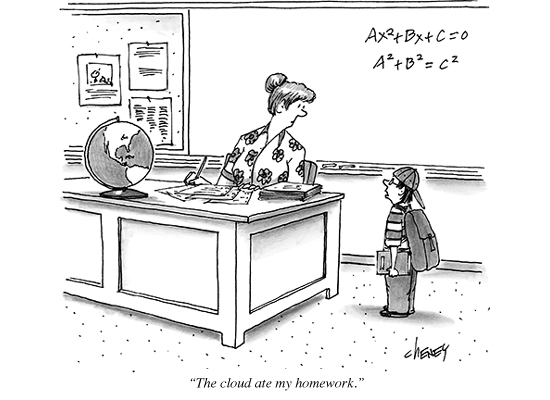
Build your own iPhone. Throw away your nuts and bolts, grab some bits and atoms. Digital fabrication is coming. It’ll change everything.
This is another reason why we should just forget about trying to 'manage the exchange rate down' to help our local manufacturers. That strategy has never worked in the past, and with these new manufacturing innovations could never work in the future. Making 'things' in New Zealand makes little sense, especially to potential international customers. We need to reinvent ourselves as a center of ideas. (cue Michael Parker.) Neil Gershenfeld is on to it:
A new digital revolution is coming, this time in fabrication. It draws on the same insights that led to the earlier digitizations of communication and computation, but now what is being programmed is the physical world rather than the virtual one. Digital fabrication will allow individuals to design and produce tangible objects on demand, wherever and whenever they need them. Widespread access to these technologies will challenge traditional models of business, aid, and education.
The revolution is not additive versus subtractive manufacturing; it is the ability to turn data into things and things into data.
8. Big discovery
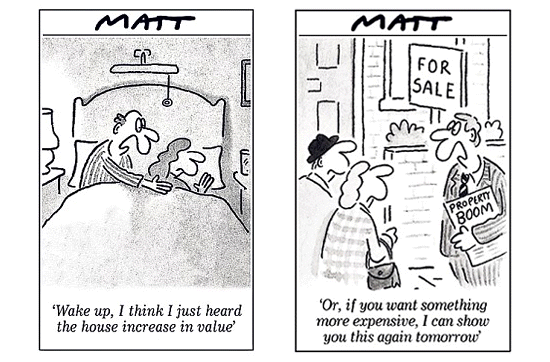
Confirmation of huge new oil and natural gas reserves have been announced in the US, likely a reason the oil price is falling these days. The numbers are impressive, and likely to rise substantially as more exploration work is done. We're talking truly big numbers here. But for a country that uses about 19 million barrels of oil per day, and 60 bln cu/ft of gas per day these new reserves alone won't solve their energy issues. But they do come at a time when consumption is falling and energy efficiency programs are taking hold. The switch to natural gas is changing their markets fast.
Drilling companies beginning to explore the Utica Shale got a piece of good news Friday when the U.S. Geological Survey estimated the rock formation in Ohio, Pennsylvania and other states holds enormous reserves of natural gas and oil.
Releasing its first estimate of the Utica, the USGS calculated the shale formation holds about 38 trillion cubic feet of undiscovered, recoverable natural gas, 940 million barrels of oil and 9 million barrels of natural gas liquids like ethane and propane.
9. King Ludd is still dead
Kenneth Rogoff reckons we should not fear change, still not fear it even though its pace is accellerating. He makes his points with some interesting observations about playing chess for money, which you can read in the full article.
Since the dawn of the industrial age, a recurrent fear has been that technological change will spawn mass unemployment. Neoclassical economists predicted that this would not happen, because people would find other jobs, albeit possibly after a long period of painful adjustment. By and large, that prediction has proven to be correct.
Two hundred years of breathtaking innovation since the dawn of the industrial age have produced rising living standards for ordinary people in much of the world, with no sharply rising trend for unemployment. Yes, there have been many problems, notably bouts of staggering inequality and increasingly horrific wars. On balance, however, throughout much of the world, people live longer, work much fewer hours, and lead generally healthier lives.
10. Forget the national average; look for the successes
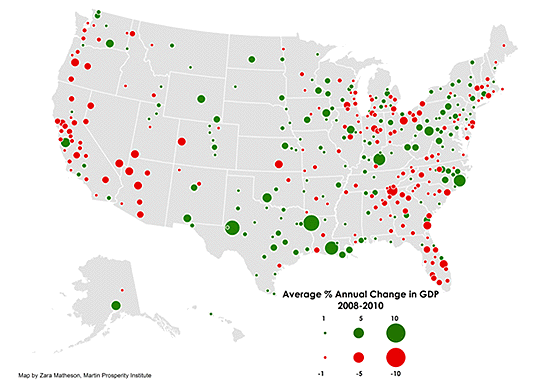
America's overall economic growth rate is essentially a composite of its many different cities and regions. Look in detail about how this vast number of towns and cities are faring through the GFC and maybe we can learn some lessons. Tech and knowledge wins. (cue Michael Parker again.) More from Richard Florida:
Among large metros, those that have performed well over both periods include big diverse metros like New York and the knowledge- and resource-based metros mentioned earlier, as well as San Antonio, Dallas, Nashville, Philadelphia, and Salt Lake City.
More or less the same pattern holds for small- and medium-size metros. College towns and knowledge regions like Ann Arbor, Michigan; Boulder and Fort Collins, Colorado; Champaign-Urbana, Illinois; Logan, Utah; Portland, Maine; and Rochester, Minnesota have posted consistent growth before and after the crisis, as have resource-rich locations, as well as Casper, Wyoming, Fargo, North Dakota, and Charleston, South Carolina.
The lesson for national economic growth is rather simple. It makes sense to focus the future economy less around housing, roads, and physical capital, and more toward the accumulation of human capital and knowledge assets.
We welcome your comments below. If you are not already registered, please register to comment
Remember we welcome robust, respectful and insightful debate. We don't welcome abusive or defamatory comments and will de-register those repeatedly making such comments. Our current comment policy is here.