

By Bernard Hickey
Just imagine if you could invest NZ$14.1 million up front and get a return over the next 50 years of NZ$3.3 billion. Would you do it?
Most would say a return that was over 200 times greater than than investment was probably worth it.
But most people don't have those sorts of opportunities, or the ability to magic up NZ$14.1 million at the drop of a hat at a low cost.
Except everyone in New Zealand does, in the form of being taxpayers in common to a Government that does have these opportunities and has the access to those funds at a much lower cost than most would realise.
This is what the Government's social investment approach is all about and the apparatus of Government is starting to get its head around how to measure those costs and benefits, and what types of investments it could make.
There is potentially a huge opportunity, if the early results are any indication.
Back in 2013 the Government announced it would spend NZ$7.9 million to employ individual case workers to essentially nag and cajole individual teen single mums back into work and education, and to help them make sure the bills are paid and their kids looked after. It was like employing a 'super nana' for every teen mum and baby. It also spent NZ$6.2 million on setting up seven supported shared homes for these young single mothers, including around-the-clock support and care for their babies.
The theory was that single mums who stay on the benefit without any ability to get a job and start an independent life are often the ones most at risk of being stuck on the benefit for decades, and more importantly, their own children get stuck there too. The risks that those kids will be sicker and get into trouble with the justice system is also much higher, amplifying the cost, not to mention the human misery.
The Government's actuaries have worked out that a single parent on the benefit under the age of 20 is likely to be on the benefit at one time or another for 20 years by the time they retire and the net present cost of that person is NZ$220,000.
So investing heavily in that teen mum's training, health, housing and life skills at a very early stage can have a very big payoff. Do it for enough teen mums, or kids in bad housing, or illiterate teenagers and you could end up with a very big 'investment' return.
The early verdict was a very big number. The actuaries worked out that the lifetime liabilities to taxpayers of those single mums reduced by NZ$3.3 billion between June 2013 and June 2014. That's at least partly because the early interventions reduced the numbers of single mums on benefits and reduced their expected time on benefits over the long run. There are now 43,000 fewer single mums on benefits than there were three years ago.
Finance Minister Bill English talked in the Budget about another group where early investment could create huge benefits for those people and taxpayers at large. He says 1,500 5-year-olds are in state care every year and they're expected to cost the taxpayer NZ$550 million in welfare and prison costs by the time they are 35.
So if the Government could devise a way to invest in those 1,500 youngsters up front to give them the skills and resources to avoid the benefit and prison systems then the payoff could be immense.
This week ANZ Economist Cameron Bagrie sensibly questioned whether it was time for the Government to use its balance sheet, which means its ability to borrow cheaply, to invest and spend in the economy and help keep it growing strongly. Prime Minister John Key said it was too early to push the panic button yet, but the Government would invest heavily again to support the economy if it needed to. He referred to the Government's billions of dollars of investments in motorways and infrastructure during and after the 2008/09 Global Financial Crisis and the 2010/11 earthquakes.
Here's the opportunity. The Government's net debt is just over 25% of GDP at the moment and forecast to drop back towards 20% over the next couple of years. The IMF and OECD says the New Zealand Government could easily handle net debt of 60-90% and was over 200% of GDP away from its absolute limit. The OECD also recommended this week that countries invest in skills to help restart productivity growth.
No one is suggesting investing tens of billions of dollars in training and nagging and doctoring and housing thousands of kids and teenagers. A few hundred million dollars could make an enormous difference if the early results of the social investments so far are any indication. The spending certainly appeals more than a couple of kilometres of concrete.
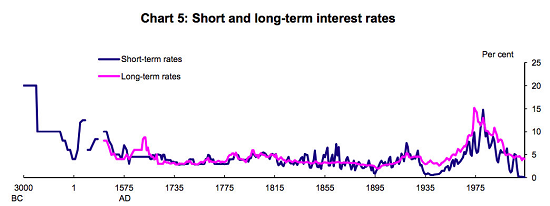
One thing the Government could do to smooth the path for more of this investment is to reduce the discount rate recommended by Treasury to Government departments considering these sorts of social investment projects and programmes. It currently says they should use 8% as the rate and has asked for feedback on a draft manual for cost benefit analysis for social spending. That's important because a high discount rate often means future benefits count for little in any cost benefit analysis.
The Government can currently borrow for a 10 year term at around 3.5%, which is less than half the cost when the Treasury was setting discount rate baselines. It should lower them.
Wouldn't you borrow NZ$14.1 million at 3.5% for an effective return of NZ$3.3 billion?
The Government could do an awful lot more using its own social investment techniques and its very strong balance sheet.
-----------------
A version of this article has also appeared in the Herald on Sunday. It is here with permission.
We welcome your comments below. If you are not already registered, please register to comment
Remember we welcome robust, respectful and insightful debate. We don't welcome abusive or defamatory comments and will de-register those repeatedly making such comments. Our current comment policy is here.