
There was much excitement in the lead-up to American retail giant Costco’s first New Zealand store opening.
How cheap would the food be? What will butter cost? And what about beef mince, or fruit, or that hideously expensive basic, cheese?
Auckland-based consumers within driving range of the west Auckland store were salivating at the hope Costco would be taking it to the big two supermarket duopoly, Woolworths and Foodstuffs, and those alleged excess profits.
There were even rumoured supermarket spies scoping out Costco’s shelves on its first day, walking every aisle of the store and recording what the US firm was selling, and for how much.
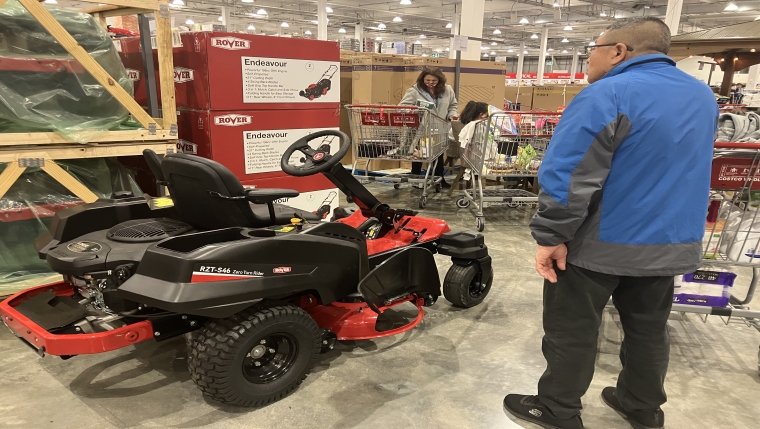
What may have surprised some of Costco’s competitors is that some of the best deals in Costco’s first weeks in Aotearoa were items you would more likely see at Mitre10 or Bunnings, or even Farmers, rather than Pak ‘n Save or Countdown.
Take this example from a happy shopper.
Costco Auckland was selling a Masterbuilt Gravity Series 800 griddle, grill and smoker for $1299. Now, this product is not my cup of tea as a mostly-vegetarian, but this was a deal, with the same product being sold for about $2400 at competing NZ retail stores.
One savvy shopper took advantage of Costco’s big grill discount, posting a photo of their new toy on social platform Reddit.
"Expected to just walk in and get some bulk toilet paper walked out with a smoker for $1299. Retails at mitre 10 and other bbq stores for $2399," they said, underneath a photo of their car boot with a brand spanking new smoker residing inside.
But it wasn’t long before the Costco shopper was one-upped by an even more enterprising soul.
“After I saw another post by another user on here today,” they wrote on Reddit, “who stated Costco had the master built 800 series for $1299 when they usually cost around $2399-$2499 depending where you go. I went straight to mitre 10 and they bet it [sic] by 15% as per their price promise. Got it for $1004. Pretty happy.”
And the same grill is also being offered by online importer Container Door as a parallel import deal for $1999. In this case you have to agree to buy it in advance, and Container Door will import it for you.
But you won’t see a $2000-grill and smoker for sale at New World, and not in Countdown, and certainly not in a Pak 'n Save.
Because Costco isn’t a supermarket. And in fact, it’s not even a retail store like Mitre 10 in the traditional sense.
Costco has more in common with Foodstuffs-owned wholesaler Gilmours than New World. An even more similar business model might be New Zealand wholesale buying club Cherry Tree, but with obvious differences such as the lack of retail stores.
Cherry Tree has three levels of memberships, silver, gold and platinum.
Silver doesn’t cost anything to sign up, and members are offered discounts of up to 25% off recommended retail price on products offered by agreement with Cherry Tree suppliers.
Gold comes with a $995 one-off joining fee and then an annual membership fee of $250. In return, Cherry Tree members get up to 60% off recommended retail price on more than 550,000 products from 2,400 brands.
To get the discounts, you have to be a member.
At Costco, to get its discounts you also must also be a member. You can’t just shop in a Costco store on a whim; the lines of people out the front are testament to the no member ID, no entry rule for Costco’s new store.
Costco has two memberships, gold star for individual membership with an annual fee of $60 and business membership for small business owners and enterprises for $50 a year.
And this is what makes Costco so different. It charges you before you even set foot inside its warehouse. You pay up because you expect to pay less.
“It’s a unique model,” retail expert and managing director of Coriolis, Tim Morris says.
“It's kind of part-wholesale. People are currently talking about it as if it competes with grocery. Everyone's focused on the duopoly and that it’s a new competitor. Oh, so exciting. That's not really who they compete with.”
Morris says Costco has flourished with a model that hasn’t worked for many others. Many have tried the club and membership model, and many have died.
But if we are looking to Costco to kill the duopoly, think again.
Morris says Costco doesn’t kill competitors, it just “takes a little bit from everyone”.
“In practice, like the US, people will go to Costco and then they'll realise they don't have everything they need. And while they're there, they'll go to Mitre 10. Or they'll go to Bunnings … It competes with Warehouse Stationery, it competes with Harvey Norman's, it competes with Bunnings.”
And it is aggressively competing for business customers. Morris says at least 60-70% of what Costco sells is to other businesses.
Its membership model means Costco has a nice padding of revenue always coming in that isn’t reliant on sales. For its most recent financial quarter, Costco reported US and Canada renewal rates for memberships of 92.6%. It has more than 100 million members, and Costco Australia and New Zealand managing director Patrick Noone said its NZ membership sign-up numbers were a record.
It is clearly a winner with consumers. Costco’s latest results show it pulled in US$4.2 billion from membership fees for the 52-week period ending August 28, an increase from the same period in the previous year, when it collected US$3.8b in membership fees. These fees are a significant contributor to Costco's profit.
Much like how Costco will take a little bit from lots of competitors, in taking a little bit (membership) from its customers up front allows it to ruthlessly focus on value and those hot, big-ticket deals, like the expensive griller and smoker, that make a membership worthwhile.
We welcome your comments below. If you are not already registered, please register to comment
Remember we welcome robust, respectful and insightful debate. We don't welcome abusive or defamatory comments and will de-register those repeatedly making such comments. Our current comment policy is here.