

We are still spending. But discretion is being applied. And yes, big numbers of us did all climb in to get a full tank of gas ahead of the reintroduction of the 25c fuel excise tax at the end of last month.
Kiwibank's latest Household Spending Tracker shows that following a "seasonally soft start to the year", Kiwibank electronic card spend rebounded 4% over the June quarter.
Kiwibank senior economist Mary Jo Vergara said compared with a year ago, spend is up almost 5% - although, that is the smallest annual increase since June 2021.
"Both the value and volume of spend are sitting above pre-covid levels. Historically low levels of unemployment continues to support Kiwi incomes and, in turn, consumption," she said.
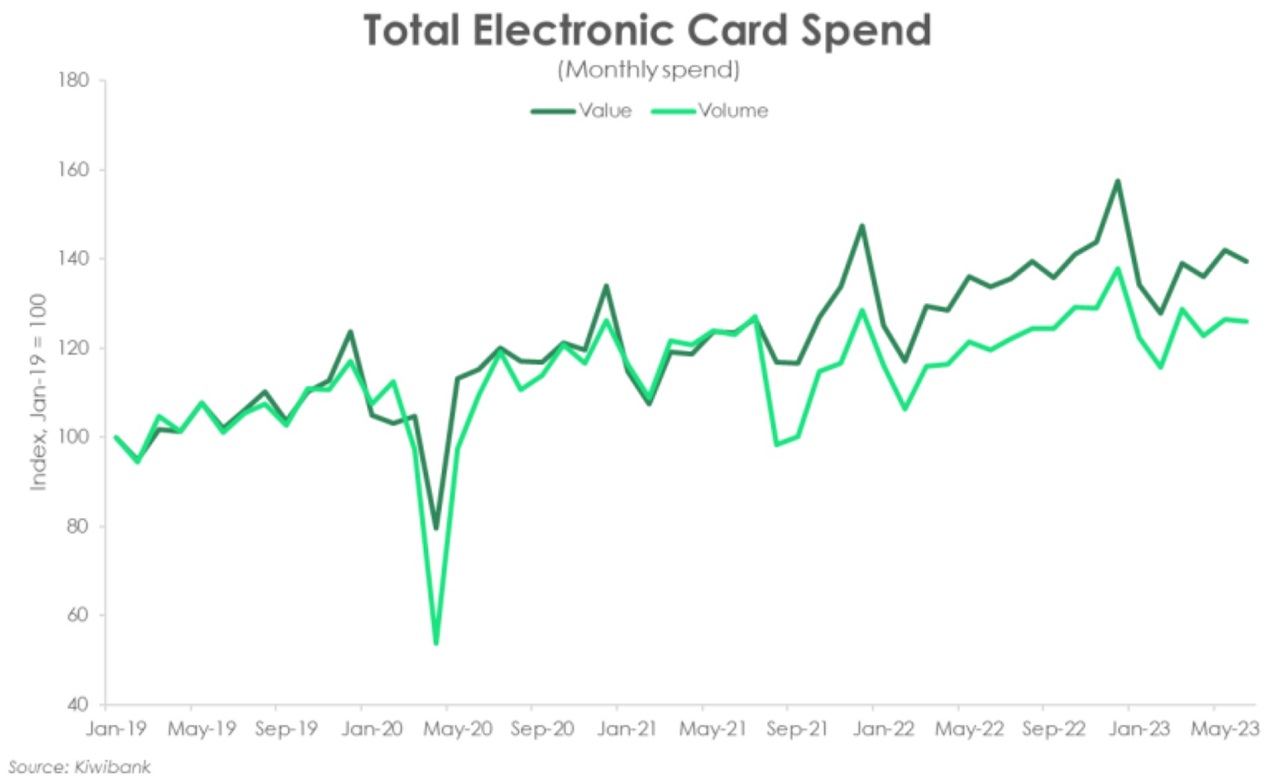
While aggregate spend is holding up - "also helped by high consumer prices" - a deeper dive into the categories reveals shifting preferences.
"Household disposable incomes are being squeezed with high consumer prices and rising interest rates. Consumer confidence is low and there’s little appetite to spend on big ticket items. Our data confirms as much. As households cut back on spend, it’s discretionary items that are being slashed from the budget," she said.
She noted that demand for home contents & furnishings, in particular, is waning. Compared with last year, spend is down 6%.
"The average monthly volume of spend on home contents & furnishings is sitting around 3% below pre-covid levels," Vergara said.
"...But there’s still appetite for the little things in life, like a well-brewed cup of coffee. Over the June quarter, spend at restaurants, bars and cafés lifted 4%."
Food prices are up around 12% over the past year. So, how are we handling that?
Well, Vergara said since the beginning of the pandemic, there has been a marked divergence between the value and volume of spend at grocery stores and on fruit & veg.
"For spend at grocery stores, the growth in dollars spent continues to outpace the growth in the volume of transactions made. The nominal value of spend rose 3.5% over the quarter, while the volume of transactions rose just 1.8%," she said.
"We expect the value of spend to face some downward pressure in the year ahead. Especially for fruit and veg. We are already seeing signs of this. Compared to last year, the value of spend declined 0.2% despite the 4% lift in transactions. Central banks have moved swiftly to combat inflation and their actions are weighing on global demand, as intended."
Petrol prices have dropped a lot this year. Vergara said that while compared with last year spending on petrol is down 10%, the volume of transactions rose 1% over the second quarter of the year.
And then there was the last three days of June, before the excise duty tax came back on...
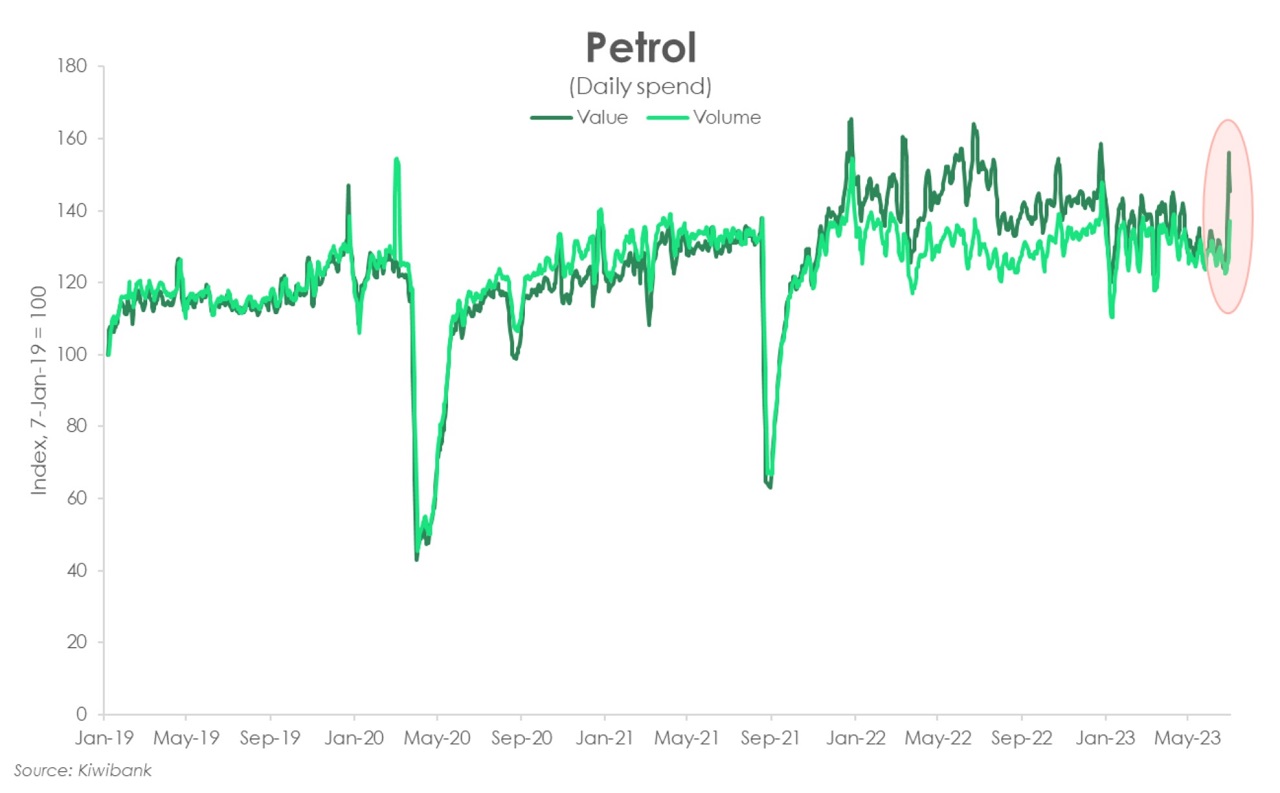
"Long queues formed at petrol stations and spend spiked 67% in the last three days of June," Vergara said. She said petrol spend "will likely track higher from here" - but the volume of spend will the best indicator as to the appetite for petrol consumption.
And what about travel? Yes. We are doing it again.
Vergara said there was a 2.3% lift in flight booking transactions over the quarter. However, the total spend fell 4.5%. "As capacity among airlines builds, prices look to be normalising," she said.
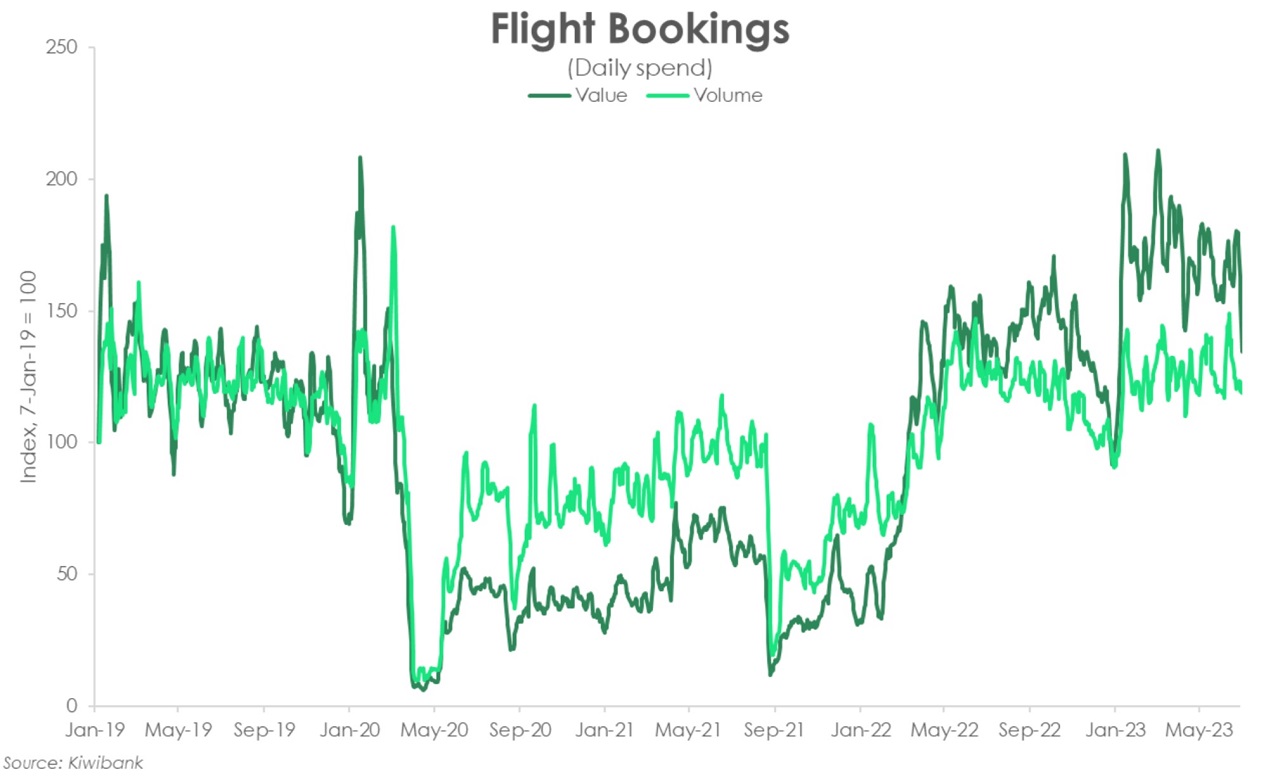
However, she said with "the world back open", the surge in domestic tourism may have run its course.
"The good news is, overseas tourists are coming back. Visitor arrivals have risen steadily with the removal of border restrictions last year. Arrivals are running at about 70-80% of the pre-Covid levels which means there is more upside to come - especially from China, which was our second largest market (after Australia) prior to the pandemic. Chinese short-term visitor arrivals are currently running at 10% of 2019 levels.
"Tourism was once our biggest export industry, contributing 20% of total exports. That contribution has fallen to 2.4%. The return of tourists comes at an opportune time. Because the spend up of foreign dollars will help to offset the weakening demand by Kiwi consumers," Vergara said.
We welcome your comments below. If you are not already registered, please register to comment
Remember we welcome robust, respectful and insightful debate. We don't welcome abusive or defamatory comments and will de-register those repeatedly making such comments. Our current comment policy is here.