

The country's bank mortgage pile grew by the biggest monthly amount in October in nearly three years, according to the latest Reserve Bank (RBNZ) figures.
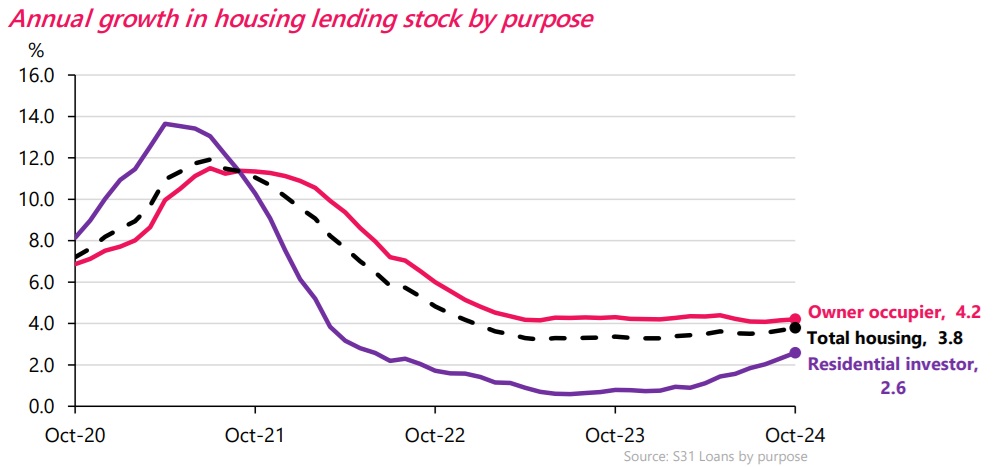
The RBNZ said the banks' total housing lending stock increased by $1.58 billion in October 2024 to a grand total of $360.58 billion. The housing lending annual growth rate rose from 3.7% to 3.8%
This was the biggest monthly increase since a $2.049 billion rise in December 2021.
In October 2024 owner-occupier lending increased by $1.187 billion (to $268.039 billion) while residential investor lending increased by $393 million (to $92.54 billion).
In the past six months to October, the investor mortgage pile has grown by $1.696 billion - and by $2.155 billion for the year to date.
This contrasts with an increase of just $345 million for the whole of 2023 and an increase of $1.4 billion for the whole of the 2022 calendar year.
In 2021, which included the tail-end of the pandemic housing boom, the residential investors increased their mortgage pile by $7.697 billion.
Separately, other RBNZ data for October shows the outstanding amount of money on floating rates rose by the most in a single month since June 2011.
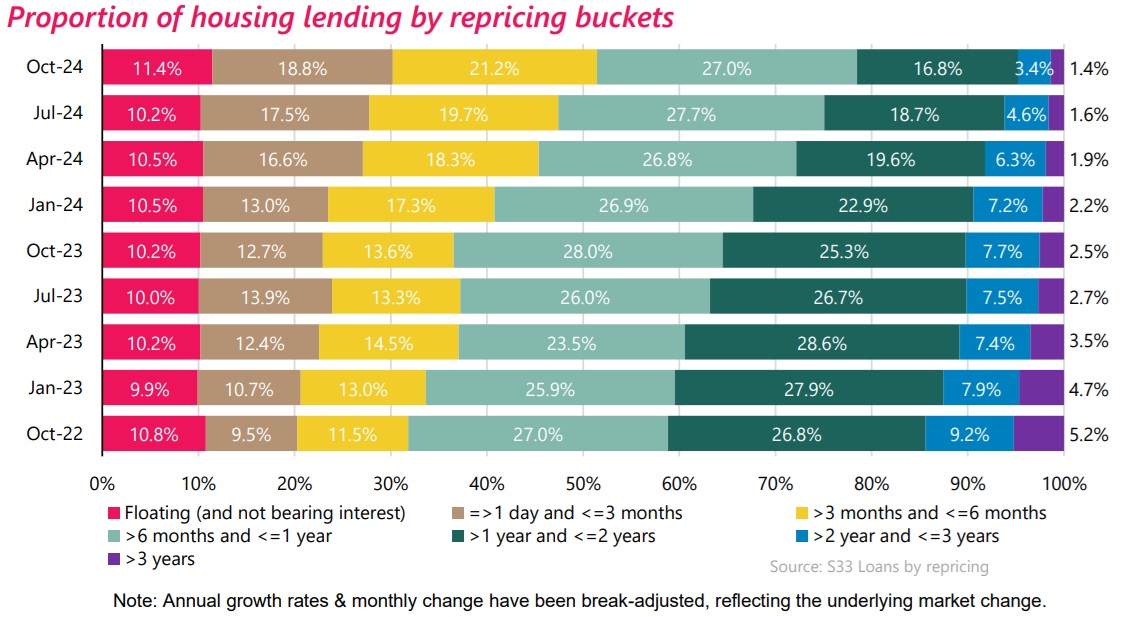
The amount outstanding on floating rates rose by $2.966 billion to $42.744 billion in October. The total amount of money on floating rates is now at its highest level since March 2020.
In October the amount of mortgage money on fixed rates dropped by $1.356 billion to a total of $323.317 billion, which was the biggest monthly fall since December 2011.
Floating rates were much more popular than fixed rates in the wake of the Global Financial Crisis (GFC) because for quite some time they were lower.
More recently the fixed rates have been lower than the floating rates. However, with the Reserve Bank now reducing the Official Cash Rate (it's been dropped from 5.50% to 4.25% since August) there may well be some people prepared to wait on a floating rate to see what happens in coming weeks and months.
The general trend since the start of this year has been for people to go shorter and shorter with their mortgage rate terms in order to take advantage of likely rate falls.
The October data shows that including floating rate mortgages, over 51% of the outstanding mortgage pile is due for a rate reset within six months, with over 78% due for a reset within a year.
Meanwhile, non-performing housing loans increased by $88 million (4.4%) to $2.109 billion in October, which is the first rise in three months.
The non-performing total rose $690 million (48.6%%) in the 12 months to October 2024.
The amount of non-performing loans represents 0.6% of the outstanding stock, up from 0.4% in October 2023.
In the aftermath of the GFC the non-performing loans percentage frequently hit 1.2%.
We welcome your comments below. If you are not already registered, please register to comment
Remember we welcome robust, respectful and insightful debate. We don't welcome abusive or defamatory comments and will de-register those repeatedly making such comments. Our current comment policy is here.