
ANZ New Zealand says the High Court has awarded summary judgment against it in a class action case, with the bank saying its maximum potential liability is $125 million.
The case was brought by a group called Banking Class Action in 2021 against ANZ and ASB. ASB settled last year, agreeing to pay more than $135 million.
The High Court found ANZ breached section 22 of the Credit Contracts and Consumer Finance Act (CCCFA). ANZ says it's disappointed with the court's fundings, is considering the judgment and its next steps, including a potential appeal.
Banking Class Action alleged ANZ and ASB breached section 22 of the CCCFA by failing to provide proper disclosure information to customers who made agreed changes to their loans during the relevant periods, which were 6 June 2015 until 18 June 2019 for ASB customers, and 6 June 2015 until 28 May 2016 for ANZ customers.
Scott Russell, a lawyer representing class action plaintiffs, welcomed the High Court’s decision.
"The Court held that the ANZ breached its disclosure obligations under the CCCFA and that the plaintiffs were not liable for the costs of borrowing they paid in relation to their loan during the period ANZ was in breach. It has ordered ANZ to refund the plaintiffs those costs of borrowing, which total $32,728.42," said Russell.
He said the Court made several findings that will help the plaintiffs in advancing the about 17,000 class members' claims.
"The next step in the proceeding will depend on a number of factors, including whether ANZ appeals," Russell said.
"This judgment is an important step in holding ANZ accountable under consumer protection legislation designed to ensure borrowers receive accurate information about their loans."
ANZ NZ CEO Antonia Watson said the bank opposed the claim because it believes the law wasn't intended to operate in the way the plaintiffs and the litigation funders argued.
"We maintain that the potential consequences under the current law are disproportionate and not aligned with any actual harm caused," said Watson.
The ANZ case relates to about 17,000 customers who on average underpaid their mortgages by $2 a month between 2015 and 2016, the bank says.
"ANZ NZ self-reported the issue [to the Commerce Commission], took accountability and paid more than $35 million to affected customers," Watson said. ANZ reached a settlement with the Commerce Commission in 2020.
"As a result, all customers were left better off than they would have been if the issue had not occurred."
ANZ said errors in loan variation letters were "minor and technical," with the financial impact on customers "very small."
However, the High Court found the representative plaintiffs weren't liable for costs of borrowing on their loan for the period of breach and has directed ANZ to refund them $32,728.42.
"ANZ NZ is considering how this judgment may apply to other members of the class," Watson said.
"ANZ NZ’s estimate of its maximum potential liability for costs of borrowing arising from this decision is approximately $125 million."
'[Parliament's] Finance and Expenditure Select Committee has recommended changes to the CCCFA that confirm the Court’s ability to make orders that are just and equitable in relation to costs of borrowing between 2015 and 2019 where lenders breached their disclosure obligations," ANZ said.
"The changes are a positive extension of previous amendments that already cover the period after 2019, but the Select Committee has recommended that they don’t apply to the case against ANZ NZ."
Last October, after ASB agreed to settle its case, Watson said ANZ remained confident of its position, and looked forward to having the matter determined by the Court.
The Banking Class Action case is being funded by Australian litigation funder CASL and New Zealand litigation funder LPF Group. In 2021 they said legal fees and services payable to the funders would total between 16% and 23.5% of any money the banks were to cough-up.
ANZ mulling potential appeal
Watson said ANZ's still deciding whether to appeal.
"But you know, we would absolutely be paying out more money if the ruling stands as it is," she told journalists in Singapore.
"We've said today that the maximum exposure we have is $125 million. Compared to our profitability, I think it's [equivalent to] about 10 basis points of capital. So it's not material, but it's a big number."
"That was the reason that we wanted to keep fighting this case. We just felt that for a situation where our customers, through an error we made, had underpaid their home loans, the idea of refunding cost of borrowing just wasn't the intention of Parliament at the time," said Watson.
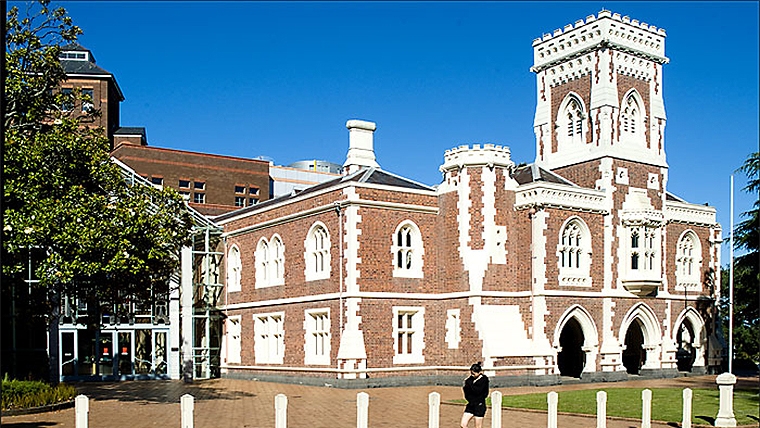
The ANZ hearing was held in March at the High Court in Auckland.
*Additional reporting Anna Whyte.
We welcome your comments below. If you are not already registered, please register to comment
Remember we welcome robust, respectful and insightful debate. We don't welcome abusive or defamatory comments and will de-register those repeatedly making such comments. Our current comment policy is here.