
National is targeting a suite of KiwiSaver changes as a key campaign strategy leading up to the election.
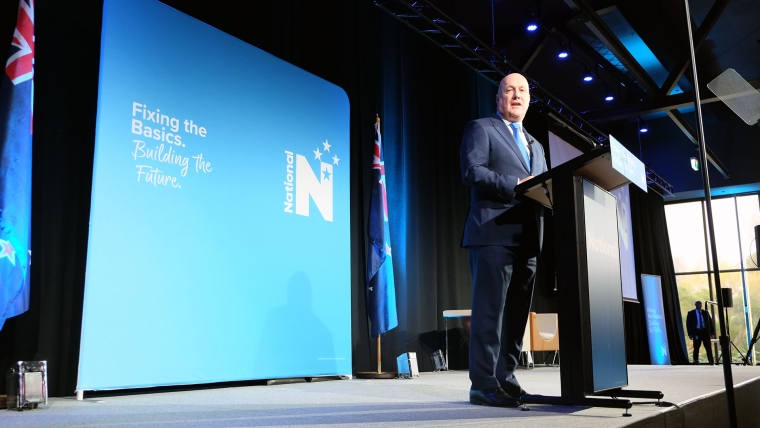
National Party leader Christopher Luxon announced at his party’s annual conference on Sunday, that if re-elected, National would make KiwiSaver or an equivalent scheme compulsory for workers, automatically enrol every baby born in New Zealand along with a $1500 Baby Boost payment, and make a contribution into a parent’s KiwiSaver while they’re on paid parental leave.
In November, the National Party released its first key election policy - increasing contribution rates for employers and employees. Additional increases would start from April 2029, rising by 0.5% per year until April 2032 - to a 6% contribution rate for employers and employees each.
“Under National’s changes, everyone in work will be required to contribute to KiwiSaver, or an equivalent retirement savings scheme, from 1 July 2028,” Luxon said.
“Recent global volatility has underlined the need to strengthen our financial security. In a more uncertain world, New Zealand needs higher savings and greater financial resilience. Compulsory KiwiSaver will help deliver both.
“We’re also supporting mums and dads to continue building their KiwiSaver while on paid parental leave. We know that welcoming a new baby can put financial pressure on many families as they adjust to life on a single income and more expenses, so many parents choose not to contribute to KiwiSaver during this time," he said.
That would be set at the default KiwiSaver rate and applied against the amount of paid parental leave.
The party also promised to require employers to maintain KiwiSaver contributions for employees over 65.
National is planning to campaign again to gradually lift the retirement age to 67. Asked if the Kiwisaver changes were needed to make the case to raise the retirement age, Luxon said he saw the topics as two separate conversations.
"One is very much about long-term security for kids that are getting born today, they're going to be retiring in the 2090s...
"With respect to how you might move retirement universal superannuation from 65 to 67 like many other countries have, we'll have more to say about that before the election."
"We've had a long-standing position about gradually lifting retirement ages, we're giving people lots of time... certainly to adjust to that, but this is actually more about a much longer-term ambition."
New Zealand First was the first party to announce its KiwiSaver election policy in September, proposing to increase employee and employer contributions to 10% and making KiwiSaver compulsory. At the time, NZ First leader Winston Peters said KiwiSavers and employers would receive tax cuts to cover the increases.
Peters also promised to make KiwiSaver compulsory from birth, with an automatic Crown contribution of $1000.
Following National's KiwiSaver announcement on Sunday, NZ First leader Winston Peters was quick to comment on social media: "Funny. We thought National was tough on crime - they just blatantly stole NZFirst’s policies of compulsory KiwiSaver, increased contributions, and automatic enrolment at birth with a government top up - which we announced in May and called ‘KiwiSaver Generation’."
"We realise the only great policy announcements are coming from NZFirst but at least admit they’re ours before you announce them…"
In 2015, the then-National government removed the $1000 Kiwisaver kickstarter. Finance Minister at the time Bill English said it had "considerable costs for taxpayers".
"The Government will spend more than $850 million this year on two subsidies – the ongoing government subsidy of up to $521 a year per member and the $1,000 kick-start," he said.
Luxon, asked about the current Government's stance, said he was focused on the future.
"I wasn't here at that time, I fully admit that, but I just think actually, when you look at financial literacy and you think about actually what makes it work for people going forward, it's actually regular consistent savings year in year out, and that's why we believe very strongly."
In May last year, the Government Kiwisaver contribution was halved from a maximum of $521 a year to $260 a year, while those earning over $180,000 would cease to receive the contribution.
We welcome your comments below. If you are not already registered, please register to comment
Remember we welcome robust, respectful and insightful debate. We don't welcome abusive or defamatory comments and will de-register those repeatedly making such comments. Our current comment policy is here.