
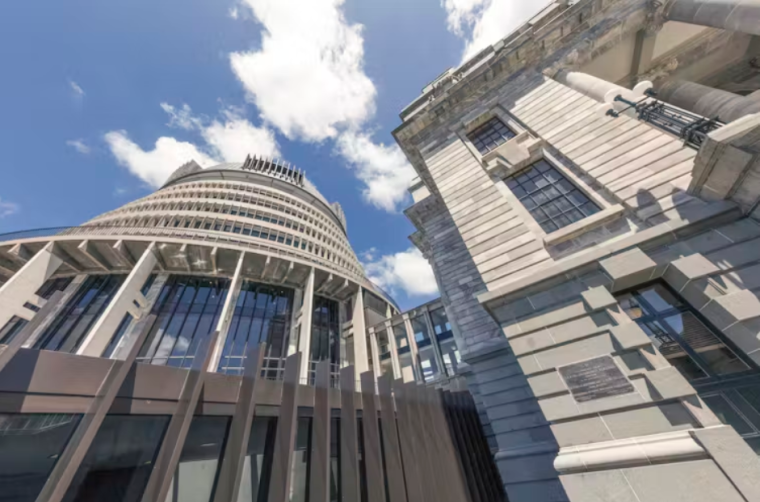
Parliament is shifting gears in anticipation of Budget 2026 on May 28. This week we have an interview with Westpac NZ chief economist Kelly Eckhold on the Government's assessment of the country's fuel risk, what's expected as the Government prepares its pre Budget announcements, and the campaign promises coming through thick and fast.
Polls apart
Everyone in Parliament loves a poll (unless they're doing badly and suddenly the "only poll that matters" is on election day).
Two snapshots of public sentiment have been released following Prime Minister Christopher Luxon's successful, self-called confidence vote on his leadership.
Results:
| Taxpayer's Union - Curia Poll |
Talbot Mills Corporate Poll |
|
| Labour | 31.9% | 36% |
| National | 30.0% | 29% |
| NZ First | 11.7% | 14% |
| Greens | 9.7% | 9% |
| ACT | 6.5% | 7% |
| Te Pāti Māori | 4.1% | 2% |
| Other | 6.1% |
Both major parties stayed relatively steady in both polls, with Labour falling 1.5%-points in the TPU poll, and both results project the governing bloc of National, ACT and NZ First to retain enough support to stay in power.
When it came to preferred PM, Luxon pulled himself back up to the top spot in the TPU poll at 21.5%, followed by Chris Hipkins at 19%, while Winston Peters was at 11.6%.
In the Talbot Mills poll, Hipkins was ahead on 23%, Luxon was on 20%, while Peters had shot up in the last few months and sat closely behind at 17%. Twelve per cent were unsure. The Talbot Mills poll was conducted May 1-10 and the TPU poll was May 3-7.
Buying back the Bank
NZ First leader Winston Peters announced his plan on Sunday to buy BNZ and merge it with Kiwibank to create a National Bank of New Zealand. His plan was to keep it commercial with a Crown shareholder, paid for through a “blended funding stack”.
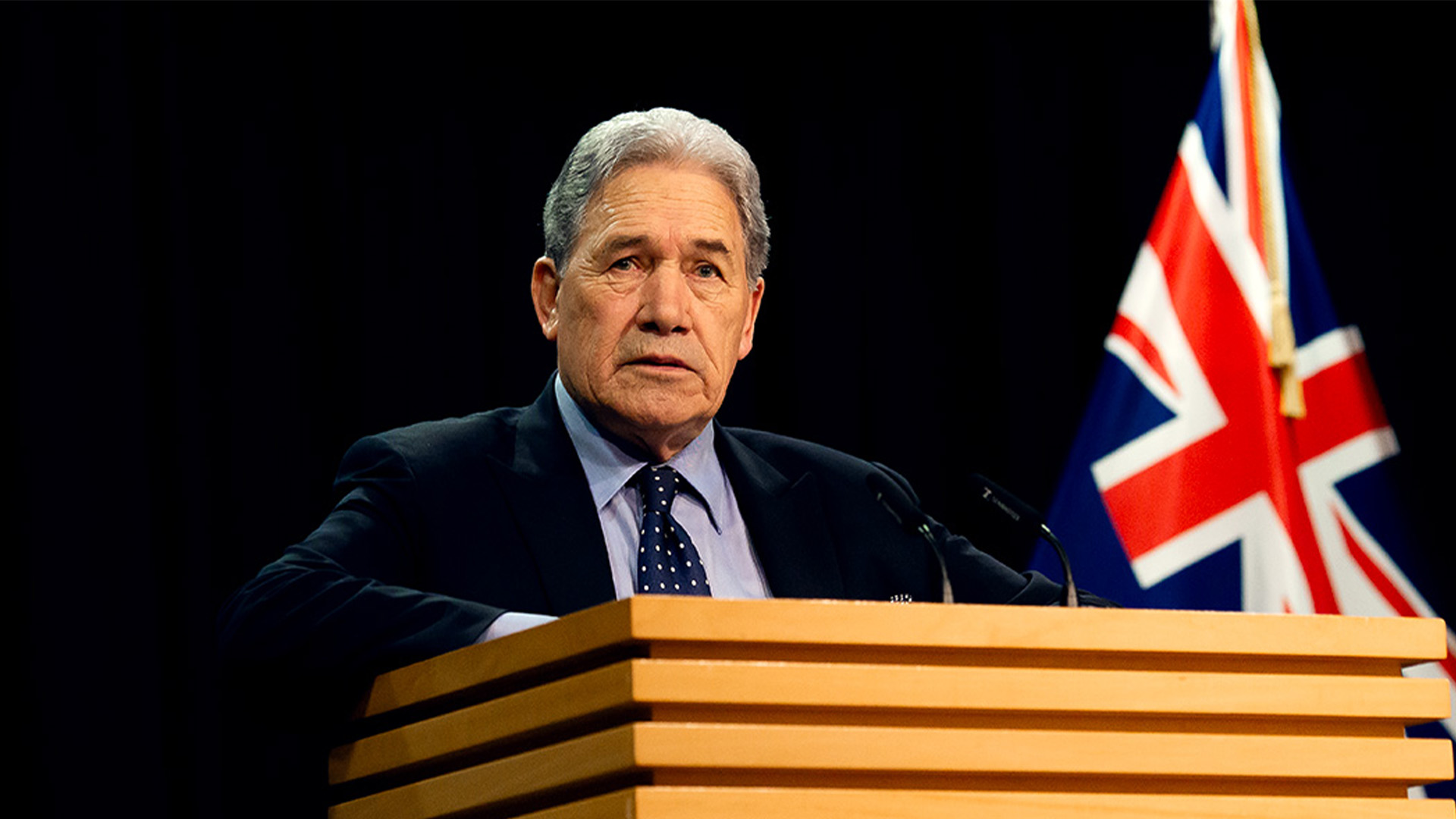
Taxpayer Union chair and former Finance Minister Ruth Richardson called it a “bizarre” idea and “a bankruptcy of thinking“. In response, Peters described Richardson as the neoliberal ‘ghost of economics past’.
We need to save more
KiwiSaver is shaping up to be a political benchmark this election. Peters is promising to make it compulsory from birth, with an automatic government contribution of $1000 returning.
Last week, Prime Minister Christopher Luxon also hinted at more changes to KiwiSaver if National is governing after the election, in addition to a promise already announced to lift the combined contribution rate to 12%. Labour has also said it will have a policy on KiwiSaver prior to the election.
Strait talking
The Government outlined last week who would be prioritised for fuel should the situation escalate and the country moves to phase 4 in the national fuel plan (we’re currently at 1). It has been very intentional in stressing this is the worst case scenario, Finance Minister Nicola Willis calling a move to phase 4 “highly unlikely”.
"Most disruptions we can envisage could be managed without having to move into a phase four plan. The scenarios that we have worked through indicate that a large scale, ongoing diesel or petrol supply disruption is extremely unlikely."
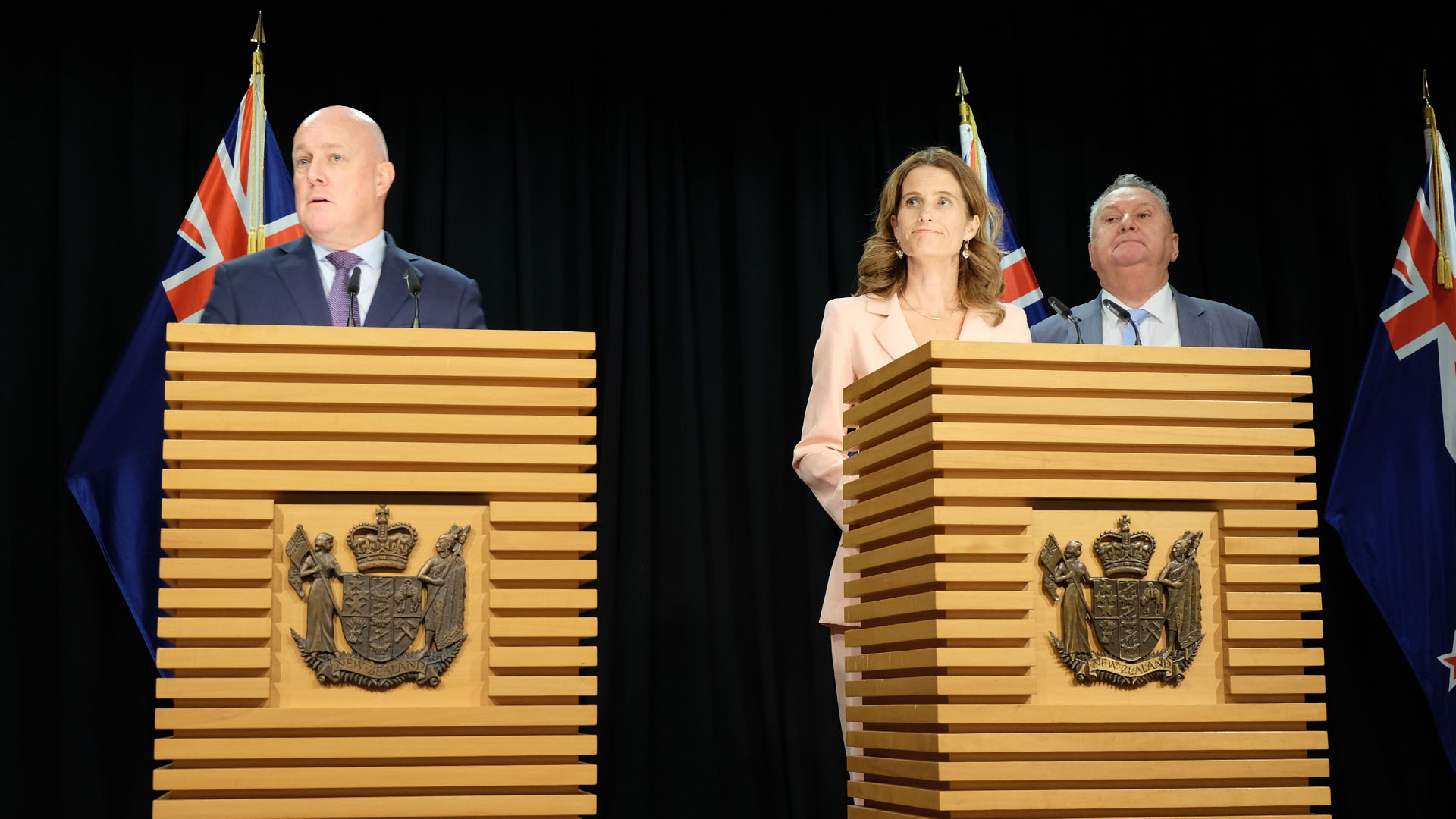
Westpac chief economist Kelly Eckhold told Interest.co.nz, “it seems quite like a very low assessment of the risk, considering the information that's out there at the moment about the strain the global energy markets are under”.
“I would say at the best, it's optimistic.”
He said global investment banks and experts in the oil industry “are pointing out with increasing concern that this crisis has gone on for so long now that there are going to be increasing pressures on the global supply chains, which is going to create issues in refining and supply of fuels globally”.
“When I see that, I don't understand why New Zealand wouldn't be affected by that.”
At a refinery in Singapore earlier this month, where New Zealand gets about a third of its fuel, Luxon said companies were doing a good job of "hustling" to find alternative sources of feedstock, and he was reassured they had good access to be able to continue to send fuel to New Zealand.
Asked by Interest.co.nz about the flow on effect of price, Luxon said, “…yes, it’s coming at higher prices, in some cases it’s taking longer to get to the refinery, and it’s obviously got higher transport costs as well”.
“Prices will continue to fluctuate, the supply chain is adjusting, but certainly price is a part of that.”
Eckhold said he thought the government was presenting a conclusion that fuel will always be available, “but it may just be available at a very high price, and they think on the basis of that, then essentially the economy will self police itself, because as the price goes up, people will use less, which will mean that demand will fall to reach the available supply - is the assumption that they're running under”.
“I think there are some real questions that you could ask around that view,” he said. “In the global crude markets, if I look at what the investment bank research is saying, they're projecting that even if things finish tomorrow, there'll be a significant enough drawdown in inventories around the system to mean that refineries globally would be heading towards a period of what they call operational stress.”
“… If refineries don't have surety of a regular flow of inputs into their systems, then they have to shut down their systems at least partially, because it's much easier and cheaper to reduce capacity in a refinery, as opposed to suddenly have to shut it down altogether.”
What’s happening this week
It's full steam ahead for Budget 2026 - and the pre-Budget announcements will come in thick and fast. The week before the Budget, set down for May 28, is a little bit like the week before Christmas in Parliament - there's excitement in the air, but parties outside government tend to hold off on announcements, waiting until after the big day to know what is in the country's coffers and how much they have to spend of the Christmas cash.
Finance Minister Nicola Willis will be delivering her only pre-Budget speech on Tuesday (she has done multiple in previous years), following Luxon's pre-Budget speech last week where he outlined the package of new, net operating funding would be $2.1 billion - $300 million less than the $2.4b set last December.
Willis will likely give more detail about how the Government plans to achieve its objectives through the budget. The Budget Policy Statement lays out the Government's overarching goals as - building a stronger, more productive economy, deliver more efficient, effective and responsive public services and get the government’s books back in order.
NCEA
Details of the NCEA replacement was released over the weekend, with students from 2028 onwards working towards the newly named ‘Foundational Award’ for literacy and numeracy at Year 11, the New Zealand Certificate of Education (NZCE) in Year 12 (from 2029) and the New Zealand Advanced Certificate of Education (NZACE) in Year 13 (from 2030).
The students have to pass a minimum of three subjects at their year level or above to gain NZCE or NZACE, and pass the year 11 foundational award.
What happened last week
The off again on again relationship between the Government and a liquefied natural gas (LNG) terminal continued to heat up, and now sounds like National are warming back up to the idea - Luxon telling reporters: "We are very interested in it, obviously, that’s why we kicked it off because we have a dry year risk which drives into huge risk premiums and therefore higher power prices".
In February the Government announced its planned LNG import facility which was anticipated to be operating as soon as 2027. But by April, a question mark hung over whether it would definitely be going ahead, new Energy Minister Simeon Brown saying the world had changed since the initial decision was made.
And it was more bad news for Air New Zealand - expecting fuel costs for the second-half of its financial year to weigh in at about $980 million, $240 million more than it expected in February, but it's not currently considering raising capital.
Baby news
Outgoing ACT deputy Brooke van Velden announced she is expecting a baby in November.
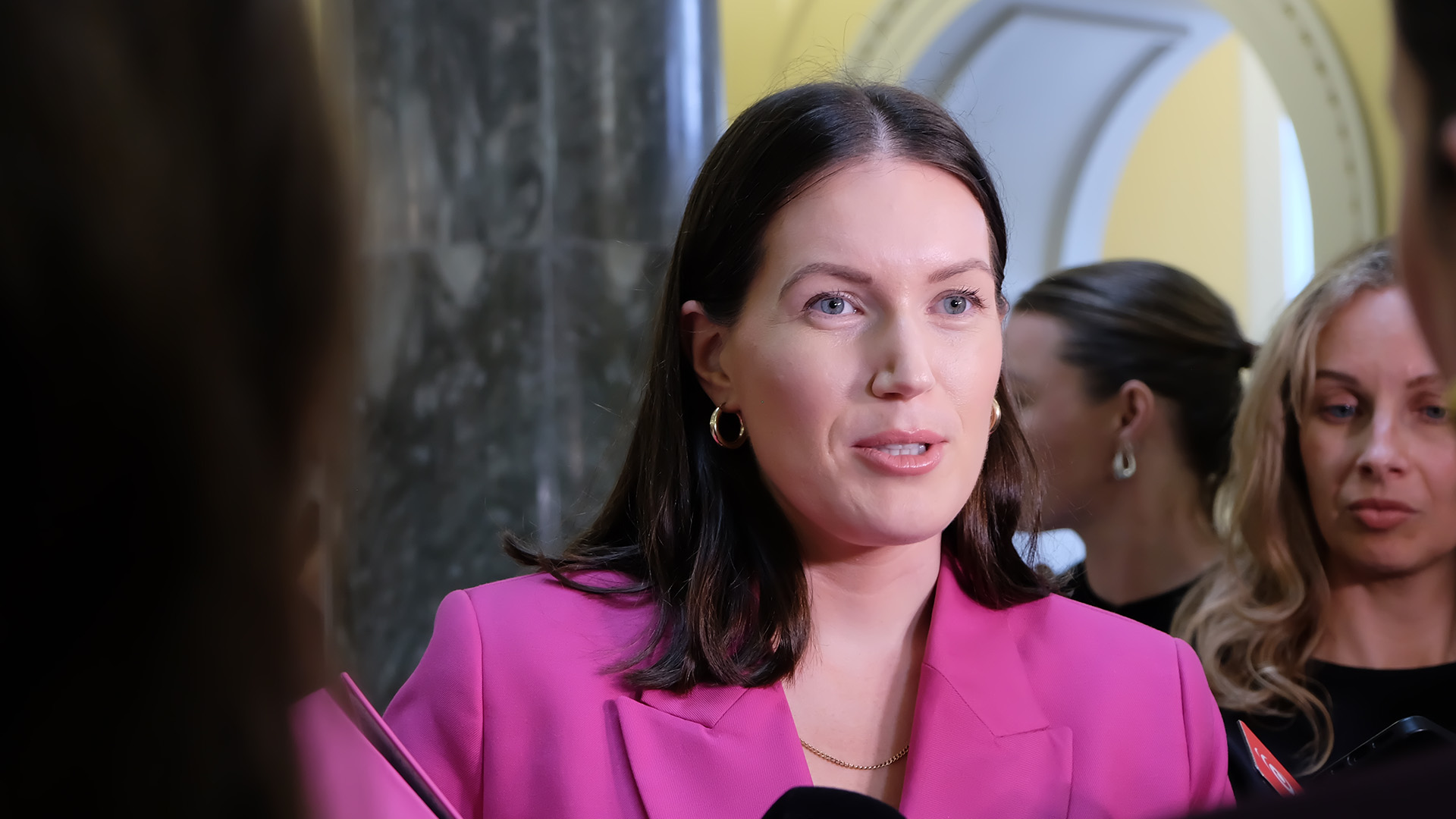
“I’ve never sought to bring my personal life into politics, but this is an exception, as it was going to become increasingly obvious!” she wrote on social media.
“This news is unrelated to my decision to not seek re-election, but it’s incredible timing! As many of you will know, there are many things in life that you can schedule and plan for, but this was one that was going to happen in its own time.”
And a goodbye to Judith Collins
Judith Collins bid politics farewell to a chamber full of notable faces last week, telling Parliament after her 24 years, "I’m over politics and looking forward to going back to my first loves: my family and the law".
Former Prime Minister Jenny Shipley, former National leader Don Brash, Don McKinnon, Public Service Commissioner Brian Roche and Police Commissioner Richard Chambers watched on as Collins' delivered her valedictory speech on Tuesday night.
"I have never had the patience for the concept of doing my time or, worse still, knowing my place," Collins said.
*Stay informed with what you need to know from the Capital - the politics shaping business and the Beehive insights driving decisions.
We welcome your comments below. If you are not already registered, please register to comment
Remember we welcome robust, respectful and insightful debate. We don't welcome abusive or defamatory comments and will de-register those repeatedly making such comments. Our current comment policy is here.