
by Anna Whyte and Mandy Te
Fuel prioritisation details have been released by the Government if the country reaches the "unlikely" worst stage of the national fuel plan, which would see a fuel reduction target set and a priority framework that would get fuel to 'critical users'.
Critical users include emergency services, social services, national security systems, public transport, education, corrections and media.
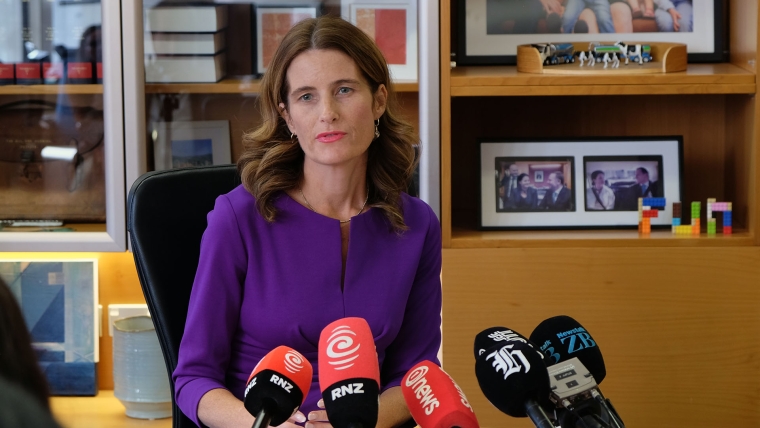
While the country is currently at phase 1, Finance Minister Nicola Willis said that in the "unlikely event we ever need to move to Phase 4, it is critical that business and industry have a clear understanding of the objectives and measures, and can put them into action".
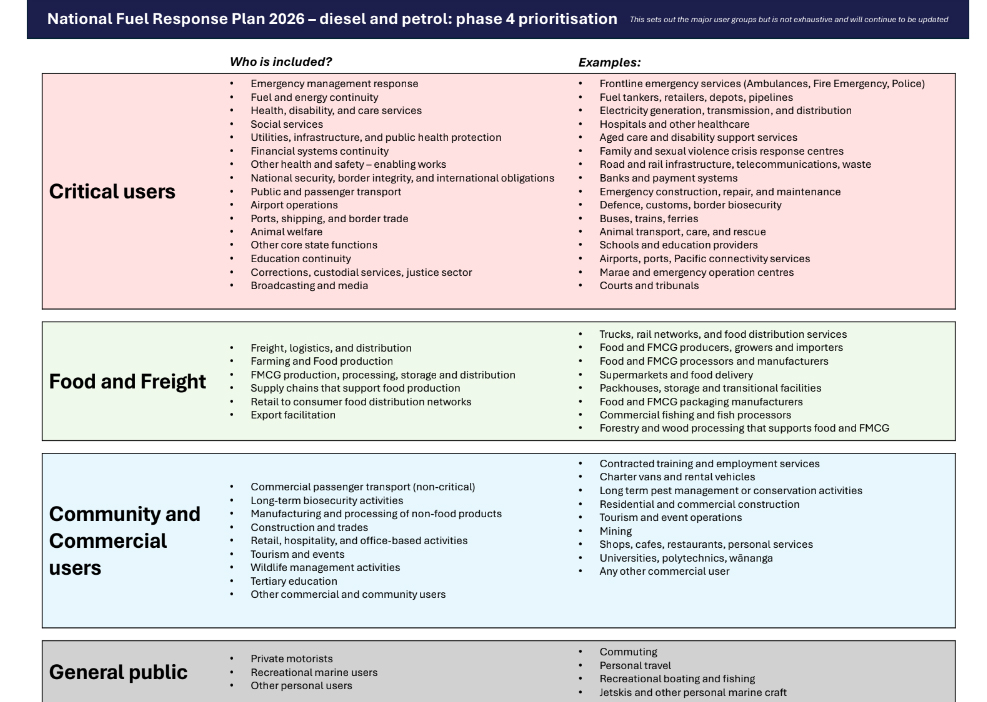
Under phase 4, critical users would get priority and uncapped access to fuel, food and freight would also get uncapped access - subject to demand reduction requirements, commercial users would get the same access as food and freight, but with higher savings targets, and the general public would have transaction limits at the pump aimed at reducing fuel use.
"A move to Phase 4 would occur only if there was a genuine likelihood of a severe and prolonged disruption, such as the loss of a large share of fuel supply for many months," Willis said.
"While this is highly unlikely, the Government would set a fuel reduction target and apply a simplified framework of priority users to ensure fuel goes where it’s needed most."
Willis said in phase 4 there would be "practical flexibility" for those in the general public in exceptional circumstances, such as those who live in rural areas.
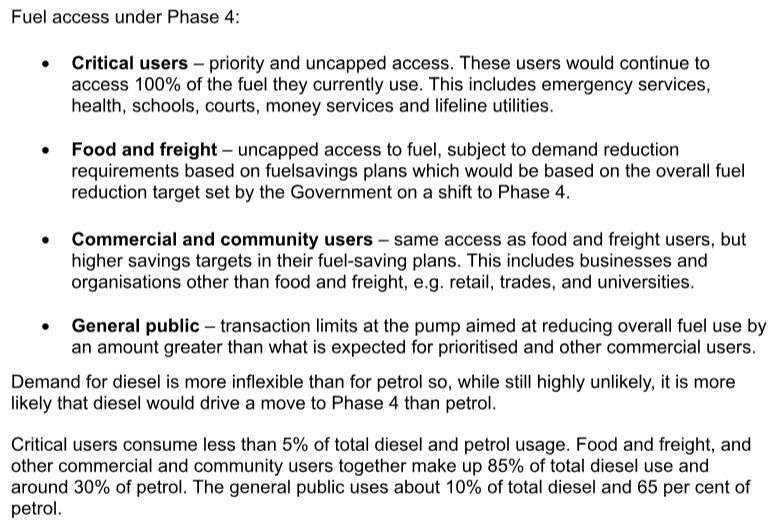
The transaction limit would mean the public can buy up to a specific weekly amount of fuel based on the level of fuel the Government believes needs to be saved, which can change based on the nature of supply disruption.
Limits could also vary across petrol and diesel.
Labour leader Chris Hipkins said the reality was there was already fuel rationing happening.
"Fuel is available to those who can afford to pay for it and to those who can't afford to pay for it - it's not.
"Families are having to make some really tough choices between going to the supermarket or going to the petrol station, and this government's message is very clear to those families, you're on your own."
Infometrics chief executive Brad Olsen said in a statement that data shows current New Zealand fuel stocks extend "well into the second half of June, although we can only see further new shipments up to three weeks ahead".
"Our conversations with various participants across markets indicate continued fuel movements through into July at a minimum, with refiners adjusting and sourcing new supplies across the world."
The National Road Carriers Association CEO Justin Tighe-Umbers supported freight being prioritised.
“Cost remains our largest concern as every dollar of increased cost is coming from within the economy. Since the start of the conflict diesel has cost the economy an additional billion dollars and it would be naive not to conclude that this degree of cost escalation will impact the economic recovery that was starting to show prior to the Iran conflict."
Government officially signs deal with Z Energy to source about an extra 90 million litres of diesel
Willis and Associate Minister of Energy Shane Jones, also announced that the deal with Z Energy had been finalised and an order had been placed for the fuel.
In April, the Government told reporters it had signed a letter of intent with Z Energy to procure close to 90 million litres of diesel, adding about nine days to the 21 days of diesel the country currently has in storage.
Willis said the Government expected the diesel would be in refurbished tanks at Marsden Point "as early as the end of June".
Under the terms of the deal, the diesel will be delivered to Marsden Point in Northland and while Z Energy will procure, own and manage the diesel, the Crown will be in charge of how it is released into the New Zealand market.
Willis had previously called this an "insurance policy" and a back up buffer. “It’s like the money in the piggy bank that has masking tape all over it. It’s only there if we really, really need it on a rainy day," she told reporters in April.
On Monday, Jones said: “We are continuing to monitor the impacts of the conflict in the Middle East very closely and will assess whether any further action is needed to secure additional fuel supplies.
“While our fuel system is built to manage uncertainty, and we have already taken significant steps to strengthen our fuel security, New Zealand is exposed to international supply chains. The conflict in the Middle East has reinforced the importance of building strategic resilience.
“Working with industry to establish reserve fuel supplies and increase our fuel storage capacity is exactly the kind of action we need to be taking right now to give ourselves the insurance we need.”
We welcome your comments below. If you are not already registered, please register to comment
Remember we welcome robust, respectful and insightful debate. We don't welcome abusive or defamatory comments and will de-register those repeatedly making such comments. Our current comment policy is here.