
The Government has signed a letter of intent with Z Energy to procure 90 million litres of diesel, adding about nine days to the 21 days of diesel the country currently has in storage.
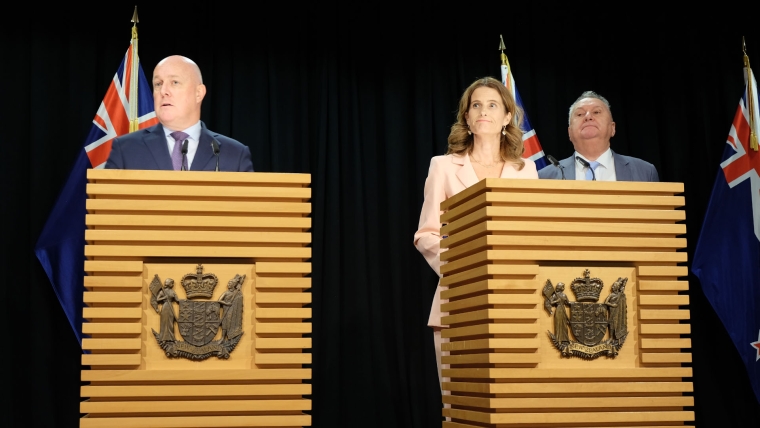
Prime Minister Christopher Luxon, along with Finance Minister Nicola Willis and Associate Energy Minister Shane Jones, made the announcement on Tuesday at a post-Cabinet press conference.
Under the terms of the deal, the diesel will be delivered to Marsden Point in Northland and while Z Energy will procure, own and manage the diesel, the Crown will be in charge of how it is released into the New Zealand market.
In early April, Jones announced the Government would enter into an agreement to support an extra 90 million litres of storage for diesel at Marsden Point. Senior ministers signed off on paying $21.6 million from the Regional Infrastructure Fund to Channel Infrastructure to increase diesel storage.
Jones elaborated on this, saying this would secure storage at Marsden Point for several years and the capital cost of recommissioning has been met by Channel Infrastructure.
Insurance policy
Channel Infrastructure is expected to have a refurbished tank that can hold more than 90 million litres ready by early June. Willis says the diesel is expected to be delivered to Marsden Point in late June or early July, and while the Government has secured the deal for fuel to be released up to the end of December, it will have the ability to negotiate an extension if that's needed.
“Importantly, a key factor in our negotiation has been to limit the Crown’s exposure to any long-term fall in fuel prices. You can imagine that purchasing fuel at a particular point in time, and then that fuel reducing in value by the time it’s delivered, could potentially expose the taxpayer to risk,” Willis says.
While she couldn’t go into details about the commercial arrangement, she says; “our intent has been to limit the taxpayers’ exposure to any reduction in the price that could occur … It’s a good deal for the taxpayer. We’re taking a belt and braces approach.”
“I think of this as an insurance policy to ensure that if the worst happens, New Zealand is prepared," Willis says.
Willis says this is a back up buffer. “It’s like the money in the piggy bank that has masking tape all over it. It’s only there if we really, really need it on a rainy day.”
“The situation that we are preparing for, a worst case scenario, a low likelihood but high impact event, would be if we were having several shipments or more than one large shipment that was significantly delayed or hadn’t been replaced.
“And we knew we were getting to a point that we were going to have to eat into those reserves in the country - the minimum stock obligation - and we were wanting to eke out our reserves a bit longer so we didn’t get into a position of shortage."
“Having this extra nine days worth of fuel would give us more breathing space while we awaited the extra tankers to come.
"Because what the fuel companies have told us to expect is, even in a worst case scenario, they’ll still be able to get alternative fuel supply. It just might take a bit longer to get here than usual, and so we need to cover for that bit longer," Willis says.
She says this would be to prevent getting into phase three and phase four of the government plan.
If the Crown wanted to release the fuel, Willis says; “we then need to in some way cover potentially a difference in cost between how much Z Energy paid for it and how much they’re able to get for it in the market.”
“If we didn’t end up using the diesel because we never get to this terrible, rainy day we’re all trying to avoid then it would progressively be released into Z Energy’s business as usual stocks,” Willis says, with this in place in commercial terms of the deal.
'Tough negotiation'
Asked if the Government was able to estimate the profit Z Energy will make from this arrangement and how it might impact their margin, Willis declined - saying it was commercially sensitive.
“We have sought to limit the exposure to the taxpayer. It’s been a tough negotiation,” she says.
The additional supply will not count towards the fuel companies’ minimum stockholding obligations.
The journey to secure this extra started came in March, after Cabinet agreed to seek commercial proposals from fuel importers as a way to strengthen fuel supply resilience. The Ministry of Business, Innovation and Employment (MBIE) ran the procurement process.
As of 11.59pm, April 22, MBIE data shows New Zealand has 51.8 days of petrol (36.1 days in country and 15.8 on water), 41.3 for diesel (21.9 in country and 19.4 on water) and 45.7 for jet fuel (24.9 in country and 20.9 on water).
We welcome your comments below. If you are not already registered, please register to comment
Remember we welcome robust, respectful and insightful debate. We don't welcome abusive or defamatory comments and will de-register those repeatedly making such comments. Our current comment policy is here.