
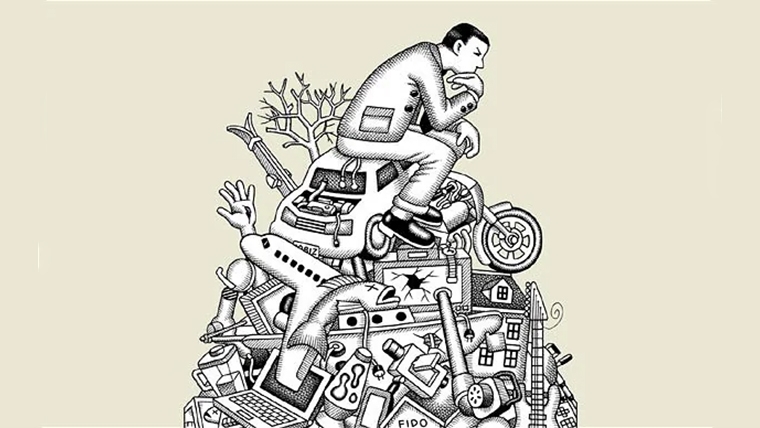
One of the questions I like to ask clients is, "What would be enough?" I’m interested in their answer as it’s also a question I often ask myself and I seem to give myself a different answer depending on what else is going on in my life.
Not enough to survive. Not enough to pay the mortgage or cover the groceries. I mean enough to feel financially comfortable. Enough to stop worrying. Enough to feel like you've made it.
It's a surprisingly difficult question to answer.
Some people immediately give me a number, although if I ask them the same question a year later, that number has often grown. Others laugh and admit they've never really thought about it. They've simply been working towards "more" for as long as they can remember.
There's nothing wrong with wanting to improve your financial position. Most of us want to earn more, save more and create opportunities for ourselves and our families. Ambition isn't the problem.
The interesting question is why reaching one goal so often creates another.
Have you ever noticed how quickly something new becomes normal?
I have talked in previous articles about the pay rise you had worked hard for. At first, it felt wonderful. There was relief, excitement and maybe even a sense that life would feel easier from now on. Then, before long, your spending adjusted, your expectations shifted and the pay rise simply became your new normal.
The same thing can happen with a new home, a new car or even growing a successful business. The excitement fades surprisingly quickly, and our attention moves to whatever comes next.
I feel this happening to me, I’ve been living in my lovely new home for just over a year now, and I’m starting to look around at ‘what’s next’? What else can I do? Then I find myself scrolling through Pinterest looking at outdoor baths….
Psychologists sometimes refer to this as hedonic adaptation. We adapt remarkably well to changes in our circumstances, whether they're positive or negative. It's one of the reasons why external achievements don't always produce the lasting happiness we expect.
Many years ago, psychologist Erich Fromm wrote about what he called two different ways of living. One centred on "having" and the other on "being." His point wasn't that owning things is bad. Rather, he questioned what happens when our sense of identity becomes tied to what we own instead of who we are.
I think about that idea quite often in my work.
As an accountant, people usually expect me to spend my days talking about numbers. The reality is that I spend a great deal of time talking about people. Numbers tell me what has happened financially, but they rarely explain why.
Why does someone keep upgrading their lifestyle even though they're constantly stressed about money?
Why does another person continue working long after they could comfortably retire?
Why does someone feel like they've failed simply because their business didn't work out the way they'd hoped?
The answers are almost never found in a spreadsheet.
They're found in the beliefs people hold about themselves.
Over the years I've noticed that money quietly becomes part of our identity if we're not careful. We start believing that earning more means we're more successful, owning more means we're doing better, and losing money somehow means we've lost part of ourselves.
That's a heavy burden to place on something that was only ever meant to be a tool.
I see this particularly when people experience major life changes. A relationship ends. A business is sold. Someone retires after decades of working. Financially, we're often dealing with assets, income and budgets. Emotionally, people are asking much bigger questions.
Who am I now?
What does success look like from here?
What matters most?
Those questions can't be answered by looking at a bank balance.
One of the most difficult conversations I have with clients is the one where they are having to close their business down as it just isn’t viable anymore. Their sense of identity takes a major hit as they grapple with not only the Who am I now question, but also the sense of failure, all their effort and energy has been ‘wasted’.
Interestingly, some of the happiest clients I've worked with aren't necessarily the wealthiest. They're the ones who know what money is for. They've taken the time to think about the life they want to create, and their financial decisions support that life instead of defining it.
That doesn't mean they don't enjoy nice things. Of course they do. They travel, renovate their homes, buy things they value and celebrate their achievements. The difference is that those things add to their lives rather than becoming the measure of their worth.
There's an important distinction there.
Money can buy comfort, convenience and opportunity. Those are wonderful things.
What it can't buy is a lasting sense that you're enough.
That comes from somewhere else.
Perhaps that's why I like asking clients what "enough" looks like. It's not really a question about money at all. It's a question about values. Once people become clear about what matters most to them, financial decisions often become much simpler.
The goal isn't to stop wanting nice things or to pretend money doesn't matter. It does matter. Financial security gives us choices, reduces stress and creates opportunities for ourselves and the people we care about.
But maybe the goal is to stop expecting the next purchase, the next pay rise or the next milestone to finally make us feel complete.
Because if we're always waiting for "more" to bring contentment, we may never notice that we already have enough to start building a life we genuinely enjoy.
As accountants, we're trained to measure financial progress, and that's important. But after all these years, I've come to believe one of the most valuable measures isn't found on a balance sheet at all.
It's whether your money is helping you build the life you want, or whether you're spending your life chasing a number that keeps moving.
*Lynda Moore is a Money Mentalist coach and New Zealand’s only certified New Money Story® mentor. Lynda helps you understand why you do the things you do with your money, when we all know we should spend less than we earn. You can contact her here.
We welcome your comments below. If you are not already registered, please register to comment
Remember we welcome robust, respectful and insightful debate. We don't welcome abusive or defamatory comments and will de-register those repeatedly making such comments. Our current comment policy is here.