

Deposit pricing, as well as loan pricing, is a major driver of bank margins, the Reserve Bank (RBNZ) says, meaning with deposits accounting for 64% of bank funding the rates banks pay depositors can materially affect their overall funding costs.
In its latest Financial Stability Report the RBNZ points out the difference between a deposit rate and the equivalent wholesale rate is the deposit spread. So when a bank pays less for a deposit than it would for wholesale funding, this adds to its net interest income.
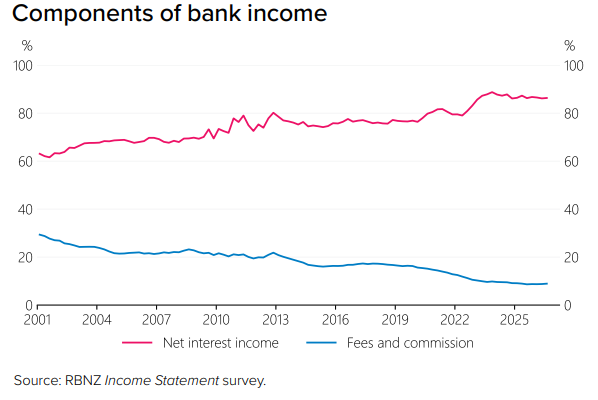
Net interest income is the largest source of income for banks and the difference between what banks earn from lending and pay for funding such as deposits and bonds. Net interest margins (NIMs) measure this difference relative to banks’ interest-earning assets.
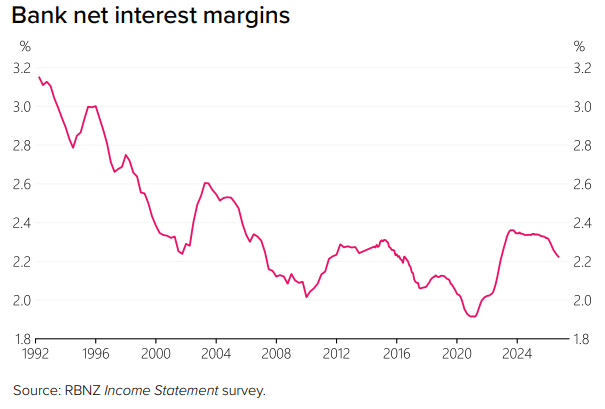
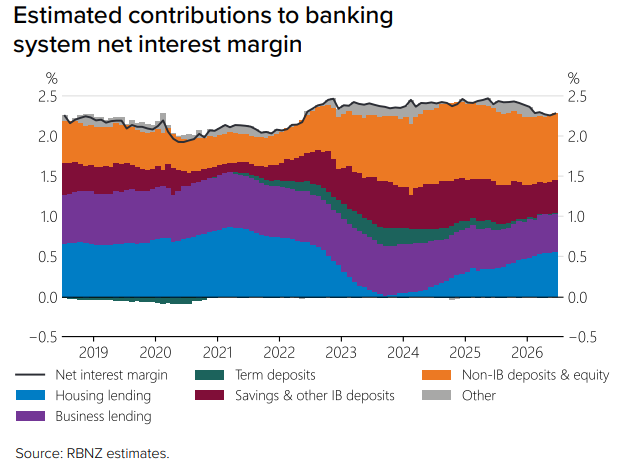
“The higher interest rate environment has supported NIMs over the past few years. There has been an increased contribution to NIMs from funding that pays little or no interest, including transaction deposits and equity. Over the past year, margins have narrowed somewhat,” the RBNZ said in Tuesday's Financial Stability Report.
Data from the RBNZ shows bank net interest margins are currently sitting around 2.2%, down from 2.4% a couple of years ago.
The drivers of this decline are not yet clear, the RBNZ said, although easing mortgage margins, reduced support from low-cost funding and the lagged impact of the Official Cash Rate (OCR) easing cycle might be contributing.
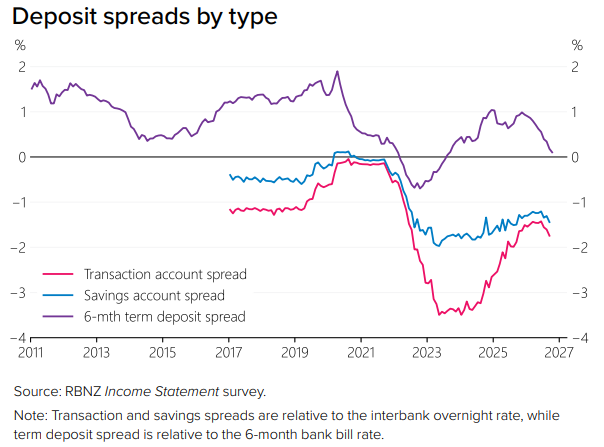
The RBNZ notes that deposit costs for banks vary by account type.
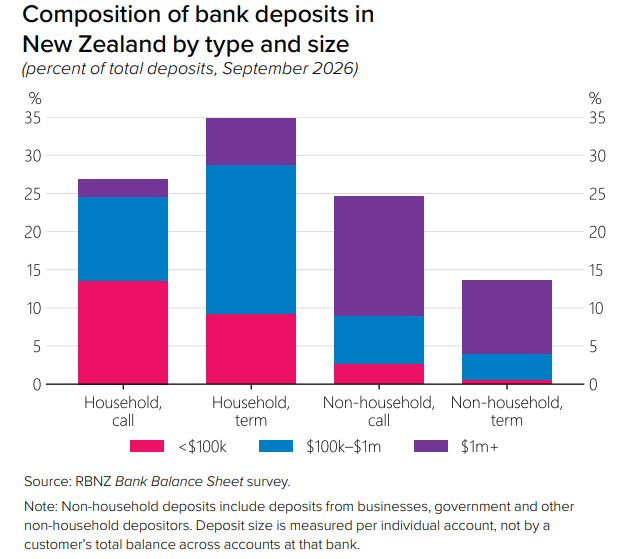
"Term deposits, which account for around half of deposits, are generally the most expensive [for banks] and at times can cost similar amounts to long-term wholesale funding. Savings accounts are usually cheaper, while transaction accounts often pay little or no interest and are therefore the lowest-cost form of deposit funding."
Changes in interest margins can materially affect overall bank profits and the RBNZ describes NIMs as an “important driver” of bank earnings, but not the same as overall profitability, as that also reflects operating costs, credit losses and other income.
The RBNZ said the recent easing in banks’ margins isn’t a financial stability concern for the central bank, given the profitability of NZ’s largest banks “and their strong capital positions.”
What banks pay savers can materially affect their overall funding costs
NIMs are influenced by lending and deposit pricing, which the RBNZ defines as the mix of lending and funding and interest rate hedging. Deposit pricing in particular is a big driver of NIMs, with the RBNZ describing deposits as “the cornerstone” of the NZ financial system’s funding base.
For registered banks, deposits account for 64% of funding, according to the RBNZ, while for non-bank deposit takers (NBDTs), that share rises to around 85%. It means the rates banks pay depositors can materially affect their overall funding costs.
“Banks noted in our liaison discussions that some savings rates were near practical lower limits close to zero, constraining their ability to pass through earlier OCR cuts. Further pressure on margins could come from lower interest rates, competition for deposits and innovation that makes it easier for customers to compare products and switch providers,” the RBNZ said.
“When a bank pays less for a deposit than it would for wholesale funding, this adds to its net interest income. Deposit costs vary by account type,” the RBNZ said.
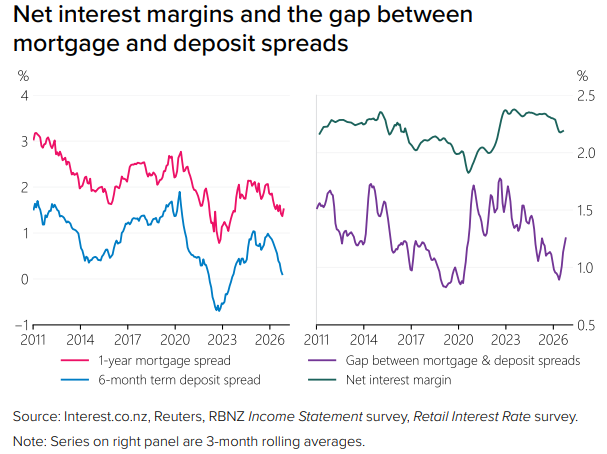
According to the report, competition for new mortgages over the last couple of years has led to banks reducing mortgage rates relative to wholesale rates, meaning for much of this period, mortgage spreads fell by more than deposit spreads, narrowing the gap between them.
“However, over recent months, this gap has begun to widen again as deposit spreads have fallen further. The earlier narrowing in the gap between lending and deposit spreads has put downward pressure on NIMs as borrowers and depositors reprice onto new interest rates,” the RBNZ said.
'Financial stability does not depend on any particular level of NIM'
NIMs are also used as a metric by the RBNZ to assess the intensity of banking competition. The latest Financial Stability Report found open banking and new digital services could put pressure on bank margins in the future by making it easier for customers to compare products, switch providers and move deposits.
“Lower margins resulting from stronger competition and greater efficiency would benefit customers and would not, in themselves, be a financial stability concern. Financial stability does not depend on any particular level of NIM. What matters is that banks remain sufficiently profitable and resilient to absorb losses, build capital and maintain lending during periods of stress. Given current levels of bank profitability and their strong capital positions, lower margins would not necessarily compromise financial stability,” the RBNZ said.
The RBNZ notes that although an increasing number of New Zealanders are engaging with open banking, uptake remains limited.
“Payments initiated through open banking remain small at $165 million in September 2026. Usage should continue to grow with broader customer awareness and an increasing number of accredited requestors and use cases.”
In September, open banking data from the Ministry of Business, Innovation and Employment shows over 23.4 million requests to securely share banking data were processed. More than 604,000 open banking payment requests were processed in September, an increase of 47,719 payment requests (8.6% growth) worth over $6.7 million (4.2% growth) since August.
We welcome your comments below. If you are not already registered, please register to comment
Remember we welcome robust, respectful and insightful debate. We don't welcome abusive or defamatory comments and will de-register those repeatedly making such comments. Our current comment policy is here.