
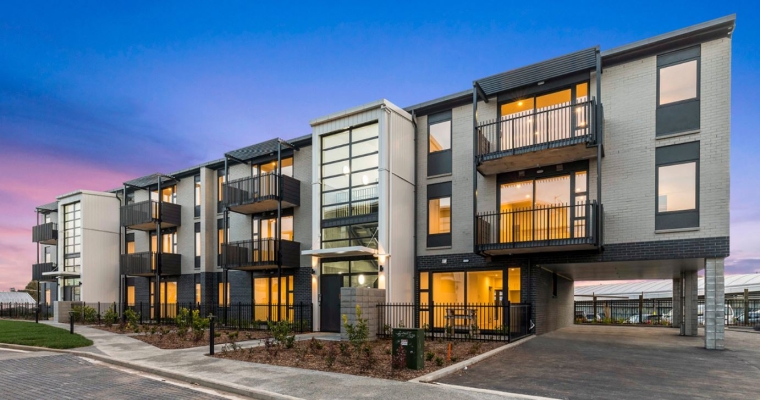
There are $26 million of unsold KiwiBuild houses on the Government's books, according to figures provided to interest.co.nz by Kāinga Ora.
The Crown has spent $59 million buying 90 KiwiBuild houses it contracted to be built on the basis it would buy them upfront, and 47 houses it had to buy because they weren’t selling. It has received $33 million for on-selling 72 of these houses.
So the Crown is currently $26 million out of pocket. This will change as houses are bought and sold.
The Government had, from the launch of KiwiBuild, allocated $2 billion towards the programme, with the idea that money spent would be recycled as houses sold and the proceeds were reinvested.
KiwiBuild has received a lot of flak - how is it actually going?
According to Kāinga Ora, the Government has agreed to underwrite a total of 2177 houses via the KiwiBuild programme.
The bulk of these are houses that have been built/will be built by developers that are guaranteed by the Government.
As per the above, the Government has also committed to purchasing some of the houses from developers upfront.
- 1 in 5 houses to end up on the open market
However 433 of the 2177 houses will have the KiwiBuild brand removed from them and will be sold on the open market, further to the KiwiBuild reset announced in September 2019.
Housing Minister Megan Woods acknowledged at the time the Government made a mistake agreeing to underwrite these houses in Wanaka, Te Kauwhata (Waikato) and Canterbury, as demand in these areas was lacking.
A Kāinga Ora spokesperson said the Government could end up buying these houses if they aren’t expected to sell “depending on the nature of the contract and the prevailing market appetite for the homes at the time of completion”. Only 83 of these houses have been completed.
In addition to these houses in Wanaka, Te Kauwhata and Canterbury, developers have removed the KiwiBuild brand from 11 houses and sold these on the open market.
So one in five houses that were meant to be “KiwiBuild houses”, ring-fenced for first-home-buyers, will be sold on the open market.
- Total of 406 houses sold
While the Government has agreed to underwrite 2177 houses, 406 houses have been sold (as at December 31, 2019). A further 728 are under construction.
It is difficult to say how many low-cost houses would’ve been built if the Government hadn’t removed some of the risk for developers via KiwiBuild.
How has the KiwiBuild reset changed the programme?
- Sweeteners for developers reduced
Changes made to KiwiBuild following the September reset have seen the Crown’s exposure to risk reduced. More of the risk now sits with developers.
While the level of underwrite provided by the Crown will differ between developments depending on the contracts negotiated, the Government is underwriting a smaller portion of individual KiwiBuild houses.
So rather than telling a developer it will pay 90% of the market value of a KiwiBuild house that doesn’t sell for example, it might only agree to pay say 70%.
It is also only agreeing to underwrite smaller portions of developments - not entire developments.
- Pool of potential buyers widened
But to developers’ benefits, the eligibility criteria for prospective buyers of KiwiBuild houses has been loosened to boost demand.
For example, it’s now easier for people who have owned houses in the past to qualify to buy KiwiBuild houses, and owners of one-bedroom studio apartments only need to live in their properties for a minimum of a year (rather than three years) before being allowed to sell them.
What do developers think of the changes?
- Underwrite swung too far the other way
NZ Living managing director, Shane Brealey, told interest.co.nz the Government over-reacted with its changes to the underwrite.
He said the Government had been “over- zealous” and has now swung too far the other way by not agreeing to underwrite more than 50% to 60% of a development.
Brealey acknowledged this spreads the KiwiBuild dollar further, prevents developers from taking short-cuts and puts the pressure on them to ensure they have a solid product that’ll be appealing on the open market.
Yet he wanted the Government to be a little more flexible around the portion of a development it underwrites, based on its merits.
He said the benefit of the underwrite for developers is that it makes it easier for them to get loans to get their projects off the ground. If the Government agrees to underwrite fewer houses, their equity is reduced, so they might need more presales.
Legacy Property managing director, Gary Gordon, made the same point regarding finance.
- New rule could further expose taxpayers
Gordon also noted the reset has seen the Government say a developer can only sell KiwiBuild houses on the open market if less than 15% of the KiwiBuild houses in their development aren’t selling. If the houses they’re struggling to sell make up more than 15% of their KiwiBuild stock, they need Cabinet approval to sell these houses on the open market.
He was concerned this new rule would force developers to call up the government underwrite when a more desirable option for both them and taxpayers would be for the unsold KiwiBuild houses to be sold by the developer on the open market.
- Demand-side changes welcomed
Gordon was pleased the reset saw the eligibility criteria for prospective KiwiBuild buyers loosened, but wanted the Government to go further and scrap requirements for the length of time buyers need to have lived in the house before reselling them.
He pointed out the restrictions on KiwiBuild houses imply buyers are receiving some sort of discount, when this isn’t the case.
If they could buy a similar property in the same development without ticking all the KiwiBuild boxes, they’d opt for this.
- Mixed developments desirable
Equinox Group development director, Elliot Knight, said his firm isn’t putting KiwiBuild applications through as “it all gets a bit too hard” and it isn’t a priority for the business.
Nonetheless, he believed KiwiBuild was achieving its goal of encouraging developers to build smaller, lower-cost houses.
He described the tweaked underwrite as being more “traditional” and was of the view that even though the sweetener from the government had been watered down, it was an incentive nonetheless.
Knight also pointed out that it was desirable for developments to have a mix of houses - not just KiwiBuild houses - “otherwise it looks like Coronation Street”. A range of houses also prevents a development from being stigmatised as “cheap”.
*This article was first published in our email for paying subscribers. See here for more details and how to subscribe.
We welcome your comments below. If you are not already registered, please register to comment
Remember we welcome robust, respectful and insightful debate. We don't welcome abusive or defamatory comments and will de-register those repeatedly making such comments. Our current comment policy is here.