
The introduction of temporary rent controls isn’t out of the question.
It’s been revealed the Government asked officials for advice on implementing temporary rent controls if measures it subsequently took to make residential property investors pay more tax sent rents through the roof.
A just-released aide-memoire prepared by the Ministry of Housing and Urban Development for the Housing Minister in December 2020, notes the Government asked for advice on extending the bright-line test, limiting interest-only mortgages, removing deductibility of mortgage interest and “temporary” rent controls.
The Government last month announced the bright-line test would be extended from five to 10 years and property investors would no longer be able to deduct interest as an expense when paying tax.
The Reserve Bank is due to report back to the Government in late-May on the option of restricting banks from issuing interest-only mortgages.
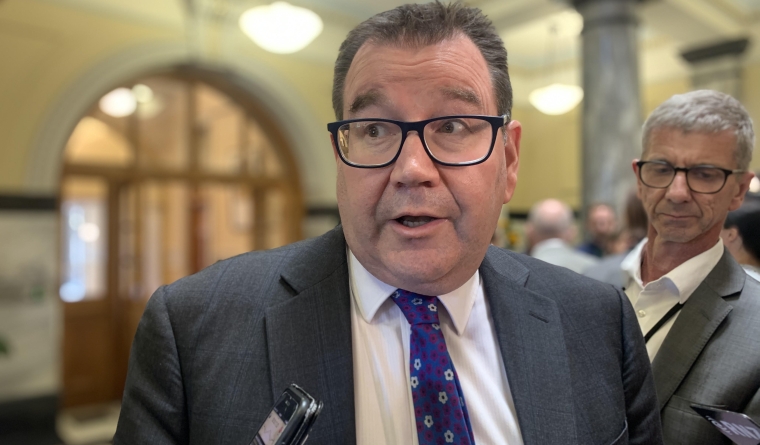
Facing backlash from property investors, Finance Minister Grant Robertson last month warned: “We will be monitoring the impact on the rental market closely and we will take action if necessary.”
The document from the Ministry suggests Robertson really meant what he said, as temporary rent controls were on the table.
The Ministry referred to Treasury advice that noted rent control measures "could be drafted to offset or limit negative impacts of adjustments to tax policy changes on rent prices".
"If the government introduces a temporary rent control then this could incentivise more investors to sell, but international evidence shows that those that retain rental properties will try to find other ways to increase rental income and/or increase rents up as soon as the period of rent control ends," the Ministry said.
Ministry recommended currently-owned rentals be exempt from changes
The Ministry raised concerns over how taxing property investors more could increase rents and cause rental “churn”.
To curb this, it recommended the removal of interest deductibility should not be applied to currently-owned rental properties.
The Government didn’t follow this advice. Rather it opted to propose the change be phased in over four years. The intricacies of the new rule are still being consulted on and are expected to be finalised by October.
The Ministry also recommended new builds be exempt. The Government followed this advice. Although the definition of a “new build” is yet to be clarified.
The Ministry also advised currently-owned rentals and new builds be exempt from any restrictions placed on the issuance of interest-only mortgages.
A number of investors likely to feel the pinch
Ministry analysis suggested a notable portion of investors might struggle to absorb the costs of the policy changes, and thus react by hiking rents or selling their properties.
These could include investors who have entered the market recently. The Ministry said about 20% of current private rentals were purchased in the past two years.
Around half of these buyers have fewer than four properties.
The Ministry said cost pressures would also be felt more by the 37% of investors in tax loss positions. The average loss is $9000.
The Ministry maintained it was unlikely investors could pass all their increased costs onto renters. It said stressed renters would simply crowd houses to share costs, and better-off renters would buy.
In this sense, there would be limits to rent hikes.
Only some FHBs could afford to buy houses from investors
The Ministry made the point the Government’s aim to effectively push some investors out of the market to make way for first-home buyers has limitations.
It said a “generous” estimate was that up to 25% of renters could afford mortgage repayments, and thus buy the houses sold by investors. But “many” in this cohort may not be able to save for a deposit.
What's more, the Ministry said the situation is unlikely to change even if prices fell by 10-20%.
As for how this push for property transfers from investors to first-home buyers would affect prices, the Ministry said: “We won’t see a significant fall in prices if demand from investors with higher levels of equity and first-home buyers (with deposits) remains strong.
“The underlying demand drivers for these purchasers - low interest rates and high rents are likely to remain unchanged.”
Examples
The Ministry provided the following examples around how changes could affect a new investor:
a. Denial of interest deduction: assuming a mortgage of $500,000, which is around 70% of the national median sale price, at an interest rate of 2.5% would have interest costs of $12,500 per annum. Denying all interest deductions would add a cost of $4,125 at a marginal tax rate of 33%.
b. Limiting interest-only mortgage: assuming the same mortgage, moving from an interest only mortgage would add principal repayments of $11,200 per annum. By comparison the median rent for new bonds lodged over the last 12 months was $470 per week, or $24,440 per annum.
Disclaimer - supply-side measures weren't discussed in the paper
The Ministry was concerned about the Government pulling levers on the demand-side when New Zealand has a housing shortage.
However the Government in March also announced it would provide councils with grants for infrastructure to support the building of more houses.
This $3.8 billion Housing Acceleration Fund was not discussed in the aide-memoire.
We welcome your comments below. If you are not already registered, please register to comment
Remember we welcome robust, respectful and insightful debate. We don't welcome abusive or defamatory comments and will de-register those repeatedly making such comments. Our current comment policy is here.