
The rural property market is in the doldrums with the number of farms and lifestyle block sales both well down on a year ago.
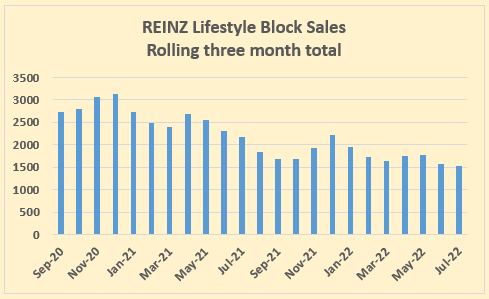
According to the latest rural sales figures from the Real Estate Institute of NZ, just 1518 lifestyle blocks were sold in the three months to the end of July, down 30% compared to the same period of last year.
The decline in sales is no monthly aberration - lifestyle block sales numbers have been steadily declining since late 2020.
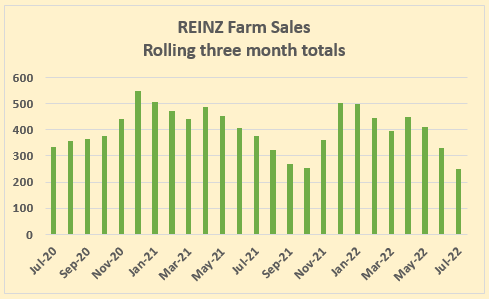
Farm sales numbers have shown a similar trend, with just 249 farms selling in the three months to the end of July, down 34%.
The slump in sales has affected all farm types, with the sale of horticultural properties in the three months to July down 55%, while sales of dairy farm were down 39%, grazing farm sales were down 35% and finishing farms down 18%.
The graphs below show the trends in both farm and lifestyle block sales. The slump in sales appears to have affected the prices being achieved for lifestyle blocks more than farms.
The rolling three month median price for lifestyle blocks was $1,015,500 for the three months to July, down by $72,000 compared to its peak $1,087,500 achieved in the three months to April.
The median price for bare land lifestyle blocks was $455,000 over the three months to July, down $55,000 from its April peak, while the median price for farmlet lifestyle properties was $1.2 million over the three months to July, down by $100,000 from it's peak at the start of this year.
However farm prices have been more resilient, with the median price per hectare for all farms sold in the three months to July coming in at $27,220/ha, barely changed from $27,180/ha in the same period of last year.
The REINZ All Farm Price Index, which adjusts for differences in the mix of properties sold by size, type and location, was up 13.9% in July this year compared to July last year, suggesting prices are doing better than the price per hectare figures suggest.
The REINZ Dairy farm Price Index, which adjusts for differences in the mix of sales by size and location, was up 1.8% compared to July last year.
"The combination of the wettest July for many years and the mid-winter temperatures clearly impacted on the enthusiasm within the rural sector to transact, and when the external factors of inflation, rampant cost escalation and increasing interest rates are added to the mix, the outcome was somewhat inevitable," REINZ rural spokesman Brian Peacocke said.
The comment stream on this story is now closed.
We welcome your comments below. If you are not already registered, please register to comment
Remember we welcome robust, respectful and insightful debate. We don't welcome abusive or defamatory comments and will de-register those repeatedly making such comments. Our current comment policy is here.