

Home loan affordability worsened in February to near its worst levels in two years after the national median house price surged to near a record high.
A slight fall in some interest rates and a marginal rise in incomes was not enough to offset the rise in house prices.
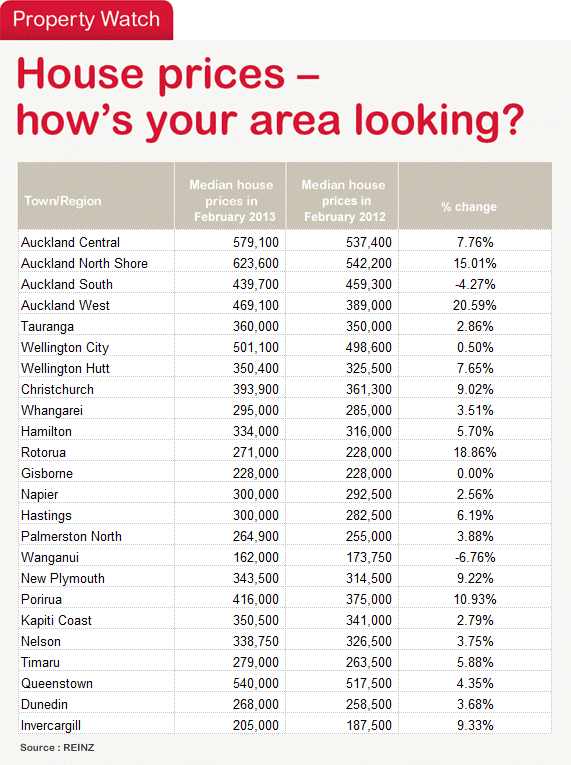
New Zealand’s median house price rose to NZ$382,000 in February from NZ$370,000 in January and was just below a record high of NZ$389,000 set in December.
A surge in house prices in Auckland and Christchurch over the last year because of a shortage of supply is now beginning to leach out into those provincial areas where economic activity is stronger and emigration is slower. A relaxation of lending standards and more heated competition between banks to lend at record low interest rates has also helped boost housing market activity.
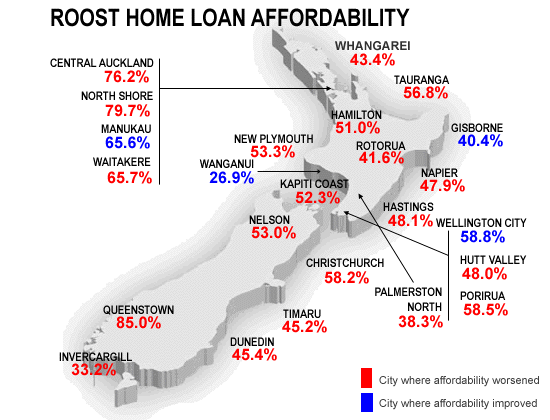
Nationally, affordability worsened by 1.6 percentage points in February from January, which meant it took 54.9% of a single median income after tax to afford an 80% mortgage on a median house in February, according to the Roost home loan affordability report released today.
“Market activity heated up again through the long hot summer. First home buyers and investors have been busy working with their brokers to get the best deal out of the intense competition between the banks,” said Colleen Dennehy, a spokeswoman for Roost, which sponsors the Home Loan Affordability report series from Interest.co.nz.
Affordability worsened in most of Auckland, Northland, Wellington, Rotorua and Porirua because of big rises in median house prices. Affordability only improved in South Auckland and Wanganui where median house prices fell.
Average advertised floating mortgage rates were flat in February, while advertised six month and 1 year mortgage rates have fallen over the last year and were down slightly in February.
For first home buyers – which in this Roost index are defined as a 25-29 year old who buys a first quartile home – there was also a deterioration, particularly in the biggest cities. However, apart from Auckland, Queenstown and Canterbury, it takes around 20-40% of after tax pay to afford an 80% mortgage on a lower quartile priced house. That percentage rises however to 66%, 67% and 47% respectively in those three most expensive areas.
Any level over 40% is considered unaffordable, whereas any level closer to 30% has coincided with increased buyer demand in the past.
For working households, the situation is similar although bringing two incomes to the job of paying for a mortgage makes life considerably easier. A household with two incomes would typically have had to use 36.2% of their after tax pay in February to service the mortgage on a median priced house. This is up from 35.1% the previous month.
On this basis, most
For households in the 25-29 age group (which is assumed to have no children), affordability also improved, with 22.3% of after tax income in households with two incomes required to service the debt, up from 21.8% the previous month.
Any level over 30% is considered unaffordable in the longer term for such a household, while any level closer to 20% is seen as attractive and coinciding with strong demand.
First home buyer household affordability is measured by calculating the proportion of after tax pay needed by two young median income earners to service an 80% home loan on a first quartile priced house.
-----------------------------------------------------------------------------------------------
Mortgage choices involve making a significant financial decision so it often pays to get professional advice. A Roost mortgage broker can be contacted by following this link »
-----------------------------------------------------------------------------------------------
No chart with that title exists.
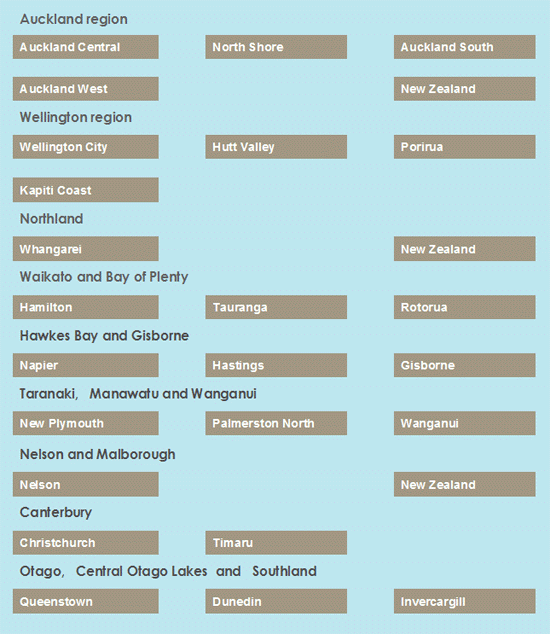
Full regional reports are available below:
We welcome your comments below. If you are not already registered, please register to comment
Remember we welcome robust, respectful and insightful debate. We don't welcome abusive or defamatory comments and will de-register those repeatedly making such comments. Our current comment policy is here.