
The Labour Government has used some of an improved budget position to extend its 25 cents/litre petrol tax cut by another two months to the end of March, but says this is likely to be the final extension as it looks to reduce its overall budget deficits and debt to take pressure off inflation in an election year.
The petrol levy cuts were initially launched as a temporary measure for three months in March this year after a jump in the oil price in the wake of Russia's invasion of Ukraine forced prices well over $3/litre. But the fuel tax cuts have been extended twice since then because of intense cost-of-living pressures and a backdrop of the Labour Government's falling political popularity.
However, oil prices have fallen in recent weeks to below pre-war levels and a 16% bounce in the NZ dollar in the last two months has dragged petrol prices back down towards $2 per litre. That highlighted the fiscal cost of the cuts, which have ramped up to a total cost of over $1b because of two extensions -- one in May and one in July.
Diesel RUCs cut ends earlier
Road User Charges (RUCs) for diesel vehicle drivers on public roads were also cut by the equivalent of 25c/litre, but those cuts will expire as scheduled on January 31. However, drivers can use their RUCs after January 31, so it's expected many will stock up on extra RUCs that can be used in subsequent months. Half-price public transport fares were extended by two months to the end of March and made permanent for about one million people who have community services cards.
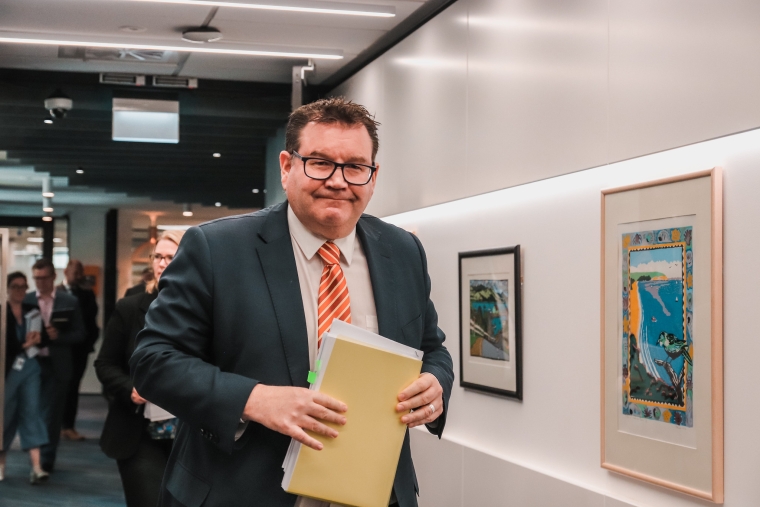
Finance Minister Grant Robertson and Transport Minister Michael Wood made the announcement as Treasury published its Half Yearly Economic and Fiscal Update and released the 2023 Budget Policy Statement. Robertson emphasised the Government had chosen not to increase its operating allowances for new Government operating spending because he wanted to keep the pressure off inflation.
The HYEFU forecast the Budget Operating Balance before Gains and Losses would shrink this year and be close to balanced in the 2023/24 financial year, during which the election will be held. Net debt was forecast to fall from 21.4% of GDP in 2023/24 to 14.1% of GDP by 2026/27.
“We are continuing to manage the Government finances carefully by reprioritising savings, setting aside money for future investments while getting the books back into surplus,” Robertson said.
“Savings identified from unspent funding has taken pressure off debt, and allowed some of it to be redirected to important priorities, like the money to pay for the fuel tax cut, half price public transport and Cost of Living Payment," he said.
“Getting the books back in the black will help to keep a lid on debt and take inflation pressure out of the economy, giving businesses more space to invest."
Treasury sees recession
Elsewhere, Treasury forecast a three-quarter recession next year that cuts GDP 0.8% and a rise in unemployment to 5.5% by mid 2024.
The Government’s books are strengthened by higher nominal GDP growth boosting taxes, which the Government has used to get back to surplus quicker and take the pressure off inflation.
We welcome your comments below. If you are not already registered, please register to comment
Remember we welcome robust, respectful and insightful debate. We don't welcome abusive or defamatory comments and will de-register those repeatedly making such comments. Our current comment policy is here.