
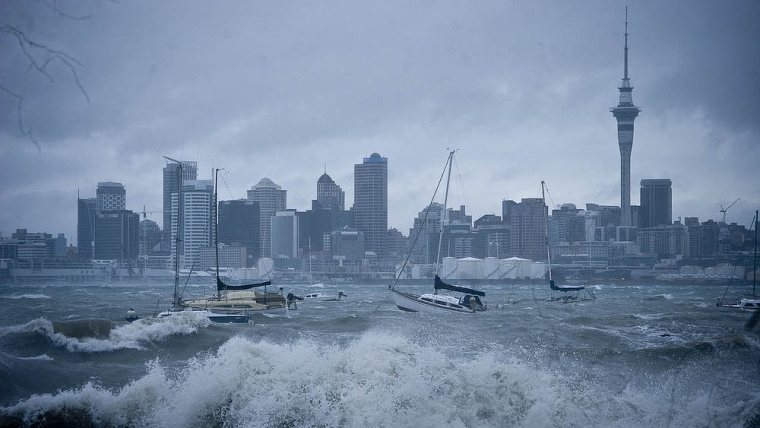
Finance Minister Grant Robertson has called for some "challenging conversations" about where and how to rebuild billions of dollars worth of infrastructure destroyed by Cyclone Gabrielle, along with who should pay for it and what form it should take in a warming climate where storms and droughts are more frequent and intense.
Robertson described climate change as any finance minister's "defining dynamic" now that 1-in-100-year climate events were more regular.
Speaking at length for the first time since Cyclone Gabrielle killed at least five people, destroyed roads and bridges, made 10,000 homeless and cut off power to nearly quarter of million homes, he said the Government would use its balance sheet to borrow to help pay for the billions of dollars of repairing and rebuilding in the devastated areas of Hawke's Bay, Gisborne, the Coromandel and Northland.
But he said the increasing frequency and intensity of storms and droughts because of climate change was changing the landscape for the Crown, councils, businesses, insurers and bankers alike.
Robertson told an Auckland Chamber of Commerce lunch that climate change was now the “defining dynamic” and “vital” for him, and it would be for future Ministers of Finance.
“Whether they like it or not, it will be the defining dynamic for every Minister of Finance who delivers this speech in the coming decades," Robertson said.
"Climate change is here. It is affecting the economic security of our country, our communities and our families, and it's not going away anytime soon," he said.
"There is no point in talking about one in one hundred year events any more. We will be dealing with them regularly."
Managed retreat and not just building back in the same way and place
Robertson said there would have to be challenging conversations "about where we live, what infrastructure we build, how do we mitigate and put in place resilience measures. And who pays when it goes wrong. And two words that you will hear a lot more over the coming months and years. Managed retreat."
"These conversations are extremely challenging. They're about our way of life. The worst thing we could do, in response to the devastation we've seen over the last couple of weeks, is simply rebuild straightaway without thought about whether or not that is the right thing to do. That's enormously challenging and difficult."
Help for the uninsured
Robertson said he expected the Government would have to help those who had not insured their homes or the contents of their homes.
He said it was now time to take stock of the infrastructure deficit and dealing with climate change.
"I think we've got to look at that broader and bolder. And for me, that is about a long term infrastructure pipeline that is agreed across our society, and that we fund it by making use of the government's balance sheet. And by working with the private sector, with iwi, with local government, to actually have the level of investment New Zealand needs."
We welcome your comments below. If you are not already registered, please register to comment
Remember we welcome robust, respectful and insightful debate. We don't welcome abusive or defamatory comments and will de-register those repeatedly making such comments. Our current comment policy is here.