
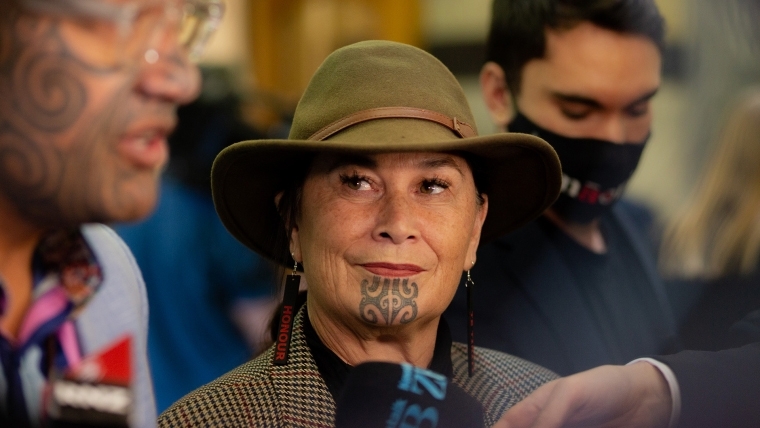
Te Pati Maori says its people should get the pension seven to 10 years before the rest of the population.
It says this would be fair since Maori life expectancy is on average seven to 10 years less than the average for other New Zealanders.
The party leaders say they would make this point very strongly during any coalition talks after the coming election.
Recent polling suggests Te Pati Maori could have a lot of leverage in Government-forming negotiations after the vote.
This issue has arisen after the two main parties renewed their traditional election year wrangling over the age of eligibility for NZ Super.
Labour has pledged to retain the age threshold for NZ Super at 65 for the third election in a row,. National has pledged to gradually raise it, also for the third election in a row.
But Te Pati Maori says the current system is unfair already, and raising the age would make it even worse. Its co-leader Debbie Ngarewa Packer says the important aim is to help her people live in dignity.
"At the end of the day our people deserve to live well in their own land."
Her fellow co-leader, Rawiri Waititi says Maori die seven to 10 years earlier than everyone else, on average.
"So we should be looking at a superannuation rate which is more equitable for Maori, until we can pull up out mortality rates (to the average).
"I am not saying we stay there for ever, let's follow the signs."
Waititi says his party would want a differential even if the age for New Zealand as a whole is kept at 65, which would happen if Labour prevails in the coming election. His party would be even more concerned if National's plan to gradually raise the threshold made any progress.
"We are absolutely opposed to any increase in the superannuation age generally - obviously for Maori it has to reflect our mortality rates - but generally we are opposed to the threshold going up past 65," says Ngarewa Packer.
Waititi says his party's preference would see the age of eligibility for Maori going back to 58, or even 55, especially since many Maori work in manual jobs which take a toll on the body.
"Some of our people don't even make it to 60."
The current debate is based on the affordability of superannuation. National argues it is unsustainable because it will prove too expensive as retiring baby boomers swell the ranks of superannuitants relative to the rest of the population.
Labour insists it is affordable as long as the Government undertakes proper planning.
Much of this is based on the contribution made by the NZ Super Fund, sometimes called the Cullen Fund. This stands at present at $62.4 billion. The most recent budget puts the cost of Super for one year at $21.6 billion. Most people live 15 to 19 years after reaching 65.
We welcome your comments below. If you are not already registered, please register to comment
Remember we welcome robust, respectful and insightful debate. We don't welcome abusive or defamatory comments and will de-register those repeatedly making such comments. Our current comment policy is here.