
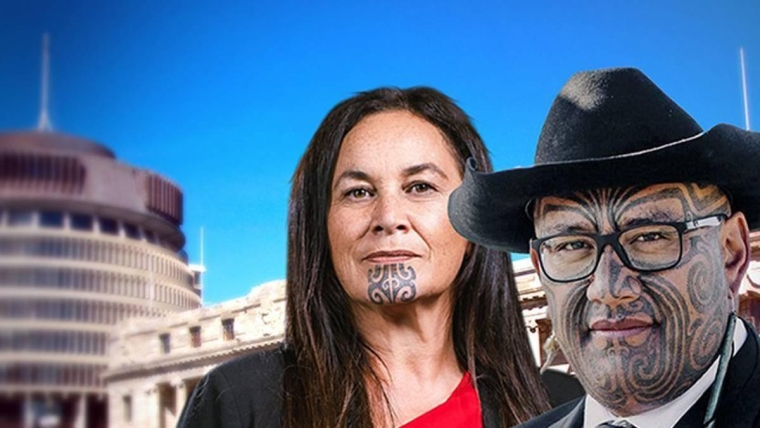
Te Pati Māori thinks huge changes are needed to fix a tax system that it says is broken and fuels extreme wealth inequality.
That includes removing all GST (goods and services tax) from food.
It says this is a regressive tax that hurts lower income whānau who end up spending nearly every cent they earn each week.
It adds removing GST on food would make a real difference for whānau who would in effect be able to buy seven week's food free when compared with current costs.
Te Pati Maori wants regulations passed to ensure that savings flow through to the consumer. The party also wants to shift the burden of tax from income to wealth.
"We are proposing to create a $30,000 tax free band which will help those on lower incomes," it says.
"The vast majority of whānau will receive a tax cut under our plan."
It says there would be 0% tax on income of $30,000 or less, 15% on income up to $60,000, 33% up to $90,000, 39% up to $180,000, 42% on income over $180,00 and 48% on income over $300,000.
There would also be a Net Wealth Tax. This would not apply to assets under $2 million. But the rate would be 2% for net wealth over $2 million, 4% for net wealth over $5 million and 8% for net wealth over $10 million.
The tax would be payable annually and would capture capital gains accrued. The rates exclude mortgages and other debts owing and would not affect most family homes or retirement savings.
It is expected to generate $23 billion annually.
The company tax rate would rise to 33%, generating $3.5 billion.
There would also be an Overseas Financial Transfer Tax, with the rate set at 2%. This is intended to capture profits from banks and multinational corporations like Facebook or Amazon.
To stop developers from “land-banking”, Te Pāti Māori would implement an Undeveloped Land Tax, which will be payable on all land that has not begun to be developed within four years of purchase.
It would be set at 33% of the increased land value, though Māori freehold and customary land would be exempt.
And, in a tilt at so-called "ghost houses", there would be an unoccupied dwelling tax. The party says when there is a housing crisis in Aotearoa, it is unacceptable for dwellings to be left empty for so long.
A similar scheme would be aimed at untenanted rentals.
In addition, there would be renewed attacks on tax evasion every year.
"The richest 10% own 50% of the wealth in this country, while the poorest half of the country own just 2%. Ordinary people are subsidising the lavish lifestyles of the rich. While the average person in Aotearoa is paying 20.2% in tax, the wealthy are only paying 9.4%," Te Pati Māori says.
We must shift the tax burden from the poor to the wealthy. It is time to eliminate poverty and restore fairness and economic justice in Aotearoa."
We welcome your comments below. If you are not already registered, please register to comment
Remember we welcome robust, respectful and insightful debate. We don't welcome abusive or defamatory comments and will de-register those repeatedly making such comments. Our current comment policy is here.