
A re-elected Labour Party would give the Climate Change Commission the authority to set limits and prices in the emissions trading scheme independent of the Government.
It comes after a TVNZ–Verian Poll found almost 70% of New Zealanders said they would be unwilling to pay higher petrol and electricity prices to stop climate change.
The emissions trading scheme effectively acts as a carbon tax. It makes most businesses buy credits which permit them to release greenhouse gasses into the atmosphere.
Those businesses pass on those costs to consumers in the form of higher prices.
Consumers are indirectly paying this tax when they buy petrol at the pump, milk in the supermarket, or use energy generated in a coal fired power plant.
When TVNZ showed the poll results to Grant Robertson and Nicola Willis, during a televised debate, both finance spokespeople said they were still committed to lifting the carbon tax.
“The reality is that there will be a higher carbon price whether a Labour or a National government is re-elected,” Willis said.
National has planned to use the revenue earned from the emission trading scheme to partly fund its tax cuts and therefore needs the price to remain at a reasonable level.
Robertson said: “Yes, the ETS price will rise over time, absolutely, because it needs to.”
But in December 2022, the Labour cabinet was spooked by the prospect of lifting the carbon price during a cost-of-living crisis and rejected the Climate Commission recommendations.
This was the first in a series of events that collapsed the carbon price and resulted in three failed auctions.
A group of activist lawyers successfully sought a judicial review and forced Cabinet to remake the decision in line with the county’s climate commitments.
Now, Labour has decided the Climate Change Commission should be allowed to set the prices and amount of carbon credits made available in each auction, without Government input.
This is similar to how the Reserve Bank functions. Most central banks were made independent in the late 20th century after political interference got in the way of inflation control.
Lifting interest rates can be deeply unpopular with voters and so elected officials tend to be biased towards looser monetary policy. This can lead to inflation being left to run wild.
Having an independent central bank prevents politicians from meddling in monetary policy and allows interest rates to be lifted regardless of public sentiment.
This has occurred in New Zealand this year, with the RBNZ explicitly engineering a recession during an election year as a way to quell high inflation.
Some have suggested that elected officials will also need to delegate climate controls to an independent body, as the costs of containing global warming could be politically unpopular.
Both the Green Party and The Opportunities Party have been running on this policy, but Labour had not committed to it until the release of its Climate Manifesto on Monday.
The manifesto also promised to create a Minister for Just Transitions who would be responsible for helping communities adapt to a low-emissions world.
Labour has also committed to setting new climate targets that would aim for gross carbon reductions and not just rely on offsets to achieve net zero.
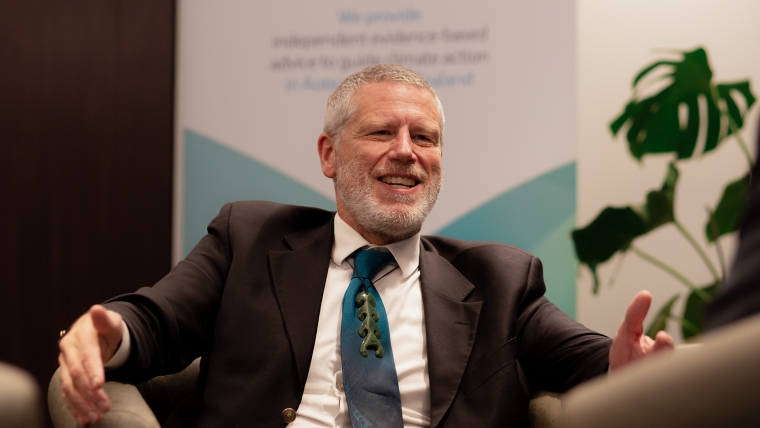
Climate Commission chair Rod Carr (pictured above) said New Zealand needed to ensure it was reducing emissions at their source as much as possible.
“Storing carbon should be focused on offsetting emissions from activities that are really hard to decarbonise,” he said in April, earlier this year.
We welcome your comments below. If you are not already registered, please register to comment
Remember we welcome robust, respectful and insightful debate. We don't welcome abusive or defamatory comments and will de-register those repeatedly making such comments. Our current comment policy is here.