
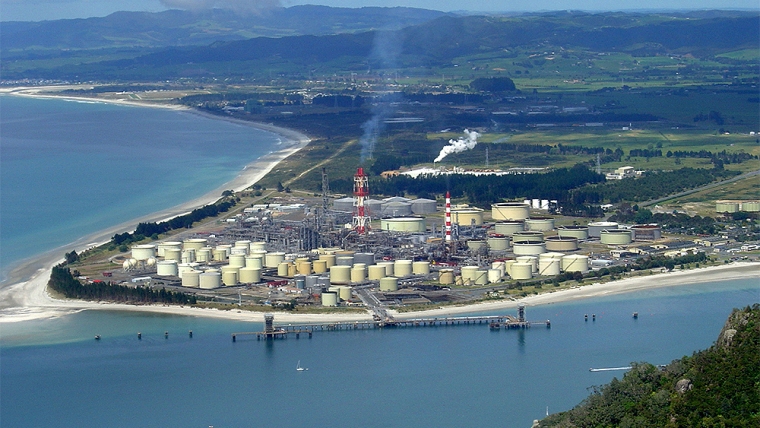
Regional Development Minister Shane Jones says the Government will consider creating a Special Economic Zone to support an energy precinct at the former Marsden Point oil refinery.
A Special Economic Zone (SEZ) is an area with different business and trade laws from the rest of the country, typically offering tax breaks, simplified regulations, and special infrastructure support to attract investment and boost economic growth.
Successful examples include Shenzhen, China, which transformed from a small fishing village into a global manufacturing hub, and Dubai’s Jebel Ali Free Zone, which helped establish the UAE as a major logistics and trade centre.
The United Kingdom has also experimented with a kind of SEZ called Freeports, which were designed to revitalise former industrial areas and spread economic activity beyond London.
In a press release on Tuesday, Jones announced that Cabinet would discuss SEZs within the next four months. These zones could feature “business-friendly regulations, infrastructure, investment support, and customs and trade facilitation.”
Fuel security
The announcement follows a fuel security study that found New Zealand is vulnerable to oil supply chain disruptions, potentially costing up to $2.4 billion.
The report said this vulnerability existed before the Marsden Point refinery converted into an import terminal in 2022, but its closure reduced New Zealand’s crude oil stock buffer and increased reliance on refined fuel imports.
Reopening Marsden Point would be too costly and wouldn't significantly improve resilience, but the site could be redeveloped for biofuel or hydrogen production, it said.
Channel Infrastructure, which owns the import terminal, released a concept for an energy precinct that included a biofuel refinery and additional fuel storage. It also proposes establishing an LNG import terminal, which the Government wants built.
“If SEZs can help smooth the path for prospective investors and tenants, the Government is willing to consider them, along with other options,” Jones said.
A consortium of investors, including energy companies from Japan and the United Arab Emirates, is exploring the option of building a biofuel refinery. It has signed a conditional agreement for the deal, but would need to raise significant capital to go ahead.
Marsden Point already has an energy precinct zoning under the Whangārei District Plan but an SEZ could potentially offer reduced corporate tax rates and duty-free fuel imports.
As the Government has already established fast-track legislation, which could be used for resource consents, the site isn’t likely to need many new zoning rules.
Do SEZs work?
Jones said SEZs could also be used to support other strategic locations where it would be in New Zealand’s economic interest to make it easier to invest or operate a business.
However, special economic zones have a mixed reputation abroad. Research by the Centre for Economic Policy in 2024 found that only 40% of SEZs in countries where the European Bank for Reconstruction and Development operated were successful.
A 2017 study by the World Bank found that special zones generally did not grow faster than the national average and those that did grow tended to lose momentum over time.
Another academic study argued SEZ policies did attract foreign investment but those businesses were more motivated by infrastructure and location than financial incentives.
"However, countries need to be cautious not to overly rely on them as a magic ‘potion’: SEZ policies will not work in every context nor will copying other countries’ experiences guarantee success," the authors wrote.
"A good industrial infrastructure together with a strategic location and service provision within the zones draw investment. Fiscal incentives, by contrast, have a limited influence on investment decisions."
Shane Jones’ office has been approached for further comment.
We welcome your comments below. If you are not already registered, please register to comment
Remember we welcome robust, respectful and insightful debate. We don't welcome abusive or defamatory comments and will de-register those repeatedly making such comments. Our current comment policy is here.