
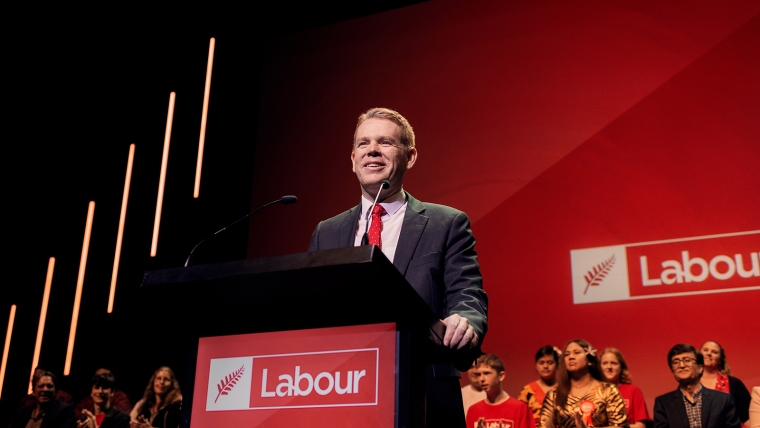
The Labour Party plans to combine state-owned assets into a new sovereign wealth fund that will invest only in New Zealand businesses and infrastructure.
Leader Chris Hipkins said the Future Fund was the first step toward creating secure, well-paid jobs nationwide. It would channel more capital into local firms and expand opportunities for workers.
“New Zealanders are inventive and resourceful, but years of underinvestment have left too many great Kiwi ideas without support, while the wealth we create flows offshore,” he said.
The fund would be governed by the Guardians of the New Zealand Super Fund but operate as a separate investment vehicle, similar to the Elevate NZ Venture Fund.
Existing commercial Crown companies would be transferred into it, and managers could borrow against the assets to finance domestic investments. They would not be allowed to sell any initial assets and would require approval to sell new ones.
The fund would seek commercial returns but would not be benchmarked against global markets. It would operate independently of the Government.
“The Minister of Finance will set broad objectives through a letter of expectation but will have no power to direct individual investments,” a policy document said.
“Returns will be both financial and social. Some investments may not deliver the fast profits of global markets, but they will create lasting national value — stronger communities, lower costs, more resilient industries, and opportunities that keep talent and ideas in New Zealand.”
$20 billion?
Labour did not specify which assets would go into the fund, but possible candidates include Transpower, the three major electricity companies, Kiwibank, Landcorp Farming, Timberlands, New Zealand Post, and Air New Zealand.
Together they could form an asset base worth more than $20 billion, generating over $1 billion a year in dividends. The Future Fund could then borrow a few billion to invest.
But restrictions on selling or trading assets would limit the fund’s ability to grow, while placing them under commercial management would stop the Crown from using them to pursue broader goals, such as directing electricity companies to build more renewable generation.
Unprofitable entities such as TVNZ and KiwiRail could not be included without permanently weighing down the portfolio, since managers would be unable to offload their liabilities.
Labour finance spokesperson Barbara Edmonds said the fund would provide the capital needed to turn innovation into “real businesses and real jobs here at home.”
“The fund will invest in New Zealand for the benefit of everyone, building infrastructure and backing innovative businesses to create secure, well-paid jobs and grow wealth in every region,” she said.
Temasek-like
The Coalition Government has also received advice on a similar policy. Ministers Paul Goldsmith and Nicola Willis were briefed on a new holding company in January last year.
Treasury said the idea had been raised several times since 1996. Labour also explored it while in coalition with NZ First in 2017 but rejected allowing the fund to sell any assets.
Fund managers often oppose models that stop them from offloading underperforming assets or require them to weigh too many non-commercial factors, as such limits constrain returns and add financial risk.
On the other hand, more capital for New Zealand projects would be welcome, given most NZ Super Fund and KiwiSaver investment is held overseas.
Labour also set out the broad values behind its plan, saying it had learned from its previous time in government when it tried to do “too much, too fast” with “not enough finished.”
“In our first term, we will choose a focused set of targeted structural reforms in the areas that hold us back most, go hard at them, and show progress quickly — no endless reviews, no relitigating everything. If something works, we will back it. If it doesn’t, we will change it.”
We welcome your comments below. If you are not already registered, please register to comment
Remember we welcome robust, respectful and insightful debate. We don't welcome abusive or defamatory comments and will de-register those repeatedly making such comments. Our current comment policy is here.