
By Earl Bardsley*
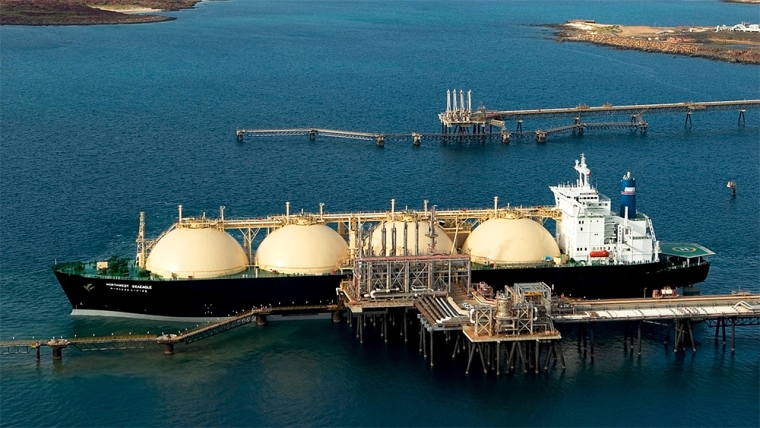
There is unusual haste in the timetabling set out in the Cabinet paper making the case for importing LNG (liquified natural gas) as dry year insurance.
In contrast to the multiple years spent by the Ministry of Business, Innovation & Employment’s NZ Battery team reviewing dry year options under the previous government, the present LNG decision is being rushed through with no published detailed evaluations of possible renewable alternatives. Even the Government’s own fast-track legislation will be bypassed.
It seems almost as if an artificial urgency has been created by defining LNG availability to be essential for the 2027 winter. Given the impact of a LNG decision, the question arises as to why a delay can’t be permitted in order to allow proper evaluation of any renewable alternatives.
Interestingly, the reason why timing is so tight could be hidden under Item 12 in the Cabinet Paper as the redacted “Confidential advice to Government”. Such secrecy leads inevitably to speculation that the “advice” is the gas lobby seeking to hurry the Government into a binding LNG decision before the November election.
This might explain why a possible change of government is listed in the Cabinet Paper as an LNG “risk factor”, needing to be offset by having a contract preferably signed before July 2026.
Seeking a workable renewable alternative for dry years
The first step towards any possible renewable alternative is to find the time to consider what might be done. To this end, the 2027 winter risk deadline could be set back by making an early definition that 2027 will in fact have a dry winter and planning for that regardless. In this way, the gentailers are early requested to reduce hydro generation to enable their respective main storage lake levels to rise to capacity in May 2027.
The downside here is that there may be some coal burning or hydro spill in 2027. However, it would create the needed time to review renewable options.
Any review would need to quickly eliminate some popular options that would not be suitable.
For example, geothermal stations or even nuclear fusion can only ever provide baseload power at a constant rate. This is the opposite of the flexible firming that is needed for dry years, whereby an energy source is available to provide ramped-up power output to offset reduced hydro generation.
Another popular misconception is that the dry year problem can be offset by building more renewable power generation, as was set out in National’s Electrify NZ election document of 2023.The idea is that surplus wind and solar power substitutes for hydro power. This supposedly keeps the lakes high or at least makes them fall more slowly.
However, new major electricity consumers will likely then be encouraged to come to the country, effectively diverting the extra power away from hydro lake conservation. For example, in anticipation of a future surplus of renewable electricity Meridian is already actively seeking new power-hungry enterprises to come to New Zealand.
It is true that the new power consumers will have a positive effect on the economy. However, dry year impacts will now become worse when the lakes run low. This is because at such times there will be more entities requiring electricity support from burning expensive fossil fuels.
The dry year concerns also apply to building new hydro dams. Constructing new power generation on the Clutha and Lower Waitaki rivers, for example, would only proceed if there was already demand in place to take all their hydro power output in normal hydrological years. Again, the dry year impact is made worse.
Any Government thoughts of dry year security being derived from more renewable generation were finally put to rest with the conclusions of the Frontier Report of last year. That is, the key need was identified to be flexible firming, where additional electricity can be generated on demand.
The Frontier Report advocated dry year firming by using fossil fuels. The renewable equivalent is large-scale new hydro storage with up to 5 TWh (terawatt-hours) being required. An internet search will reveal all manner of frothy alternative technical solutions for significant energy storage, but none are even close to meeting the storage capacity magnitude that we need.
New Zealand has two means for significantly increasing hydro storage capacity for dry years. That is, raise one or more existing hydro lakes or pump water up to a sufficiently large high basin.
Unfortunately, the many coming renewable developments in New Zealand are almost exclusively directed toward just increasing power generation, especially wind and solar. The only current project for gaining significant new hydro storage capacity is a private consortium looking to expand Otago’s Lake Onslow to create an upper reservoir for a $8.5 billion pumped storage scheme.
However, a large pumped storage scheme at any New Zealand location has the inevitable disadvantage of long construction time and therefore can’t be considered as a near-future alternative to LNG for dry years.
Raising hydro lakes take less construction time but must avoid flooding lakeside communities. This limits the only option to be a significant raising of Meridian’s Lake Pukaki. Part of that project would have to involve reconstructing the Genesis Tekapo B station at the new higher level of Lake Pukaki.
Raising Lake Pukaki again would still take some years to complete, even with special enabling legislation like that for the proposed LNG terminal.
All this suggests a potential composite pathway toward a renewable alternative to LNG imports. That is, the gentailers collectively extend the 2027 hydro lake abundance-of-caution approach into subsequent years until the Lake Pukaki raise is completed. Lake Pukaki then plays the dominant role of dry year security until the less environmentally-sensitive Lake Onslow scheme is completed later.
There is handwaving involved here of course. Would the gentailers work together for a time to manage their hydro lakes collectively, somewhat like a brief reappearance of the old ECNZ? (ECNZ was the Electricity Corporation of New Zealand, also known as Electricorp). Could Meridian and Genesis enable a final raising of Lake Pukaki? Also, it is not known at present whether the Lake Onslow scheme will be accepted into the fast-track process.
The point here is not so much to argue for this or any other renewable scenario to substitute for LNG. Rather, the more general concern is expressed that the rush to seek dry year security via LNG needs to be slowed down. If there is a pathway to an alternative renewable solution for dry years then we need to have time to consider it.
*Earl Bardsley is Associate Professor at the University of Waikato School of Science. He is the original proposer of the idea of pumped storage at Lake Onslow in Central Otago, as an alternative to burning coal and gas in dry years when hydro lakes are low. Bardsley spoke about the Lake Onslow idea in an episode of the Of Interest podcast in 2022.
We welcome your comments below. If you are not already registered, please register to comment
Remember we welcome robust, respectful and insightful debate. We don't welcome abusive or defamatory comments and will de-register those repeatedly making such comments. Our current comment policy is here.