
By Natalia Albert*
Anthropic owns Claude. It is one of three AI giants coming out of the United States, alongside OpenAI and Google. These are not names that should feel like they belong to someone else’s politics. Anthropic is punching a hole in our entire reality, and New Zealand politics is not exempt. The link between Anthropic and New Zealand politics is not obvious, but it should be.
Here is one reason it should be obvious: Anthropic is already a named signatory to the Christchurch Call, New Zealand’s own flagship international initiative to counter online terrorist content. Department of the Prime Minister and Cabinet (DPMC) records show Anthropic formally onboarded as a supporter in 2023–2024, alongside OpenAI, making them “major players in advanced AI” participating in a framework the New Zealand government helped build. We already have a relationship with this company. We just haven’t noticed what that relationship now implies politically.
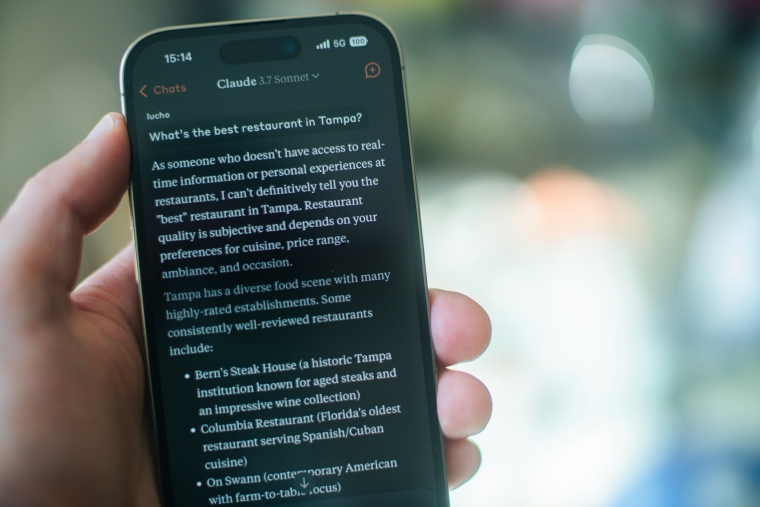
I wrote about the naivety of New Zealand’s approach to AI governance in February — Computers and Politics: We’re Having the Wrong Conversation. I want to return to it now, because the situation has escalated fast and the gap between what is happening offshore and what our political institutions are doing about it has become, in the space of a month, significantly harder to defend. I have spent the past two months using Claude (Chrome, Chat, Code and Cowork) daily for my PhD research, for this column, for understanding what it actually does. That is the lens I am writing from.
So, Anthropic and New Zealand politics, so what?
Our government is already using AI tools built on the same infrastructure to help run the country. One of them is called Paerata¹. It started as a pilot programme, became permanent infrastructure inside Treasury and DPMC, and never became policy. Everything known about it has come through Official Information Act requests. There is no public-facing documentation anywhere on government websites.
By January 2026², DPMC was planning to use Paerata to draft New Year’s Honours citations, processing nominees’ health information, political involvements, and personal histories. They needed a special exemption to do it, because the government’s own policy restricts AI use with personal data. The public found out through an OIA.
That is the New Zealand end of this story. Here is the other end.
Anthropic, a private American technology company, is now at the cold face of United States national security decision-making. It is refusing Pentagon demands. It is being designated a supply chain risk³ to national security by the Trump administration. It is making judgements about mass surveillance and autonomous weapons that elected legislatures have not made.
So what does our response look like?
New Zealand’s National AI Strategy, released in July 2025, is framed primarily around economic opportunity. It reads like an investment prospectus. The government explicitly chose a light-touch approach: no AI-specific legislation, existing frameworks extended where needed, voluntary guidance for the public sector. New Zealand was, by the way, the last OECD member to publish a national AI strategy at all. As of late 2025, DPMC was still internally discussing whether leadership documents should include a checkbox disclosing AI use. Not implementing disclosure. Discussing whether to discuss it.
This is not as though the risk was invisible. New Zealand’s own National Security Strategy, published in 2023, explicitly identified AI as a national security issue, naming it an “amplify threats from both countries and criminals.” That was three years ago. The governance response since then has been a Public Service AI Framework that is not binding, a GenAI guidance document for public servants, and a toolkit of templates agencies are encouraged but not required to use. Three years on, the government’s answer to a named national security risk is a toolkit nobody has to use. Sigh.
The easy interpretation is that New Zealand is simply behind. That framing lets our political class off the hook. The more accurate interpretation is that New Zealand made a judgement call: that the technology would move faster than any legislation could keep pace with, and that a permissive, principles-based approach was preferable to binding rules that might need constant revision. That judgement is understandable. It is also wrong and dangerous, and we now have evidence of exactly how it fails.
The Pentagon, Anthropic, and the last line of defence
In February 2026, US Defense Secretary Pete Hegseth gave Anthropic CEO Dario Amodei a deadline. The Pentagon demanded unrestricted use of Claude for “all lawful purposes,” including mass domestic surveillance and fully autonomous weapons systems. Amodei refused. Trump ordered federal agencies to stop using Anthropic’s products. Hegseth designated Anthropic a supply chain risk to national security. A $200 million contract evaporated.
This is a hard limit. The US Congress has never passed legislation governing military AI use. The Department of Defence sets its own policy on autonomous weapons. The phrase “all lawful purposes” has enormous teeth precisely because no law defines what lawful means in this context. Into that gap, the last line of defence between the US military and AI-enabled mass surveillance was a private company’s terms of service. When the government decided those terms were inconvenient, it called the company a security risk and contracted with a competitor instead.
Amodei wrote publicly that his company could not “in good conscience” grant the request, and that AI-driven mass surveillance “presents serious, novel risks to our fundamental liberties.” He also noted, with unusual candour, that mass surveillance of this kind is not clearly illegal. The law has simply not caught up with what is now technically possible.
That is a political and governance problem. And it did not appear suddenly. It was built, incrementally, by years of decisions to defer, to use principles rather than statute, to move fast and regulate later. The voluntary framework held until the moment it was tested by a government that did not feel bound by it.
The shift nobody explained to Parliament
There is a specific technical development that makes this more urgent, not less, and it has received almost no coverage in New Zealand political media. For the past two years, public conversation about AI has been organised around the chatbot. Useful, but dangerously narrow. The mental category most people have for AI is: a tool that answers questions. Again, send help!
That framing is now obsolete. Agentic AI is qualitatively different. These are systems that respond to prompts but take sequences of actions, make decisions across extended chains of tasks, and operate with degrees of autonomy that earlier systems did not have. A chatbot answers. An agent acts. Anthropic has been explicit about this development. Most legislatures, including ours, are still debating the chatbot.
This matters for NZ governance because the risks Hegseth was trying to exploit are agentic risks. Mass surveillance at scale requires a system that can not just retrieve data but cross-reference it, build profiles, and act on inferences, continuously, without human sign-off at each step. New Zealand’s Public Service AI Framework addresses none of this. It was written for a world of chatbots.
Bernie Sanders asked for a moratorium
Before the Pentagon clash became public, Senator Bernie Sanders sat down with Claude to discuss whether AI development should be paused. He asked the AI about privacy, about democracy, about whether a moratorium on new data centres was a reasonable demand. Claude answered thoughtfully. It’s worth a listen below.
But the image stays with me because it captures exactly where liberal democracies are. We are using the instruments of the previous era to interrogate something our institutions do not yet have the literacy to govern. The moratorium impulse is spot on. It also does not work, as the European Commission discovered when 46 major tech companies requested a two-year pause on the EU AI Act. The Commission declined. The Act is already experiencing implementation delays. Comprehensive AI legislation is hard to execute even when governments genuinely try.
The answer to that difficulty is not to stop trying. It is to build the institutional muscle to try properly.
New Zealand has said nothing
In October 2024, New Zealand signed a Five Country Ministerial communiqué alongside Australia, Canada, the United Kingdom, and the United States⁴. The communiqué included a dedicated section on AI and national security. The five countries committed to aligning their AI governance frameworks and ensuring “shared democratic values shape international standards and governance for AI.”
One of those five partners just tried to conscript a private AI company into building mass domestic surveillance infrastructure. New Zealand’s response, on the public record, is silence. The commitment New Zealand made in 2024 implied a willingness to say something when the framework being built together was violated. What it revealed instead is that our AI governance posture is built for a world of stable allied consensus, not for a world in which one of those allies is actively working against the democratic values the communiqué described.
The global political ground shifted. The framework did not.
What this requires
The oversimplification that most threatens New Zealand politics in 2026 is not a lie. It is the quiet, reasonable-sounding assumption that managing AI is a technical and economic challenge, best handled through voluntary guidance and OECD principles, by officials who are trying hard and mean well or have yet to engage with it. It worries me.
It is that assumption, not any single policy failure, that leaves us without the institutional vocabulary to respond when the situation demands it. Paerata has a human-in-the-loop principle and no public documentation. The NZ Defence Capability Plan does not mention AI governance. The Cyber Security Strategy, published the same week Hegseth was threatening Anthropic, frames AI primarily as a threat that comes from outside. And DPMC is still debating whether to add a disclosure checkbox to leadership documents.
Nobody in our political system is publicly asking what happens when the threat is not external. When it is the gap between what our closest ally’s government is now willing to do, and the frameworks we built together assuming they would not. That question is not too complex for New Zealand politics. It is exactly the kind of question our political institutions exist to answer. The problem is that nobody is answering it.
———
¹ The name Paerata is a Māori term meaning a hill ridge (pae) bedecked with rata trees.
² RNZ, 8 January 2026: https://www.rnz.co.nz/news/political/583495/government-planning-to-use-…
³ A supply chain risk designation allows the US government to prohibit federal agencies and their contractors from using a company’s products. In Anthropic’s case, it means any company doing business with the Pentagon faces pressure to drop Claude, effectively cutting Anthropic off from the federal market and signalling to allied governments that the company is considered a security liability.
⁴ Five Country Ministerial 2024: https://www.dpmc.govt.nz/our-programmes/national-security/five-country-…
*Natalia Albert is a political scientist living in Wellington exploring how to govern divided societies in diverse, liberal democracies, with a focus on New Zealand politics. She writes weekly on her Substack, Less Certain. Albert stood as a TOP candidate in the 2023 election.
We welcome your comments below. If you are not already registered, please register to comment
Remember we welcome robust, respectful and insightful debate. We don't welcome abusive or defamatory comments and will de-register those repeatedly making such comments. Our current comment policy is here.