
By Natalia Albert*
How do we know if National is performing well as a party? The obvious answer is polling. The slightly more sophisticated answer is ministerial delivery. The lazy answer and the one that dominates most political commentary right now is to look at the leader. So lets pull this string.
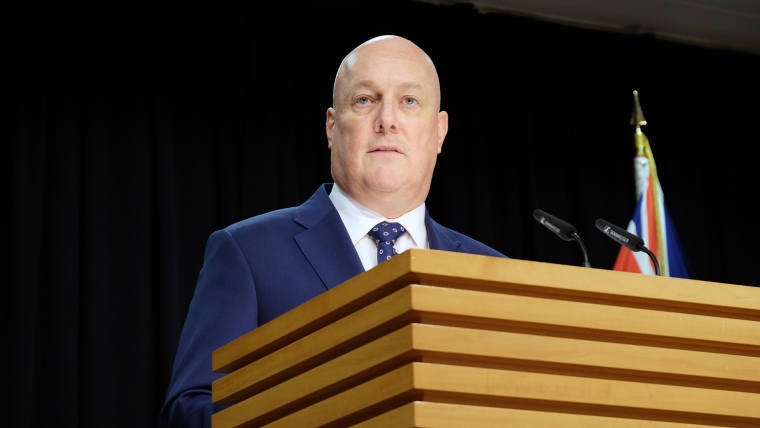
Christopher Luxon looks exhausted. I watched him on Breakfast this week with Tova O'Brien and what I saw was someone running on fumes, visibly fed up, going through the motions of reassurance without conviction behind it. He has been disorganised in his public crisis response, handing the economic framing entirely to Nicola Willis and Iran to Winston Peters. And then there is the reshuffle, ok, sure.
The reshuffle is hard to make sense of on any logic other than two things: punishing Chris Bishop for his alleged role in a failed coup in 2025, and filling the seats vacated by Judith Collins and Shane Reti. That was Luxon's own explanation and on the Collins and Reti part, it's true. But it does not explain what happened to Bishop. The official line, that he had too much on his plate, is total bull. You do not strip your highest performing minister of the campaign chair six months before an election because they are too busy. You do it because you no longer trust them.
Bishop's rumoured role in a failed coup attempt late last year almost certainly had nothing to do with it, if you believe Luxon. Most political journalists do not. So, what did this reshuffle achieve beyond filling vacancies and settling internal scores? The honest answer is not much that the moment required.
Meanwhile, Winston Peters is currently more visible on the international stage than the Prime Minister, meeting with Marco Rubio in Washington while Luxon holds press conferences reassuring people not to hoard fuel. That should not happen. Not when Ukraine, Gaza, and Iran are all active conflicts reshaping the global economy in real time. Crisis moments require a visible head of government. What we have instead is a deputy filling the role.
So: is Luxon performing? No, I do not think he is. And I will go further. I do not think he makes it to November as leader of the National Party.
The polls released this week tell a more complicated story than the "National in trouble" narrative suggests. Yes, National is at 29.8% still below 30%, still well under its 2023 result. That number is genuinely bad for them as a party. But the coalition is projected at 65 seats. NZ First is at 13.6%, the highest it has recorded in this poll series since it started in 2021.
Look at the preferred PM numbers alongside that: Chris Hipkins leads at 26%, Luxon sits at 22%, and Peters who is technically a supporting coalition partner is at 13%. Luxon has never had a honeymoon and has never broken 25% as preferred PM. He is not the draw card. He is, at best, a neutral.
And on issue ownership, the picture is worse: Labour now leads on cost of living, which is the single biggest voter concern, in a position that was National's by default in 2023. The two parties are tied on the economy. National's historic identity as the safe pair of hands has evaporated, and it has happened while they are in government. That is the real performance story, and it is ugly. It just does not tell you what it tells you about November.
This matters institutionally. In our system, governments are built from coalitions, not parties, and certainly not individuals. A government can be durable even when its leading partner is struggling if the supporting partners are strong. Right now, NZ First is surging, ACT is steady, and the opposition is not capitalising on any of this. Labour is down, the Greens are down, Te Pāti Māori is down. The left bloc is sitting at 55 seats. On these numbers, the coalition wins in November regardless of what you think of Luxon personally.
So, the question is not really whether Luxon is performing. The question is whether National, the party, has the institutional depth to carry a government into an election year when its leader is visibly depleted. Because some National MPs in that government are performing.
Nicola Willis has run the economic response to the Iran crisis with more coherence and discipline than anyone else in Cabinet. Erica Stanford has been consistently strong. Simeon Brown, whatever you think of the politics behind giving him the energy portfolio, has been competent and visible in the role. The Post named Bishop its 2025 Politician of the Year, calling him "the main character of New Zealand politics". They are a talent bench. And right now, they are quietly holding the government’s credibility together while the leader finds the job harder than expected.
The Willis-Bishop dynamic is worth watching. Bishop was sidelined in the reshuffle, whatever the official explanation. That leaves Willis as the most visible and credible senior National figure now when the government needs exactly that. When you watch the media and Willis is doing the serious work while the PM does the reassurance rounds, you are watching a de facto redistribution of authority. Whether that becomes a formal one before November is the real leadership question, not whether Luxon is tired.
Here is where I land. National is not performing well enough as a party to feel confident about November on its own numbers. But the government as a coalition is more durable than those numbers suggest. And the talent underneath Luxon is more capable than the coverage of Luxon implies.
Conflating the leader with the party leads you wrong in both directions. It made Luxon look stronger than he was when things were going smoothly. It makes National look weaker than it is now that things are not. The more useful question, seven months from an election, is whether the party can successfully redistribute authority to its stronger performers before voters make the decision for them.
On current evidence, the people most likely to benefit from that redistribution are already doing the work. That is either reassuring or unsettling, depending on which side you are on.
*Natalia Albert is a political scientist living in Wellington exploring how to govern divided societies in diverse, liberal democracies, with a focus on New Zealand politics. She writes weekly on her Substack, Less Certain. Albert stood as a TOP candidate in the 2023 election.
We welcome your comments below. If you are not already registered, please register to comment
Remember we welcome robust, respectful and insightful debate. We don't welcome abusive or defamatory comments and will de-register those repeatedly making such comments. Our current comment policy is here.