
By Chris Trotter*
Who would be Finance Minister in 2026? With the world closing in economically, politically, and morally it is difficult to maintain the fiction that an independent national response is any longer possible amid a plethora of intensifying international storms.
Nicola Willis has given it her best shot, hugely assisted, it must be said, by the chorus of Pollyannas who now pass for Treasury advisers. Playing the “glad game” made a cloying sort of sense in Eleanor H. Porter’s 1913 novel, and even more in Disney’s 1960 Movie, but it is a poor substitute for the bleak but honest forecasting expected of the economists’ “dismal science”.
With elaborate ideological roadblocks thrown up to forestall even the most tentative exploration of revenue enhancement opportunities, Willis’s options for reducing New Zealand’s debt burden are limited. Even assuming she could sell new taxes and/or tax increases to her own caucus, the challenge of selling them to Act and NZ First – without blowing up the Coalition – are just too daunting.
David Seymour’s snippy response to Willis’s oh-so-gentle attempt to extract a smidgen of fiscal support from the Aussie banks indicated clearly what she and her National colleagues are up against. NZ First, while populist enough to embrace at least a show of making the elites pay their fair share, is far too dependent on the generous donations of those same elites to do more than maintain a pained silence.
Which leaves the field clear for Labour to advance a coherent fiscal plan to equip the state with the resources it needs to address the deepening polycrisis.
A brief pause is required here while I recover from a painful fit of bitter laughter.
“We’re waiting for the Budget”, Chris Hipkins reassures us, while his Shadow Finance Minister chirruped “What he said.”, with the irritating consistency of a pet cricket. Leaving New Zealanders to choose between believing that Labour is on the cusp of releasing a bold and fully-costed economic policy, as promised, or a set of policies that owe more to modern communications theory than they do to economics.
The latter would be cheerier. But not remotely credible.
Which is not to say that Labour lacks the intellectual heft to present a bold and fully-costed economic package, merely that there is currently no political path by which such a package could make its way through Labour’s caucus.
The politicians making up that caucus are what emerges from a party hierarchy obsessed with preserving a deeply flawed factional stalemate. Accordingly, the loyalties of Labour MPs tend more towards people than principles. Philosophically, they share the values and pronounce the shibboleths of the professional-managerial class from which, overwhelmingly, they are drawn.
The quality most lacking in Labour is courage. Indeed, the last time the party demonstrated any real political guts was in 2023. That was when Labour’s Finance Minister, Grant Robertson, and its Revenue Minister, David Parker, together crafted a fiscal plan that granted tax relief to the poorest New Zealanders while sharply increasing the tax contribution of its wealthiest citizens.
Chris Hipkins, in his infamous “Captain’s Call” issued from, of all places, Vilnius in Lithuania, scrapped the Robertson-Parker initiative. That Hipkins’ decision was not overturned by Labour’s caucus bears testimony to the strength of the factional alliance that kept him in power then, and keeps him in power now.
Best summed up as “Nobody moves, nobody gets hurt.”, Labour’s electoral strategy is predicated on the idea that by slipping slyly into National’s policy shadow it can pass unmolested by the merciless gatekeepers of the neoliberal state. Hipkins’ priority has always been to convince the powers-that-be that when it comes to an “orderly circulation of elites”, the Labour Party has zero tolerance for disorderly conduct.
The contrast between Labour and the Taxpayers’ Union could hardly be starker – disorderly conduct is pretty much their stock-in-trade.
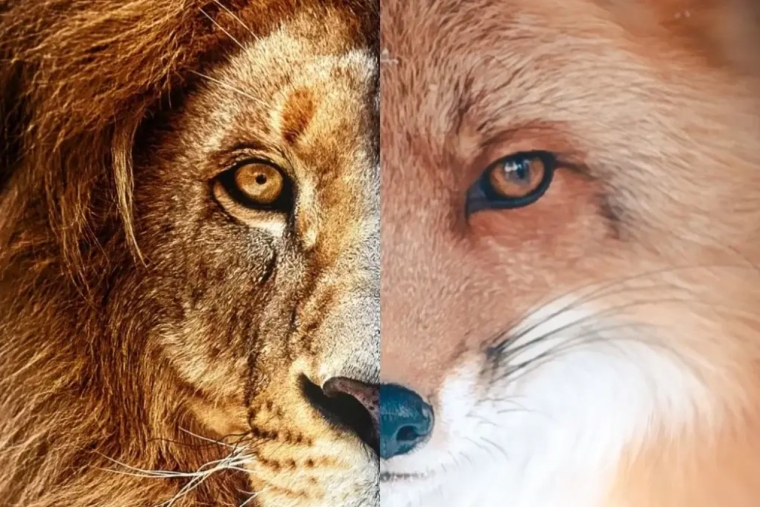
Vilfredo Pareto (1848–1923) the Italian sociologist and economist who came up with the “circulation of elites” description of electoral politics, divided those competing elites into Lions and Foxes.
According to Pareto, the Foxes rely upon political cunning, manipulation, and the enormous leverage of economic power to govern successfully. The Lions are less flexible but bolder. Tradition and the rules of the game matter to Lions: to enforce them they do not shrink from the use of force.
The Taxpayers’ Union are Lions.
To reduce state spending the Taxpayers’ Union would happily stuff the welfare state into the wood-chipper. If it had the numbers, Act would probably give them a hand.
Willis, and her fellow National Party Foxes, are too shrewd to impose so such misery on so many voters. Stuffing one’s fellow citizens (even the ones who don’t vote for your party) into the wood-chipper runs the risk of bringing the entire edifice of democracy crashing down.
Labour’s Foxes are even less disposed to such coercion, not least because its intended victims do vote for their party!
There has to be a better way of cutting expenditure. Like so many decision-makers these days, Willis and her colleagues are hoping that Artificial Intelligence (AI) can show the way.
Very soon the tens-of-thousands of New Zealanders reliant upon the benefits distributed through the good (and very busy) offices of the Ministry of Social Development will find their personal “client” files managed digitally by AI-driven case managers.
So many redundant public servants to send down the road! So much taxpayer money to save! So little that could possibly go wrong!
When it comes to New Zealand Superannuation a lot of things have already gone wrong. There was a time when for each retired citizen there were seven citizens gainfully employed and paying the taxes needed to support them. Pretty soon, however, New Zealand will face a dependency ratio of one superannuitant for every two workers.
Unsustainable?
The Lions of the Taxpayers’ Union and Act would together cry “Slash and burn! Raise the age of entitlement! Cut the rate! These old-timers have had it too good for too long!”
Wait a minute, though, what about AI?
If the long term objective of the people who have poured trillions into AI is that their capital will very soon be supplanting our labour in all but a handful of activities, then won’t the world’s most advanced economies be looking at a situation in which there are virtually no human workers involved in creating wealth, and millions of former workers utterly dependent on the wealth created by an omnipotent array of supremely clever non-human machines?
What will the Finance Minister of the future do? If she’s a Lion, then her eyes will be drawn inexorably towards the wood-chipper. But if she’s a Fox, then her thoughts might well turn to the paradise predicted by British left-winger Aaron Bastani back when AI first looked like becoming a “thing”:
“Fully Automated Luxury Communism.”
It all depends, I suppose, on whether the machines are Lions or Foxes.
*Chris Trotter has been writing and commenting professionally about New Zealand politics for more than 30 years. He writes a weekly column for interest.co.nz. His work may also be found at http://bowalleyroad.blogspot.com.
We welcome your comments below. If you are not already registered, please register to comment
Remember we welcome robust, respectful and insightful debate. We don't welcome abusive or defamatory comments and will de-register those repeatedly making such comments. Our current comment policy is here.