
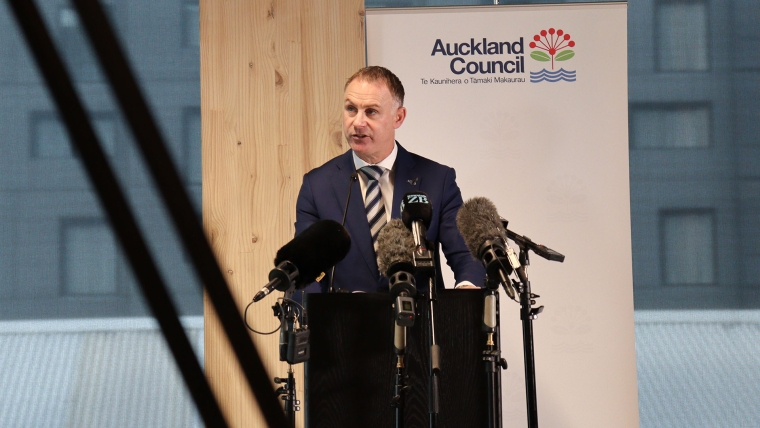
Climate Change Minister Simon Watts has directed officials to undertake a stocktake of local government climate-related planning and investment.
In a recently-released letter, Watts, who is also Minister of Local Government, said he wants councils to make climate-related decisions that are "proportionate, evidence-based, and represent value for money."
"The Government is increasingly concerned that some climate-related planning and investment decisions may be relying on high-end emissions scenarios in a way that results in unnecessary costs being imposed on ratepayers, businesses, and communities," said Watts.
He said he has directed government officials to undertake a stocktake of current council practices. Additionally officials are to; "provide advice on whether extra national direction, reporting requirements or legislative changes are needed to “ensure climate-related decisions appropriately balance resilience, affordability, and value for money for ratepayers."
"The Government's expectation is clear: councils should plan for climate risks, but they must also plan for affordability."
Watts' letter was met with criticism from Opposition parties. In a statement to interest.co.nz on Monday, Labour’s climate spokesperson Deborah Russell said the letter; “demonstrates the short-term thinking National has toward climate change.” Greens co-leader Chlöe Swarbrick said; "every dollar we don't spend getting ahead of these [extreme weather] events becomes many more dollars we spend cleaning up after them."
Value for money
Watts noted that two of the worse potential global climate scenarios, the so-called SSPS-8.5 and RCP8.5 are now; "best regarded as less likely, high-impact emissions scenarios that are useful for stress testing and contingency planning."
"They should not automatically be treated as the central or most likely future when making decisions that affect infrastructure investment, land use, property rights, or rates," he said.
The SSPS-8.5 and RCP8.5 are global climate scenarios - with SSPS-8.5 being a worst-case scenario with very high emissions and RCP8.5 being a very high warming scenario, according to the Ministry for Cities, Environment, Regions and Transport.
“New Zealand faces significant infrastructure challenges. Every dollar spent on resilience measures is a dollar that cannot be spent on fixing roads, upgrading water infrastructure, improving community facilities, or reducing pressure on rates."
“Councils must therefore ensure climate-related decisions are proportionate, evidence-based, and represent value for money," he wrote.
The letter outlined the Government's expectations of councils, including that they; “use a range of credible climate scenarios when assessing infrastructure and planning decisions, including medium and high-end scenarios,” and identified which scenario had been adopted as the primary planning assumption.
The Government also wanted councils to “demonstrate the additional costs associated with higher-end climate assumptions and disclose the impact on rates, debt, and long-term affordability” and prioritise “adaptive pathways and staged investment approaches … rather than defaulting to immediate construction of infrastructure designed solely around worst-case assumptions”.
Watts also wants councils to ensure regulatory decisions affecting landowners, businesses and communities are supported by; “robust evidence and are proportionate to the risks being managed." Additionally that major climate-driven capital expenditure proposals are subjected to “rigorous cost-benefit analysis and independent challenge.”
The Government did not think it was appropriate that worst-case scenario assumptions become “the default basis for investment decisions that impose significant costs on current and future ratepayers”, the letter said.
“Councils should be able to demonstrate that climate-related investments are necessary, proportionate, and represent the best use of scarce public resources.”
‘Councils are on the frontline of climate response’
Rehette Stoltz, president of Local Government New Zealand (LGNZ), the local government lobby group, told interest.co.nz that local government always balances the need to invest with affordability. Stoltz said extreme weather events are hitting communities more frequently and becoming more damaging.
"Every dollar spent on disaster preparedness saves at least $4 in response and recovery. Doing nothing not only puts undue pressure on public finances in the long run but comes with significant risk to New Zealanders.”
Stoltz said LGNZ had long called for more clarity over who should pay when it comes to resilience issues.
LGNZ would welcome “clear and consistent direction on the climate scenarios that should be used for planning and decision making”, she said.
Stoltz said a standardised approach to risk assessment methodology is something local government has widely called for.
"Councils are on the frontline of climate response, including current and ongoing emergency responses to severe weather as we speak," Stoltz said.
“We think it would be a more efficient use of resource if the government were to undertake a single review and set clear nationally-consistent expectations for councils following that process."
‘We have to get out of this pattern of crisis and response’
Swarbrick said Watts was trying to have it both ways.
“With one hand he says he wants a climate adaptation framework, and with the other he's telling councils to pull back on exactly the planning and investment that framework is supposed to drive.”
She said "we know that 97% of spending is going into responding and rebuilding after extreme weather, and just 3% is going into building resilience."
"Every dollar we don't spend getting ahead of these events becomes many more dollars we spend cleaning up after them.
“We have to get out of this pattern of crisis and response. Telling councils to plan for less risk doesn't make the risk go away," Swarbrick said.
“The Government should be supporting and resourcing councils to plan properly for the climate reality and build resilience, rather than consistently undermining and chastising them for doing the work this Government evidently refuses to do."
Meanwhile Russell said climate change posed a significant threat and the country needed to prepare for even more damaging weather events than we are already experiencing.
“This requires planning and investment to ensure people, homes, critical infrastructure and livelihoods are kept safe. It makes good economic sense to build resilience so that the effects of climate change don’t cause enormous damage in the long term,” Russell said.
“This letter demonstrates the short-term thinking National has toward climate change."
“By telling councils that money spent on climate resilience means less for other things, they are willing to take shortcuts and kick the can down the road to future generations to deal with flooding, slips, droughts and erosion, and the uncertainty that brings for communities.”
We welcome your comments below. If you are not already registered, please register to comment
Remember we welcome robust, respectful and insightful debate. We don't welcome abusive or defamatory comments and will de-register those repeatedly making such comments. Our current comment policy is here.