
By Chris Trotter*
It's an old saying from the American South: “Everybody wants to go to heaven (but nobody wants to die).” Jean Kluger and Cy Coben turned it into a bluegrass standard made popular by Loretta Lynn.
I remember quoting the line nearly a quarter century ago as a political commentator during the run-up to the general election in which Peter Dunne charmed the “worm” and catapulted his United Party into kingmaker territory. My primary concern on that occasion was not religious but fiscal. New Zealanders were anxious to preserve the core services of their welfare state, but distinctly unwilling to accept the levels of taxation needed to fund them.
It’s a contradiction that has only grown more glaring as the years have passed. So much so that any attempt to pay for improvements to the welfare state by raising additional revenue through taxation will result in the political party foolish enough to float such a policy being howled down by an angry chorus of naysayers.
At the forefront of these choristers is the National Party: the first and most apt pupil in the school dedicated to teaching politicians “How to win a New Zealand general election without really trying.”
From Rob Muldoon’s “Dancing Cossacks” to John Key’s “Show me the money!” National has mastered the art of presenting its electoral opponents as either schemers plotting to divert taxpayers’ hard-earned dollars into nefarious socialist schemes, or as halfwits without the slightest clue how to run a successful modern economy.
National’s catch-all charge (borrowed from sister parties all over the world) is that Labour and the smaller left-wing parties know only one solution to the nation’s problems: “Tax and Spend”.
Never mind that taxing and spending is pretty much all that governments do. (Things would fall apart pretty quickly if they didn’t!) National’s accusation never fails to draw electoral blood.
Election after election, the average voter is encouraged to regard taxation as an unwarranted imposition by politicians forever promising more and delivering less. Taxing and spending, they are told, doesn’t work. Far from making the country better, taxing and spending only makes the voter’s wallet lighter. It’s an accusation that rings true. Which is why it almost always works.
With every passing election the number of New Zealanders who can remember when the top rate of income tax was 66 percent grows smaller and smaller. Two generations have grown up believing that a top rate of 39 percent is about as high as income tax should go.
The sad fact is that these generations also have no memory of what a top tax-rate of 66 percent provided. Young people who would have paid next-to-nothing for their tertiary education in the 1960s and 70s today find themselves lumbered with the burden of repaying a hefty student loan. They emerge from university in their 20s clutching a degree and begin their working lives facing deductions from their pay packets that only the highest-paid people in the land (usually in their 50s and 60s) were expected to endure back in the bad old days.
The calculations of voters in the years preceding the era of significant tax-changes that began in the 1980s were quite different from those of today. Their own lives and the lives of their children had been, and were being, materially improved by the tax and spend policies of both Labour and National governments.
Moreover, the Great Depression and wartime austerity were still fresh in the minds of a majority of the population. In the memories of men and women born in the 1920s and 30s, low taxes and hard times seemed to go hand-in-hand. Yes, the welfare state cost money. But if high taxes guaranteed full employment, affordable housing, publicly-funded health and education, and impressive improvements in the nation’s infrastructure, then, clearly, they were worth keeping.
Those high taxes also weakened the arguments of those who advocated means-testing welfare benefits in preference to the “socialist” policy of universal provision. To the question: “Does a person earning a whopping great salary really need or deserve the support of the state?” Most New Zealanders could respond: “Well, yeah, he does, given the whopping great tax bill he is expected to pay!”
Capitalism may have generated inequality, but social-democracy’s high tax-rates offered proof to the poor that the rich were not being given a free-ride. Universalism likewise reassured a nation of aspiring egalitarians that Jack really was a good as his master. The welfare state meant that the poor, no less than the rich, had no need to beg for bread in the street or sleep in their cars.
It took a ruinous war in Vietnam, compounded by another in the Middle East which provoked a crippling Arab oil embargo, followed by dramatic increases in the price of gas, to finally bring the era of high tax-rates to an end.
Inflation and fiscal drag promoted more and more wage and salary earners into higher and higher tax-brackets. The relentlessly rising cost-of-living reduced the purchasing power of those wages and salaries, dampening demand, increasing unemployment, sharpening industrial conflict, and prompting governments to print and/or borrow more and more money to prevent the economy from crashing. Ordinary people’s faith in the welfare state faltered.
The way was opened for those who declared the entire welfare state experiment a failure and urged politicians and voters alike to unleash the animal spirits of the marketplace. Do this, vowed the free marketeers, and your taxes will be slashed.
The Nanny State had failed, they said. Henceforth free individuals will rise or fall according to their own merit and effort. Most importantly, they will be allowed to keep a much larger share of the wealth they have personally created.
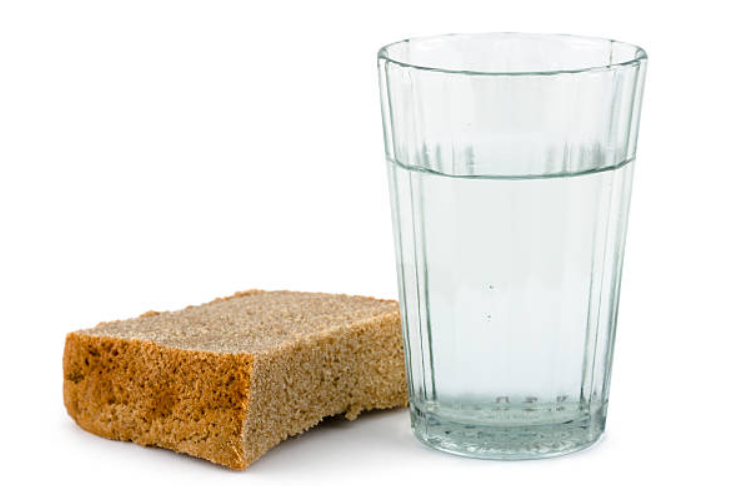
In New Zealand the top rate of income tax plummeted from 66 cents in the dollar to 33. Predictably, the services paid for by the higher rate became increasingly unsustainable. The state was put on a bread and water diet.
To advocate taxing more and spending more in this new environment was politically suicidal. All the electoral logic now pointed to further reducing the tax burden of the ordinary voter. Sure, that might require the selling-off of assets and force increasingly savage cuts in benefits and public services, but at the individual level – now the only level that counted – any policy that left more money in citizens’ pockets was a policy worth voting for.
Such may have been the electoral logic, but the raw economic logic of a state that is voluntarily starving itself to death is that the quality of the health, education, housing and welfare services on offer to those New Zealanders unable to meet the cost of obtaining them from the private sector is bound to deteriorate. Worse still, the infrastructure crucial to the proper functioning of a modern society will similarly deteriorate.
Such is the impasse at which New Zealand has arrived. Every politician knows that if new sources of revenue are not developed, and if existing taxes are not raised, then New Zealand will rapidly become “Fiji with ski fields”. They know it but, if they belong to National and Labour, they cannot say it.
National can abandon neither its “No New Taxes” policy, nor its “Tax and Spend” accusations against the Left. Labour, to blunt National’s critique, must keep its fiscal promises as weak and pathetic as possible.
New Zealanders react with horror to stories of patients left in the corridors of their public hospitals in urine-soaked bed linen. The relentless financial pressures bearing down on what remains of New Zealand’s welfare state have become obvious to everyone. As have the remedies.
Except that, no less than the politicians, the voters also find themselves trapped in economic circumstances they cannot resolve. Crushed beneath rising living costs, the value of their real wages and salaries declining, they simply cannot afford to pay the taxes required to repair their deteriorating welfare state and support New Zealand’s ageing population.
The social-democratic heaven New Zealand used to be has been transformed into a market-driven hell. National’s Christopher Luxon has no other viable political option but to play the Devil’s henchman. Labour’s Chris Hipkins has no option but to let him.
No wonder nobody wants to die.
*Chris Trotter has been writing and commenting professionally about New Zealand politics for more than 30 years. He writes a weekly column for interest.co.nz. His work may also be found at http//:bowalleyroad.blogspot.com.
We welcome your comments below. If you are not already registered, please register to comment
Remember we welcome robust, respectful and insightful debate. We don't welcome abusive or defamatory comments and will de-register those repeatedly making such comments. Our current comment policy is here.