
The Green Party is promising to pump $4.5 billion to $4.7 billion yearly into the country's future operating allowances and push the surplus out a year to provide "a significant uplift" to health funding.
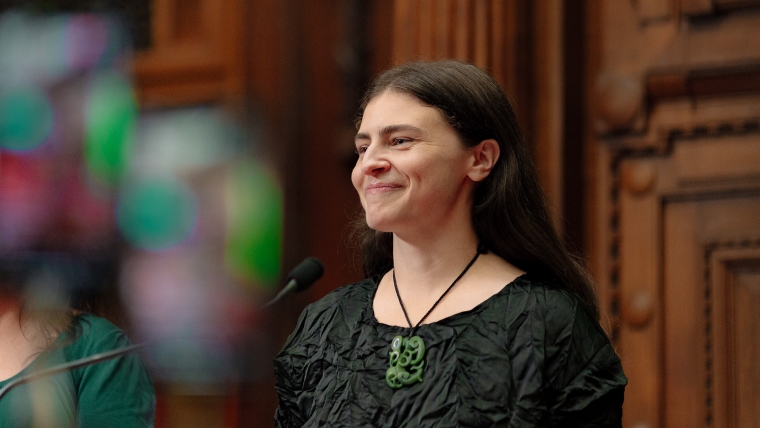
Releasing the Green Party fiscal plan on Friday, co-leader Chlöe Swarbrick said her party's plan pays for new investment with around $8 billion a year in new revenue "from the super-rich and big corporations."
"Our fiscal plan makes critical investment essential for productivity and resilience, improving long-term fiscal sustainability," she said.
The party pledged to get the government books back to surplus a year later than anticipated in Treasury's latest economic and fiscal update, pushing it out to 2029/30. On the surplus (of $0.4b in 2029/30) being pushed out by a year, Swarbrick said this was "because a Green Government would responsibly run a larger operating allowance to fix the healthcare crisis."
The Greens say they would "prioritise a larger operating allowance for the forecast period, primarily to deliver a significant uplift to health funding."
Tax
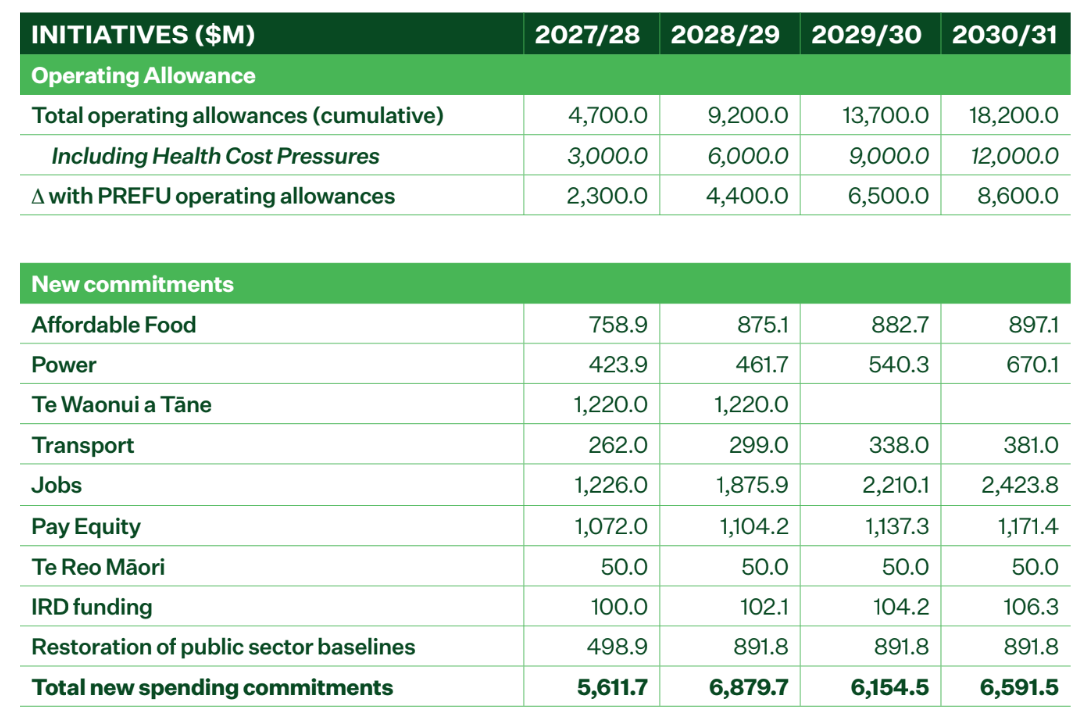
The party intended to collect $28.8b in its tax plan "that focuses on the super-rich and big corporations", its fiscal plan states.
"Unlocking these shared resources will reduce tax on the vast majority of salaried and waged workers, fund the critical social services we all rely on, and shape the economy in the direction of productive investment."
Health
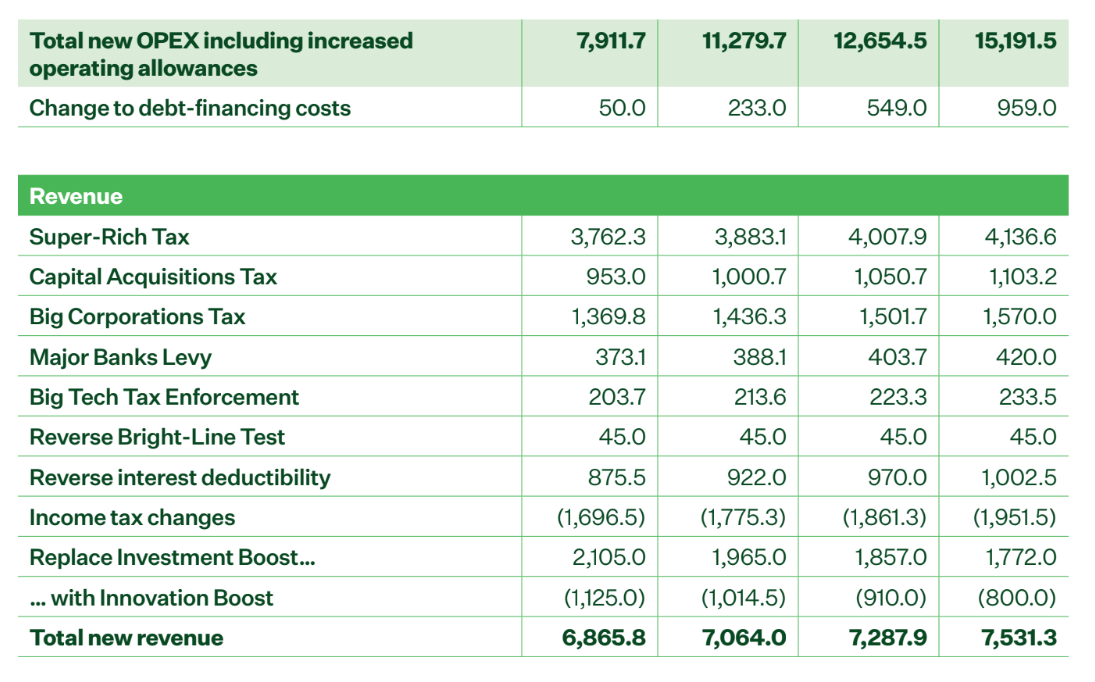
The party promised it would lift health funding "to a level that can credibly meet the needs and expectations of New Zealanders."
"This uplift of $3 billion each year for four years will mean real increases in funding above the rate of population and demand growth, and provide the sustained investment needed for workforce, capacity, access and safe care, and work to deliver equity in health outcomes for Māori as envisioned in the Health Services and Outcomes Kaupapa Inquiry."
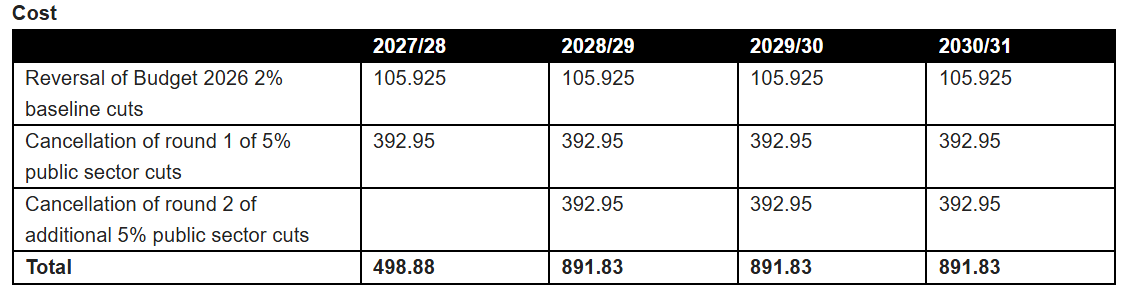
The Green Party also is promising a full reversal of the Government’s public service baseline savings - a move the Government intended to save $2.4b over four years with the loss of nearly 9000 jobs.
“Cutting public spending deepens economic downturns and inequality, pushes up unemployment and reduces output. The current Government's fiscal track is made possible only through underinvestment in core public services," Swarbrick said.
“Our public debt is comparatively low, while private debt sits at 160 per cent of GDP," she said.
"With fair revenue in place, we can use debt for what it should be used for: building the transport and infrastructure this country needs. This will stimulate jobs, tackle climate change, build resilience and mean we're much better placed against financial shocks," said Swarbrick.
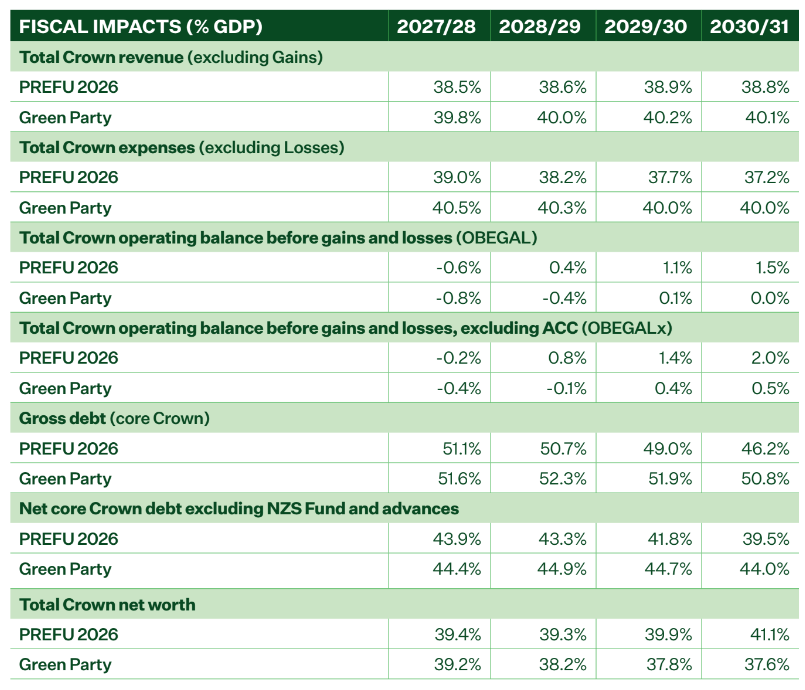
“Net core Crown debt under our plan reaches 44% of GDP by 2030/31. By the end of the forecast period, Crown expenses are 40% of GDP and revenue is 40.1 per cent of GDP. "
ACT earlier this month released its fiscal plan, promising a $12 billion cut in government debt in four years, $10b cut from the public service and a bigger surplus than currently forecast.
And while broad-based tax cuts were not in ACT’s Fiscal Plan, "several strategic tax cuts are,” ACT leader David Seymour said. That includes earnings inside KiwiSaver, crypto and charity donation caps. Seymour previously indicated he would much rather be in a position where the government was in surplus first before rolling out tax cuts.
Labour released its fiscal plan earlier this month, promising to retain the forecasted return to surplus in 2028/29 and to keep the operating allowance at the $2.4 billion set at Budget 2026.
For National, finance spokesperson Nicola Willis promised to continue with the $2.4 billion operating allowance, which Labour has also pledged to maintain, and National would also continue with $3.5 billion capital allowances for Budgets 2027 and 2028, and $5 billion thereafter.
Willis said National would drive overall government expenditure down towards 30% of GDP and "keep government debt on a downward trajectory towards 40% of GDP and maintain debt below 40% of GDP over time".
At May's Budget, the Government announced its plan of baseline reductions in the public service to free up $2.4 billion, a reduction of almost 9000 workers in three years and a reduction in the number of agencies. Baseline savings have been set at 2% in the coming year for most agencies, followed by 5% each year, for two years after. Willis said at the time the funds would go into health and education.
We welcome your comments below. If you are not already registered, please register to comment
Remember we welcome robust, respectful and insightful debate. We don't welcome abusive or defamatory comments and will de-register those repeatedly making such comments. Our current comment policy is here.