

Fast growing and largely unregulated crypto-asset markets may ultimately present a threat to global financial stability, the Financial Stability Board (FSB) says.
In a new report the FSB says that although the extent and nature of use of crypto-assets varies across jurisdictions, financial stability risks could rapidly escalate, highlighting the need for timely and pre-emptive evaluation of possible policy responses.
"Crypto-asset markets are fast evolving and could reach a point where they represent a threat to global financial stability due to their scale, structural vulnerabilities and increasing interconnectedness with the traditional financial system," the FSB says.
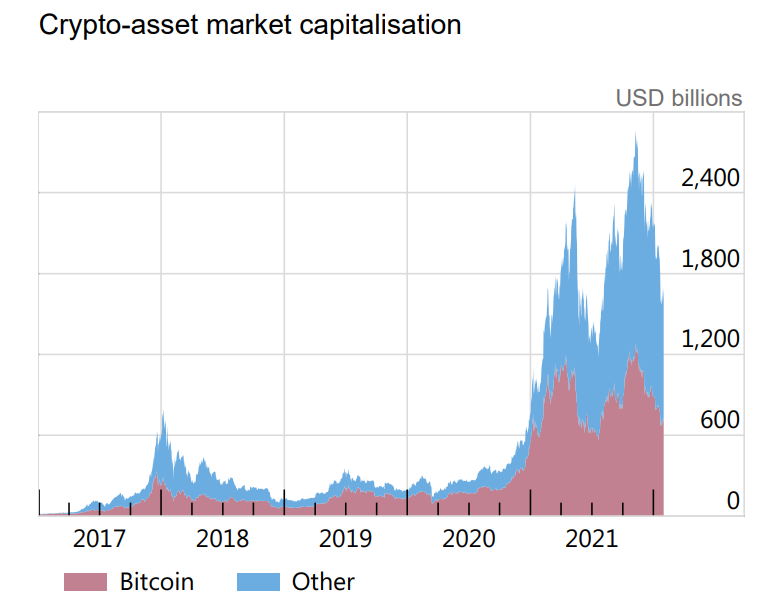
"Crypto-asset market capitalisation grew by 3.5 times in 2021 to $2.6 trillion, yet crypto-assets remain a small portion of overall global financial system assets. Direct connections between crypto-assets and systemically important financial institutions and core financial markets, while growing rapidly, are limited at the present time."
"Nevertheless, institutional involvement in crypto-asset markets, both as investors and service providers, has grown over the last year, albeit from a low base. If the current trajectory of growth in scale and interconnectedness of crypto-assets to these institutions were to continue, this could have implications for global financial stability," says the FSB.
"The rapid evolution and international nature of these markets also raise the potential for regulatory gaps, fragmentation or arbitrage. Although the extent and nature of use of crypto-assets varies somewhat across jurisdictions, financial stability risks could rapidly escalate, underscoring the need for timely and pre-emptive evaluation of possible policy responses."
The FSB coordinates the international work of national financial authorities and international standard-setting bodies, developing and promoting the implementation of effective regulatory, supervisory, and other financial sector policies. Based in Basel, Switzerland, it's hosted by the central banks' bank, the Bank for International Settlements.
FMA doesn't regulate cryptocurrencies
In a submission to a parliamentary select committee's inquiry into cryptocurrencies last year, New Zealand's Financial Markets Authority (FMA) pointed out it doesn't regulate cryptocurrencies. However, some cryptocurrency activities can fall within the FMA's regulatory remit.
The FMA says it only regulates cryptocurrency issuers or service providers, such as exchanges, to the extent they are issuing cryptocurrencies that are financial products, or if they are in the business of providing a financial service.
"As a general observation, most offers of cryptocurrencies and most cryptocurrency exchanges deliberately structure themselves to operate outside of the reach of mainstream markets or securities regulation," the FMA says.
"There has not been a regulated offer of cryptocurrencies yet in New Zealand nor is there a regulated financial product market here. We have however seen a number of offers made in other jurisdictions that may have been taken up by people in New Zealand. The regulatory protections available in such circumstances are very minimal," the FMA says.
DeFi concerns
Meanwhile, the FSB notes decentralised finance, or DeFi, is a fast-emerging sector, providing financial services using both unbacked crypto-assets and stablecoins. Additionally some crypto-asset trading platforms aggregate multiple types of services and activities, including lending and custody.
"Some of these platforms operate outside of a jurisdiction’s regulatory perimeter or are not in compliance with applicable laws and regulations. This presents the potential for concentration of risks, and underscores the lack of transparency on their activities."
The FSB says that, partly due to the emergence of DeFi, stablecoin growth continues, despite concerns about regulatory compliance, quality and sufficiency of reserve assets, and standards of risk management and governance.
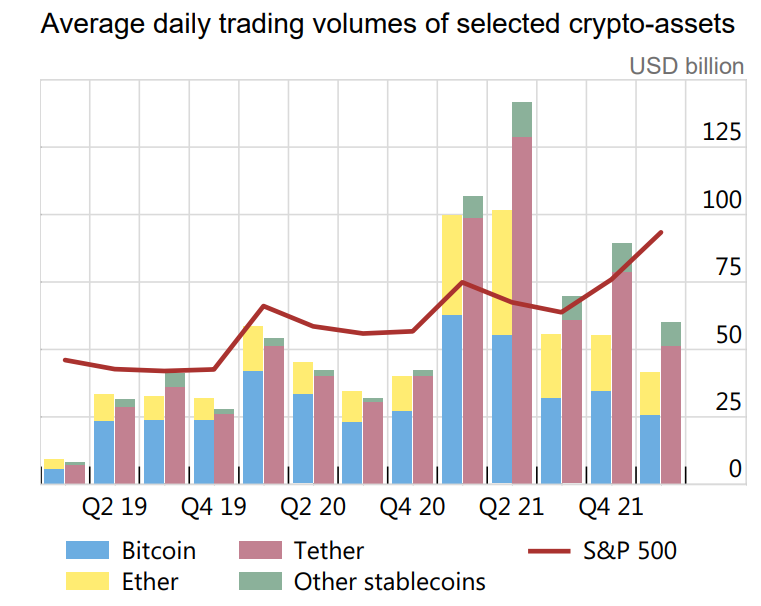
"At present, stablecoins are used mainly as a bridge between traditional fiat currencies and crypto-assets, which has implications for the stability and functioning of crypto-asset markets. Were a major stablecoin to fail, it is possible that liquidity within the broader crypto-asset ecosystem, including in DeFi, could become constrained, disrupting trading and potentially causing stress in those markets. This could also spill over to short-term funding markets if stablecoin reserve holdings were liquidated in a disorderly fashion."
"Without sufficient regulation and market oversight, DeFi and associated platforms, might present risks to financial stability. Some of these risks are becoming apparent, such as concentration risk in terms of protocols and technology used. The sector has already seen numerous operational and cybersecurity incidents, and failures of governance. DeFi related hacks made up over 75% of the $481 million known total hack and theft volume of crypto-assets through September 2021."
FSB to 'monitor and share information on regulatory and supervisory approaches'
The FSB also highlights a number of vulnerabilities associated with crypto-asset markets, including increasing linkages between crypto-asset markets and the regulated financial system; liquidity mismatch, credit and operational risks that make stablecoins susceptible to sudden and disruptive runs on their reserves, with the potential to spill over to short term funding markets; the increased use of leverage in investment strategies; concentration risk of trading platforms; and the opacity and lack of regulatory oversight of the sector.
And it sees wider public policy concerns related to crypto-assets. These include low levels of investor and consumer understanding of crypto-assets including costs, fees, conflicts of interest and lack of redress and/or recovery and resolution mechanisms, money laundering, cyber-crime and ransomware, and uncertainties around the operational resilience of some crypto-asset focused institutions.
The FSB argues that, if current trends continue, and there's no effective regulation and supervision, financial stability risks may emerge as crypto-assets become increasingly interconnected with the wider financial system.
"This is especially the case in emerging market and developing economies where crypto-assets may in some situations replace the domestic currency, or offer opportunities to circumvent exchange restrictions, and capital account management measures," says the FSB.
"The FSB will continue to monitor developments and risks in crypto-asset markets. It will explore potential regulatory and supervisory implications of unbacked crypto-assets, including the actions FSB jurisdictions have taken, or plan to take, to address associated financial stability threats. The FSB will also continue to monitor and share information on regulatory and supervisory approaches to ensure effective implementation of its high-level recommendations for the regulation, supervision and oversight of so-called 'global stablecoin' arrangements," the FSB says.
*A version of this article was first published in our email for paying subscribers. See here for more details and how to subscribe.
We welcome your comments below. If you are not already registered, please register to comment
Remember we welcome robust, respectful and insightful debate. We don't welcome abusive or defamatory comments and will de-register those repeatedly making such comments. Our current comment policy is here.