
Rural lobby group Federated Farmers is asking the Government to relax the Reserve Bank’s regulatory capital requirements, push Kiwibank into rural lending, and investigate behaviour among the big four banks it alleges is "cartel-like."
Richard McIntyre, a Federated Farmers board member and banking spokesperson, presented to the parliamentary banking inquiry on Wednesday morning.
The group successfully lobbied for the banking inquiry, which was initially promised in the National–NZ First coalition agreement, to focus specifically on rural lending practices.
Farmers have been frustrated by high interest rates and climbing environmental standards which have made it difficult for them to access or afford financing.
McIntyre complained that farmers who owned hundreds of hectares of land were paying higher interest rates than first-home buyers in Wellington
“Farmers with generations of equity behind them, proven track records and productive businesses were being treated as riskier than a graduate buying a townhouse at 5% deposit,” he said.
"Right now, farm loans are risk-weighted between 0.91% and 1.17%. Urban home loans sit between 0.3% and 0.5%, that means that even if a farmer has 90% equity in their business, they will still be judged to be more risky than the riskiest homeowner. Let that sink in."
Banking sector representatives have previously told the committee that farm loans are business loans and priced similarly to urban business lending.
Residential housing loans are seen as safer and easier to recover in a default. Banks can quickly repossess and auction houses, but taking over and selling a working farm is far more challenging.
While agricultural defaults are rare, banks warned they can hit the entire industry at once, creating a nationwide systemic risk — unlike residential property, where risks are more localized.
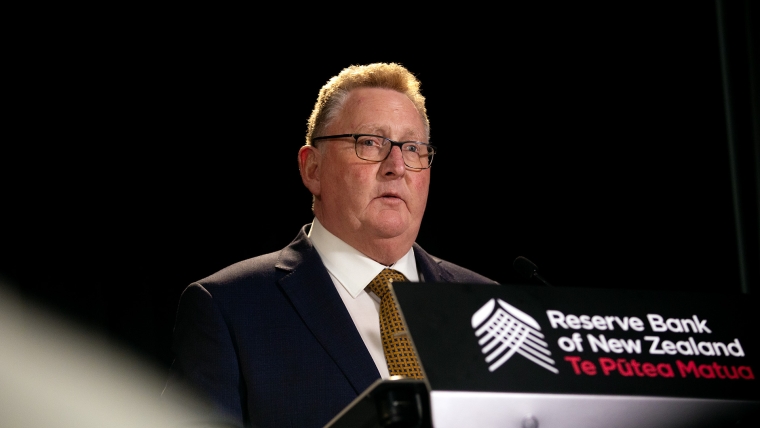
Still, McIntyre said New Zealand’s banking system was too cautious and called for the Minister of Finance to force Reserve Bank (RBNZ) Governor Adrian Orr to “stop punishing rural New Zealand with overly conservative risk settings”.
“Banks should be able to assess farmers with high equity as low risk, and not be forced to hold high levels of capital, even when farmers have high equity. Agricultural lending should not be penalised with higher capital weightings than property investment,” he said.
This policy change appears to be the primary reason Federated Farmers sought the banking inquiry, though it also aims to push back against banks’ climate policies and partnerships.
Cartel accusations
A key focus is the Net Zero Banking Alliance, a UN-led group of banks working to make their lending and investment portfolios carbon neutral by 2050—a goal endorsed by nearly all nations in the 2016 Paris Climate Accord including New Zealand.
Chlöe Swarbrick, co-leader of the Green Party, challenged submitters on the apparent contradiction between banks being too profit-driven and yet also motivated by climate politics.
"How do you square that with the notion that banks are somehow making decisions on withdrawing from climate change risks on the basis of some ideological wokeness, and not merely on financial risk?” She asked.
Paul Melville, the group’s general manager of policy and advocacy, said individual banks setting climate goals to manage credit risk or meet internal sustainability targets was acceptable, but coordinating them was cartel-like behavior.
"The profit side of that is protected by the fact that they've all committed to doing it together. If they didn't have a commitment where all five of the rural lenders in New Zealand have signed up to take the same actions, then they would put their profit at risk,” he said.
Federated Farmers asked Parliament to hold an annual hearing with the major banks as a condition of their license and to support a proposed NZ First member's bill making it illegal to base lending decisions on non-commercial grounds.
Gumboots on the ground
Finally, the lobby group said a survey it conducted showed 40% of farmers would switch to Kiwibank if it entered the rural lending market.
“If 40% of farmers are ready to switch, but Kiwibank still won’t go into the market, then something's not adding up. This committee should cover the reasons behind their reluctance, examine the barriers that they and others face, and outline the solutions in its final report to help remove them,” McIntyre said.
Kiwibank previously told the committee that, as a small bank, it had to focus its resources and had chosen first-home loans, since Rabobank already operated as a specialist in the rural market.
*Also see our story on Federated Farmers' written submission here, and why Kiwibank's reluctant to enter the rural banking market here.
We welcome your comments below. If you are not already registered, please register to comment
Remember we welcome robust, respectful and insightful debate. We don't welcome abusive or defamatory comments and will de-register those repeatedly making such comments. Our current comment policy is here.