
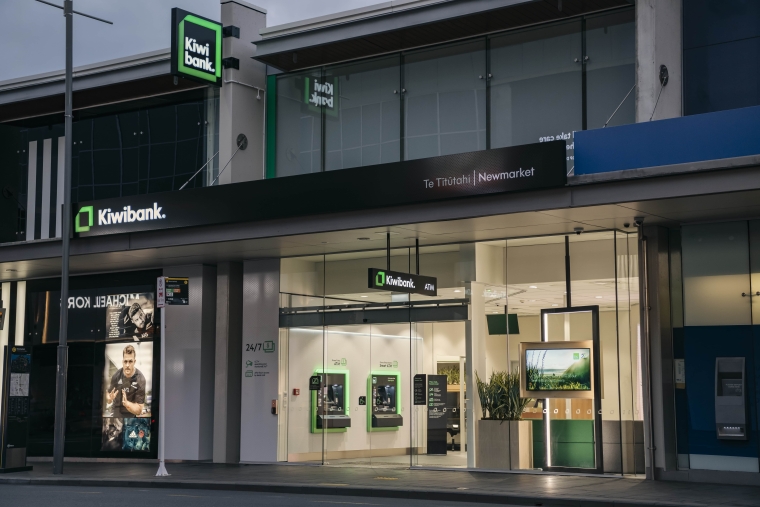
The Government is pushing Kiwibank’s parent company, Kiwi Group Capital Limited, to develop alternative growth scenarios for the bank along with the capital required for these, after Kiwibank ditched its proposed $500 million capital raise late last year.
In December, Kiwibank announced a proposed $500 million capital raise, recommended by the Commerce Commission and endorsed by the Government to help it better compete with the big four Australian-owned banks, was off the table.
At the time, the bank cited changes to the Reserve Bank’s capital requirements and said Kiwibank’s successful $400 million Tier 2 capital raise at an attractive price meant that it could continue its “strong growth without the need for additional equity”.
Documents on Kiwibank’s long-term growth and competitiveness were proactively released last Friday.
In a Cabinet paper from Finance Minister Nicola Willis and Minister for State Owned Enterprises Simeon Brown, they said: “Kiwibank can grow in-line with its current business plan over the next several years without additional capital. However, KGC (Kiwi Group Capital) and Kiwibank should plan for what is needed to accelerate towards its full potential as a market disruptor.”
“This involves developing business strategies for accelerating lending growth, determining the timing and amount of capital needed to support that growth and framing its sourcing.”
Speaking to reporters on Tuesday, Brown said regulatory capital changes by the Reserve Bank have given Kiwibank the capacity to grow and the expectation is that Kiwibank; "utilise that to expand their market share and be hungry as a bank".
'Undertake work on alternative growth scenarios'
The proactive release included a letter from Brown, which was sent in March. Brown, in a letter to KGC chairman David McLean, outlined additional specific expectations for the company.
“The Government has previously agreed to step towards providing KGC with a reliable channel to regularly access new capital over the longer term through a public listing, but that any initial public offering (IPO) will not occur without an electoral mandate,” Brown wrote.
“It has also noted that if Kiwibank is to significantly increase its relative growth, adding greater competitive pressure in the banking sector, the bank will need to know in advance that it has assured ongoing access to capital markets.”
“We expect KGC to undertake work on alternative growth scenarios for Kiwibank along with the capital required for these. We also expect you to engage with the Treasury on these scenarios, and the implications they would have for the Crown,” Brown wrote.
In February Kiwibank CEO Steve Jurkovich told interest.co.nz Kiwibank and KGC had "no indication at all" of whether there could be an IPO of the bank's shares on the share market following November's election.
Uncertainty about whether there could be an IPO in Kiwibank's future was an issue raised by some institutional investors the bank and its advisors spoke with during the ultimately aborted $500 million capital raise last year, Jurkovich added.
Willis initially approved Kiwibank plans to raise $500 million by selling a stake to NZ institutional investors in July.
The Commerce Commission's final report from its market study into personal banking services, released in August 2024, recommended; "the Government, as Kiwibank’s owner, should consider what is necessary to make Kiwibank a disruptive competitor, including how to provide it with access to more capital. In the shorter term, capitalising Kiwibank appears to have the greatest potential to constrain the major banks and disrupt a market that is otherwise stable due to lack of competition."
Kiwibank’s $400 million raise was done through the issue of unsecured, subordinated notes, which are categorised as Tier 2 capital for regulatory purposes. The interest rate set for the first five years and three months of the issue was 4.93% per annum.
We welcome your comments below. If you are not already registered, please register to comment
Remember we welcome robust, respectful and insightful debate. We don't welcome abusive or defamatory comments and will de-register those repeatedly making such comments. Our current comment policy is here.