
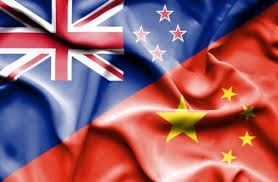
The Government has confirmed that after three years, it’s concluded negotiations to upgrade New Zealand’s free trade agreement (FTA) with China.
The agreement is expected to be signed in early 2020.
Speaking at the East Asia Summit in Thailand, following a meeting with Chinese Premier Li Keqiang, Prime Minister Jacinda Ardern said the upgrade ensures the FTA “remains the best that China has with any country”.
While the draft text is yet to be legally verified and released, Ardern and Trade Minister David Parker said in a statement that it doesn’t include any changes to the dairy sector’s access to China.
Under the existing NZ-China FTA, signed in 2008, all tariffs will come off most dairy products in two years’ time and milk powder in four years.
Elsewhere, the upgraded FTA will:
- Remove tariffs from another 12 New Zealand wood and paper products, worth NZ$36 million in trade to China. The change will see 99% of New Zealand’s $3 billion wood and paper trade to China have preferential access.
- See fresh food products, and other products that may have transited through other countries on their way to China, released faster at the Chinese border.
- Enable approved exporters to self-declare that their goods are “New Zealand goods”, reducing compliance costs.
- Make it easier for exporters to comply with product labelling requirements.
- Introduce commitments to promote environment protection and ensure environmental standards are not used for trade protectionist purposes.
- Provide greater market access for New Zealand in services sectors “of commercial interest to New Zealand” such as environmental, audio-visual, ground handling and specialty air services.
- Provide some services exporters, such as education, with protections should China make new commitments to other countries that make New Zealand exports relatively less competitive.
- Rejig visa allocations for “iconic Chinese occupations” so that twice as many Chinese tour guides (200) and twice as many Mandarin teaching aides (300) can get visas, at the expense of less used visa categories. The cap for “iconic Chinese occupations” will remain at 800.
- Include new chapters on electronic commerce, environment and trade, competition policy and government procurement “reflecting advances in trade rules and business practices over the past decade”.
The upgraded FTA won’t change New Zealand’s investment settings.
Ardern and Parker said “the government’s right to regulate for legitimate public policy purposes continues to be duly protected as is our exception for the Treaty of Waitangi, which enables the government to take measures it considers necessary to fulfil its obligations to Māori”.
“New Zealand was the first developed country to sign a free trade agreement with China, in 2008, but China’s free trade agreements have evolved since then,” Parker said.
“This is why we entered into upgrade negotiations: to ensure our agreement is modern and deepens our relationship further, and to ensure that New Zealand’s exporters have a deal as good as, if not better than, their competitors.”
We welcome your comments below. If you are not already registered, please register to comment
Remember we welcome robust, respectful and insightful debate. We don't welcome abusive or defamatory comments and will de-register those repeatedly making such comments. Our current comment policy is here.