
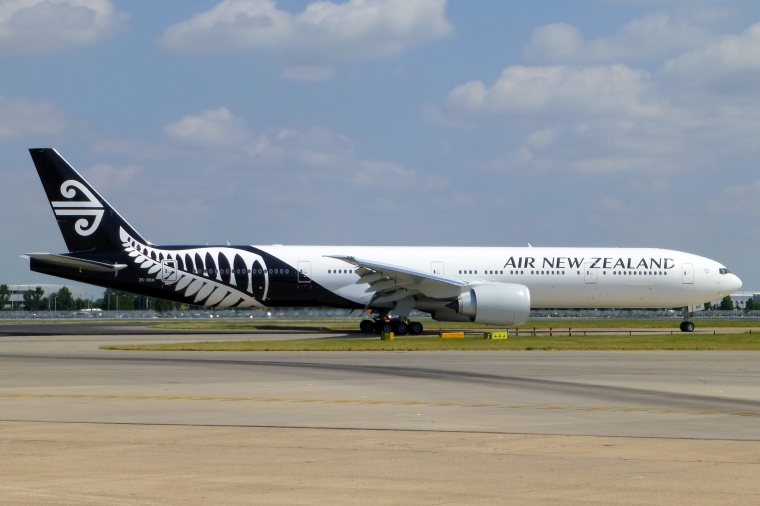
The Government is stepping in to support Air New Zealand by providing a loan of up to $900 million.
Finance Minister Grant Robertson said it was clear Air NZ couldn't access this kind of funding elsewhere, and "without this intervention, NZ was at risk of not having a national airline".
Air NZ will be able to draw down on the “standby loan facility” if its cash reserves drop below a minimum threshold.
The deal gives the Government the ability to seek repayment by converting the loan into equity or getting the airline to do a capital raise after six months, should this be necessary.
The Crown already has a 52% shareholding in Air NZ. Robertson wouldn't be drawn on the likelihood of the airline requiring more government support, possibly to the extent there’s a government takeover, saying the situation remains "fluid".
Under the deal, Air NZ is also required to suspend its interim dividend payment, worth $123 million.
Air NZ's share price plummeted on Friday morning. When share trading was halted on Monday, shares were trading at $1.54. As at 11.50am, the share price had fallen to 85 cents. Air NZ shares had been trading at around $2.80 in late 2019/early 2020.
“This agreement means that Air NZ is in a position to play its part in making sure Kiwis can return home from overseas and that essential flights and freight lines for goods like pharmaceuticals remain open by ensuring flights continue to and from key international destinations," Robertson said.
"The agreement also safeguards the domestic network, with flights assured to all current destinations.
“While today’s action means the company can continue to operate, given the unprecedented shock to the global aviation industry caused by COVID-19, Air NZ has advised that there will unfortunately be job losses as capacity is cut.
“The Government is actively working with Air NZ on what can be done to support these workers. This includes work underway through a separate process to mobilise some of Air NZ’s workforce to other areas of our fight against COVID-19, including supporting the health response."
The debt facility will be provided in two tranches - one of $600 million with an effective interest rate initially expected to be between 7% and 8% per annum, and a second tranche of $300 million, with an effective interest rate expected to be in the order of 9% per annum.
The facility will be available for 24 months. The effective interest rates on both tranches will step-up by 1% if the facility remains after 12 months.
Robertson said this style of finance had been chosen because it could be done immediately.
Here's a statement from Air NZ:
Air New Zealand has entered into a debt funding agreement with the New Zealand Government. Under the terms of the agreement the Government will provide a standby loan facility (‘the facility”) of up $900 million to support the airline as it manages the unprecedented impact of the Covid-19 outbreak on its business.
The facility will provide Air New Zealand with the ability to draw down on funds should its cash reserves drop below a minimum threshold, providing additional funds if cash reserves are not at a satisfactory level. The facility was negotiated on an arms’ length basis, with each party having been independently advised. The facility will be provided in two tranches – a tranche of $600,000,000 with an effective interest rate initially expected to be between 7% and 8% per annum and a second tranche of $300,000,000 with an effective interest rate initially expected to be in the order of 9% per annum. The facility will be available for a period of 24 months. The effective interest rates on both tranches will step-up by 1% if the facility remains after 12 months. This debt funding will be used to support the airline’s business operations as it manages the implications of various government border restrictions and substantial reductions in travel demand.
The availability of each tranche of the facility is subject to certain conditions precedent, including agreeing an operating finance plan with the Government and other documentary conditions precedent. Another condition precedent which Air New Zealand must satisfy in order to have the facility available is the cancellation of the 2020 interim dividend of 11 cents per share (which equates to a total of $123 million) that was announced to the market on 27 February 2020 and was due to be paid to all shareholders, including the Government, on 25 March 2020. Air New Zealand’s Board of Directors believes that, given the highly uncertain environment that exists, the cancellation of this dividend is in the best interests of the airline, including because that action is a pre-requisite to the availability of the facility. Accordingly, the Air New Zealand Board has cancelled this interim dividend effective today.
Other terms of the agreement (which is in the form of a binding terms sheet to be converted into long form agreements), include: a prohibition on payment by Air New Zealand of any dividends or other distributions to shareholders (including the Government) while any amount is available to be drawn under the facility, the giving of security for the loan by Air New Zealand and certain of its subsidiaries over their assets (subject to certain exceptions), the Government having the ability to seek repayment through a capital raise by the airline after six months, or converting the loan to equity (subject to compliance with laws and any necessary regulatory and/or shareholder approvals), Air New Zealand giving various undertakings, representations and operational and informational and other undertakings, and typical events of default. NZX Regulation has granted Air New Zealand waivers from the requirements under the NZX Listing Rules to obtain shareholder approval for entry into and performance of the facility with the Government (as a related party of Air New Zealand). Those waivers were granted because of the recent, extraordinary decline in Air New Zealand’s market capitalisation, and on the grounds that Air New Zealand’s Board of Directors have confirmed that: entry into the facility is in the best interests of all Air New Zealand shareholders (other than the Government); there has been an arms’ length negotiation in relation to the facility, and that the Government has not influenced Air New Zealand’s decision to enter into the facility.
Both Air New Zealand and the Government acknowledge that the terms of the facility do not alter the fundamental principles of their relationship, with the airlines Board of Directors, Greg Foran as CEO and the Executive Team maintaining responsibility for all commercial and operational decisions of the airline.
Separately, and distinct from this agreement, the Government is working with Air New Zealand to ensure other key services can be provided, including repatriation flights, maintaining critical cargo transport lines and having Air New Zealand staff assist the health response. Those services will be provided for under separate commercial arrangements to be negotiated in the future on an arms’ length basis between the airline and the Government.
Here's a statement from Robertson:
The Coalition Government has stepped in to protect Air New Zealand with a significant financial deal that protects essential routes and allows the company to keep operating.
The Government and Air New Zealand have agreed a debt funding agreement through commercial 24-month loan facilities of up to $900 million*. The agreement also allows for the conversion of the loan to equity at the request of the Crown.
“Without this intervention, New Zealand was at risk of not having a national airline,” Finance Minister Grant Robertson says.
“Air New Zealand has a unique and critical role in our economy and society. Also, the Government owns 52% of the company, which means we have a responsibility towards it. We have acted swiftly to put this loan agreement in place and support our national carrier.
“This agreement means that Air New Zealand is in a position to play its part in making sure Kiwis can return home from overseas and that essential flights and freight lines for goods like pharmaceuticals remain open by ensuring flights continue to and from key international destinations. The agreement also safeguards the domestic network, with flights assured to all current destinations.
“While today’s action means the company can continue to operate, given the unprecedented shock to the global aviation industry caused by COVID-19, Air New Zealand has advised that there will unfortunately be job losses as capacity is cut.
“The Government is actively working with Air New Zealand on what can be done to support these workers. This includes work underway through a separate process to mobilise some of Air New Zealand’s workforce to other areas of our fight against COVID-19, including supporting the health response.
“This shows how we are all working together in New Zealand in this battle against the virus,” Grant Robertson said.
“Air New Zealand will play an important role in our economic recovery, when the disruption caused by this global pandemic is over.”
Separately, and distinct from this agreement, the Government is working with Air New Zealand to ensure other key services can be provided, including repatriation flights, maintaining critical cargo transport lines and having Air New Zealand staff assist the health response. Those services will be provided for under separate commercial arrangements to be negotiated in the future on an arms’ length basis between the airline and the Government.
* note
The debt funding agreement will be provided on, and was negotiated on, an arms’ length basis, with each party having been independently advised. The facility will be provided in two tranches – a tranche of $600,000,000 with an effective interest rate initially expected to be between 7% and 8% per annum and a second tranche of $300,000,000 with an effective interest rate initially expected to be in the order of 9% per annum. The facility will be available for a period of 24 months. The effective interest rates on both tranches will step-up by 1% if the facility remains after 12 months.
There are a number of other conditions precedent which Air New Zealand must satisfy in order to have the facility available, including the cancellation of the 2020 interim dividend of 11 cents per share (which equates to a total of $124 million) that was announced to the market on 27 February 2020 and was due to be paid to all shareholders, including the Government, on 25 March 2020.
The loan agreement does not affect the Government’s operating position or net debt as it is a commercial loan which is expected to be repaid.
We welcome your comments below. If you are not already registered, please register to comment
Remember we welcome robust, respectful and insightful debate. We don't welcome abusive or defamatory comments and will de-register those repeatedly making such comments. Our current comment policy is here.