
The global fuel crisis underscores just how vulnerable New Zealand is to energy shocks, but there is an opportunity to improve sustainable economic growth and create resilience while also reducing emissions, a report by the Sustainable Business Council and the Climate Leaders Coalition says.
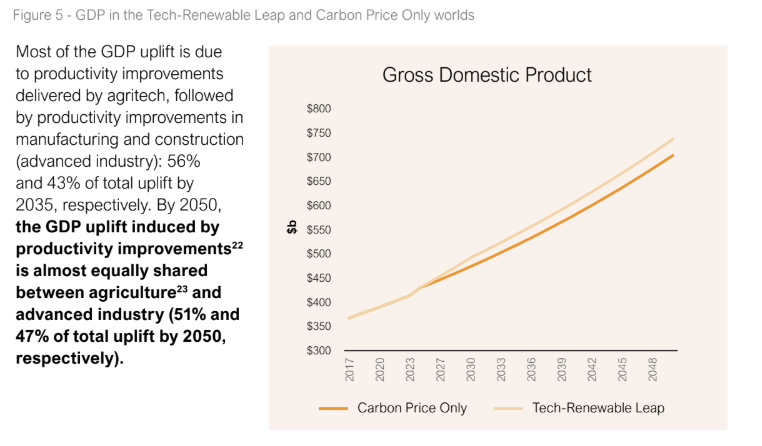
And there's a pay off - "an estimated increase of $22 billion per year in GDP by 2035, rising to more than $33b by 2050, compared to an economy that only relies on the current carbon price path", the report, 'Driving Sustainable Growth: Opportunities for New Zealand’s Economy', suggests.
It says that pursuing sustainable growth would reduce emissions by 6% per year by 2035 and 22% per year by 2050 compared to an economy "that only relies on the current carbon price path."
It's thought this could be achieved through a combination of electrification, digital adoption and agritech innovation, with the report integrating the "economywide effects of electrification with the sector level gains from digital adoption, and layer in the potential for agritech breakthroughs - particularly methane reducing innovations."
Mike Burrell, chief executive of the Sustainable Business Council, said sustainable growth and a productivity strategy "are not an environmental trade off, actually, they reinforce one another".
Burrell said reducing New Zealand's exposure to fuel shocks through increasing productivity, innovation and renewables was timely. He said what they had not realised was when productivity and competitiveness was lifted, "and you focus on resilience, you can also accelerate emissions reductions - and we were surprised by the scale".
Burrell said the disconnect between productivity and sustainable growth was two-fold.
"For a long time we've been following the policy positions that we've put we put in place many decades ago, and we really haven't modernised them. We haven't looked at the fact that it is now more affordable than ever to be able to, for example, to utilise electricity as your main [energy] generation source for many of our uses".
The report referenced research by the Ministry of Business, Innovation and Employment which showed gaps in public investment since the 1980s in critical ecosystems: pilot facilities, biorefineries, market information systems, skilled talent pipelines, and patient capital.
"The other part of it is that we've lost our way in terms of the confidence that we used to have as a country, around being a prosperous country," Burrell said. "The good news is, if we tried to have a growth strategy, say, back in the 80s... it would have been based on carbon."
But due to new technology, "we can grow our economy and we can decouple growth from carbon", he said.
The report stressed credible carbon pricing created "strong demand for lower emissions production and consumption, rewarding firms that can innovate quickly".
"That demand pulls through clean and digital technologies that cut emissions at falling costs, while also enabling firms to do more with less energy and material."
The recommendations included shifting to renewable energy sources, particularly for transport "signaling long-term economy-wide demand, while reducing exposure to global fuel volatility", establishing a public-private ‘energy efficient process heat’ partnership to reduce industrial dependence on imported fuel, and develop a public-private national transport fleet resilience plan.
"This should include integrated and coordinated electrification roadmaps for heavy freight, rail, light vehicles and public transport, while recognising the potential of alternative fuels."
It was policy certainty and coherency over the medium term that was the binding constraint.
Minister says government wants to support sustainable transitions
Climate Change Minister Simon Watts told Interest.co.nz the Government wants to support businesses make sustainable transitions and build long-term growth.
"Our sustainability policies are guided by our climate strategy, which recognises the need to plan for the future by taking practical steps to reduce emissions, meet climate targets, and strengthen our resilience to a changing climate, all while continuing to grow our economy."
That prioritises resilient infrastructure and communities, credible markets, abundant and affordable clean energy, world-leading climate innovation, and nature-based solutions, he said.
"The New Zealand Emissions Trading Scheme is our key tool for reducing emissions. Alongside this, we are focused on climate policies that remove barriers, support research and development, unlock sustainable private investment, and improve market efficiency. This is reflected in our second emissions reduction plan."
We welcome your comments below. If you are not already registered, please register to comment
Remember we welcome robust, respectful and insightful debate. We don't welcome abusive or defamatory comments and will de-register those repeatedly making such comments. Our current comment policy is here.