By Mark Jennings
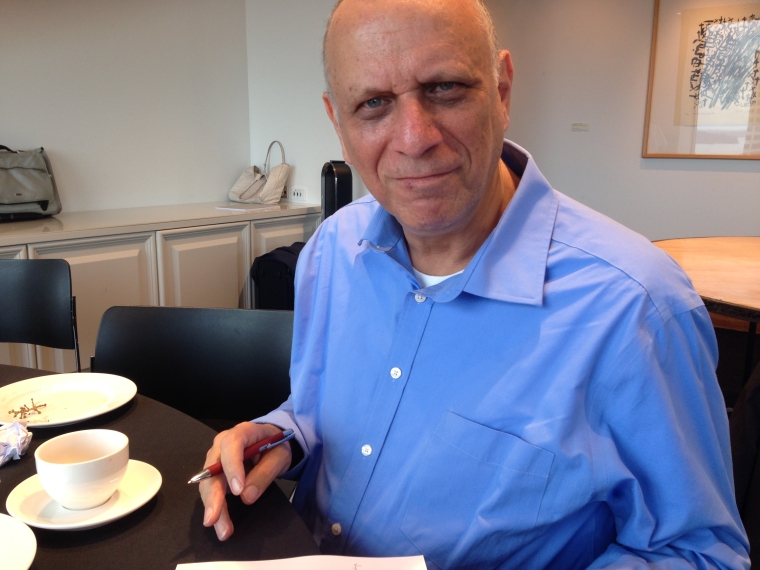
Dov Moran, the man who invented the USB stick, says Kiwi mums can play a key role in boosting this country’s economy.
“They have to stop telling their kids to be lawyers and accountants and encourage them to be entrepreneurs. That’s what has happened in Israel and it is fundamentally changing things. Mothers now say to their kids: 'go do a start-up'," Moran says.
This change in mindset has helped Israel become the second most innovative nation in the world according to the latest World Economic Forum’s Global Competitiveness report.
Switzerland is number one and New Zealand is back in 23rd. The report comes after a record breaking last quarter for Israeli start-ups. 187 start ups raised a record US$1.7 billion, according to accounting firm KMPG in this report (page 3).
Moran’s Tel Aviv-based company, Grove Ventures, is behind some of these fledgling enterprises and he wants New Zealanders and Australians to start investing in them.
“Believe it or not most of the venture capital for Israeli start-ups comes from outside. The laws prevent our own pension funds from investing in higher risk businesses," he says.
Israel has 70 companies listed on the NASDAQ (the traditional market for high tech companies) in the United States, but according to Moran investors can make a lot more money if they get into Israeli start-ups before they go public.
“We are the investors' eyes and ears in Israel. Importantly, we also put our own know how and knowledge into the start-ups we invest in so they have a better chance. Most start-ups fail. Up to 10 percent do ok and about 4 percent do really well."
Moran cites some of Israel’s success stories like Mobileye, which has pioneered technology for driverless cars and is now a US$10 billion company.
A more recent star is the social games company Playtika which has just been bought by a Chinese consortium for US$4.4 billion.
Moran sold his own company M-Systems, which developed the USB stick, for US$1.6 billion nearly 10 years ago.
'Having a back-up in his pocket'
He hit upon the idea after his computer died when he was about to speak at a conference. He was offered another computer but had no way of quickly transferring his presentation on to it. He decided then to never show up at another conference without a backup presentation in his pocket.
“Once I had the idea the rest was easy," says Moran.
The former tank driver in the Israeli army was also the brains behind a company developing the world’s smallest mobile phone. He sold this to Google, but the product hasn’t appeared yet and he is not sure if it ever will.
'Put more money into start-ups'
Moran believes New Zealand has plenty of good ideas, but there isn’t enough money going into start-ups here. He says Israel would not have become known as “Start Up Nation” if its Government hadn’t made a bold move in 1993.
“It put a safety net around investors putting money into venture capital funds. It guaranteed that people would get 80 percent of their money back. The most you could lose was 20 percent of your investment. In the end they didn’t have to spend a cent, but the high tech sector benefited hugely, New Zealand should look at doing something similar," he says.
It is hard to see National Government here following suit, but there are moves underway that could make a difference.
New Zealand and Israel are about to sign an Innovation agreement and both countries are allocating some funding to leverage this.
'Spark plans start-up fund'
Spark CEO Simon Moutter is leading a move to have New Zealand’s biggest companies commit hundreds of millions dollars to a start-up fund. It’s understood that a group of corporates have already signed up.
Moutter took a trade delegation to Israel earlier this year and this has led to a number of partnerships and licensing agreements between Israeli and New Zealand companies.
Another trade mission will go to mid next year to look at Israel’s world leading cyber industry. Moran says this will all help New Zealand’s push to become a more innovative nation but he also suggests we could benefit by looking closely at the latest areas of hi-tech disruption.
“Autonomous cars are going to change a lot of economic factors in our towns and cities. We won’t need as many cars, or insurance companies or downtown parking buildings. Traffic flows will become much better as computers control individual vehicles," Moutter says.
Moran also predicts that it won’t be long before we see major advances in health care.
“Everyone is soon going to be wearing sensors to monitor their heath and this will be revolutionary. DNA and data analysis will enable more specific cures. We will see a lot more use of robots in hospitals too and I think this will make surgery much safer."
He believes New Zealand can benefit hugely by being an early adopter of these technologies, but only if we strengthen the hands of our budding entrepreneurs first.
We welcome your comments below. If you are not already registered, please register to comment
Remember we welcome robust, respectful and insightful debate. We don't welcome abusive or defamatory comments and will de-register those repeatedly making such comments. Our current comment policy is here.