
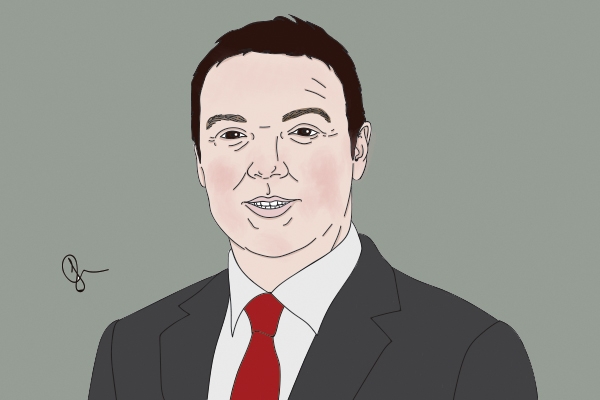
Financial Markets Authority (FMA) CEO Rob Everett has given a withering critique of the Milton Friedman principle of shareholder primacy, saying company boards and executives should "anchor themselves" in what's good for New Zealand and the communities in which they operate.
Everett made these comments in a presentation to the NZ Capital Markets Forum, entitled Thinking beyond shareholders. It was released by the FMA on Friday. He also said companies ought to ask what their purpose is. And if it's solely to make money at the expense of everyone else they shouldn't be allowed to operate, Everett said.
The model favoured by American economist Milton Friedman was never valid or sustainable, Everett said. He described the Friedman model as one where the responsibilities of a listed company board are primarily aimed at returns for shareholders, with the competitive dynamics of the “market” itself able to weed out those who do harm.
Everett, who worked for investment bank Merrill Lynch prior to joining the FMA, said he hadn't "gone communist." Rather what working at Merrill Lynch had taught him was when a firm shifts from a client-focused model to a shareholder and employee-focused model, "bad stuff happens."
"Across the globe, people are asking themselves – what purposes do companies serve, what are the duties of their boards, and who are those owed to......Well, there’s a lot in there but I am going to focus first on the question of the duties of boards and then on whom board directors are there to serve."
Although directors do "of course" owe their duties to those who entrust the company with their hard earned capital, they also have employees to consider, plus the local community, the environment and their regulators. Last but not least is the customers, who pay for products or services.
"They have a right to be treated with respect, not to be lied to, misled or avoided when they aren’t happy with how they have been treated," said Everett.
Meanwhile a focus on what is expected from boards opens up the broader question of who they serve, he added.
"This is particularly challenging in somewhere like NZ where the financial services firm boards are often 'subsidiary boards' - ie they have to balance serving and directing the NZ entity, while under the direction and resource constraints of a parent company in another country. A country and parent’s entities which, despite the similarities, quite naturally put their own agenda first."
'We have plenty of reason to challenge Friedman’s model'
Everett said the accepted model of capitalism post-Friedman, and encouraged by ex-US Federal Reserve Chairman Alan Greenspan, has been "an unfettered pursuit of corporate profits with the assumption that rational and judgemental markets will weed out the crooks and the incompetents, and the 'best' will rise to the top."
"All of us in financial markets know that markets are often not rational and nor, it seems, are parliaments or electorates."
"In 1970, Friedman said that those who claim 'that business is not concerned merely with profit but also with promoting desirable social ends . . . They are — or would be, if they, or anyone else took them seriously — preaching pure and unadulterated socialism.' Unfortunately, we have plenty of reason to challenge Friedman’s model," Everett said.
"One flaw in the principle of shareholder primacy is that the shareholder is often no longer the person or entity at the biggest risk from the conduct of the company. Reductions in profit or even bankruptcy at any particular company are not existential threats to global fund managers or other institutional investors running huge, diversified portfolios. Employees have much more at risk."
"As we have seen here with a situation like Mainzeal, suppliers likewise often have more at risk than shareholders especially when they become, whether they like it or not, creditors of the company. BP risked death and injury to its employees, irreversible damage to the environment and risk to the livelihoods of the local fishing fleet, in cutting corners and shaving off costs on its Deepwater Horizon rig," Everett added.
"Social licence is a phrase that is becoming over-used but I believe that most market participants now accept that all corporate structures have responsibilities to a broader set of stakeholders than their shareholders."
Companies need to ask themselves what their purpose is and what their values are, Everett said.
"And if it is purely to make money at the expense of everyone else they should not be allowed to operate."
Citing examples aired in Australia's recent financial services royal commission, Everett said taking outrageous levels of fees on old investment products “because it’s in the contract” might be legal but it’s not right. Additionally charging fees for no service “because no one has noticed and we managed to pull the wool over the regulators’ eyes” is not right. And nor, he said, is charging dead people or failing to fix known issues because there are technical complications.
"These behaviours apply equally across a whole range of corporate sectors. Some of the Commerce Commission action against Viagogo, Vodafone and Youi insurance reflect that," said Everett.
"Some might argue that competition will ultimately deal with those who treat any of those constituents with contempt and so it will - but experience tells us - not quick enough. Not before customers have been mistreated, rivers polluted or employees harmed. This is mostly why we have conduct regulators or consumer protection agencies. Frankly, without wanting to do myself out of a job, that’s a shame but it is the reality."
Push back
Everett also said that, if all that matters to boards and CEOs is the share price and how to keep demanding shareholders happy, the problems revealed in financial services in Australia and elsewhere will happen in NZ.
"So boards and executives need to anchor themselves in what is good for NZ and the communities in which they operate and they need to push back on parent companies and shareholders who push them in the other direction."
"Boards have to balance serving the shareholders by doing the right thing. And as [Kenneth] Hayne pointed out in the Australian Royal Commission that is a far higher standard than complying with the law, or doing stuff that may not be in the spirit of the law, or does not 'affirmatively' and provably breach it," Everett said.
"I think the tide has turned in terms of what the public and the community at large expects from its corporate leaders. Issues of trust and fair treatment of those that companies come in contact with show up clearly in the global research as the top indicators for employees and customers.To some extent, the law hasn’t caught up yet although recent consultations on corporate governance standards in both Australia and the UK reflect the general direction."
"Regulators and the law should reflect the expectations and needs of society. And those goalposts are moving," said Everett.
*This article was first published in our email for paying subscribers. See here for more details and how to subscribe.
We welcome your comments below. If you are not already registered, please register to comment
Remember we welcome robust, respectful and insightful debate. We don't welcome abusive or defamatory comments and will de-register those repeatedly making such comments. Our current comment policy is here.