
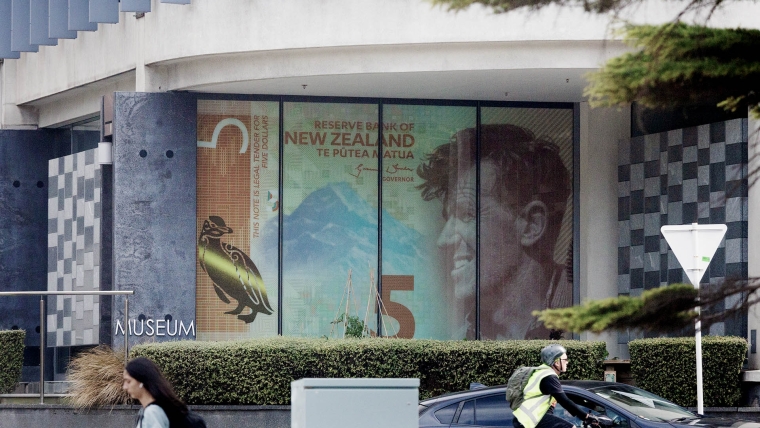
Economists expect both headline and core inflation will fall into the Reserve Bank’s target range in the next three months, with 75% of June inflation unrelated to economic demand.
The consumers price index (CPI) data, released on Wednesday, showed headline inflation at its lowest level in three years (3.3%), but largely because of lower international prices.
Recently, there has been something of an obsession with non-tradable inflation as those parts of the economy are what the Reserve Bank supposedly has the most influence over.
Non-tradables are prices that do not face international competition. Annual inflation in that category was still elevated in June at 5.4%, down from 5.8% in March.
But not all non-tradable prices are easily influenced by the Reserve Bank. There are few key problem areas which monetary policy may only affect slowly and indirectly.
Vehicle and home insurance, petrol prices, actual rents and the cost of home ownership, alcohol and tobacco taxes, and local authority rates made up 75% of all annual inflation in June.
These items contributed 2.5 percentage points to the headline rate of 3.3% and each has a reason for getting more expensive that doesn’t have much connection to consumer demand.
Petrol prices are the only truly tradable good in that list. Oil prices were relatively low during the June quarter of 2023 but OPEC production cuts that July quickly changed that.
The cost of fuel has been volatile over the past year but the non-discounted price at Kiwi pumps was 40 cents higher at the end of this June than it was one year earlier.
Global interest rates do have an impact on fuel prices but local rates alone can only have a small effect on how much is bought and sold at the global market price.
Costs push inflation
Everything else in that list are what ASB economists call “cost-driven” prices which are partly a delayed reaction to previous inflation and are unlikely to be repeated.
Alcohol and cigarettes are the perfect example. These are being driven higher by taxes which are indexed to the Consumers Price Index, and so were lifted 6.6% last July.
Strip out the indexed tax and prices in this category increased just 0.3%. Beer and wine effectively got cheaper, with producers seemingly absorbing some of that added cost.
Vehicle and home insurance, while not directly indexed to CPI, are heavily exposed to market prices of the goods they are covering. Construction costs in particular have climbed a lot and made it more expensive to repair damage to a house.
Repeated extreme weather events over the past year have triggered a record number of insurance claims, worth over $3 billion, and caused insurers to push up their risk premiums.
The former problem shouldn’t be repeated, with generalised inflation now under control, and the latter is a “relative price” change that isn’t related to a supply and demand imbalance.
It is a similar story with local council rates, which are essentially a bundle of services exposed to all the other prices in the economy. Additionally, councils have suddenly stopped undercharging for the costs of building and maintaining infrastructure.
Rents are another quasi-indexed price as they closely track wage growth because New Zealand has a perpetual shortage of housing. Nominal incomes have been rising with inflation and rents are following along with some delay.
Tight monetary policy has already weakened the labour market and will break the wage–prices feedback loop, and so rents should start to stagnate with wage growth.
It's never been so over
Mark Smith, a senior economist at ASB, said annual inflation excluding these cost-driven items had fallen to 2.4% in June and was on track to be below 2% by the end of 2024.
“We do not envisage that higher costs from these pockets will feed through into generalised increases in inflation in the current environment. In fact, they seem to be a significant added cost to household budgets and could have a disinflationary impact on inflation,” he said.
Late on Wednesday, the retail bank changed its interest rate prediction after the Reserve Bank published its own measures of core inflation.
The central bank’s sectoral factor model of core inflation dropped to its lowest reading since September 2021 at 3.6%.
It uses 96 CPI components to separate prices into tradables and non-tradables and estimates core inflation as a weighted average of common changes in these prices, while excluding unusual price movements.
Another Reserve Bank model, which does the same thing without differentiating between tradables and non-tradables, showed core inflation was in the target range at 2.8%.
In fact, CPI was so close to target in the June quarter that just excluding volatile petrol prices would be enough to get it across the line.
Statistics New Zealand’s measures of core inflation, which trims off the largest changes both up and down, ranged between 3.4% and 3.8% depending on how much was trimmed.
While roughly 3.6% inflation is still too high, it is a massive improvement on the March quarter when these Stats NZ measures were showing a number closer to 4.5% and the Reserve Bank was at 4.2%.
Smith said the sharp drop in core inflation estimates gave him confidence the central bank would not need to wait for the next CPI release and would first cut rates in October.
ANZ and Westpac both also moved their first cut prediction from February to November.
Work it out
The Reserve Bank’s key core inflation measure has now been falling for four consecutive quarters and, if the current pace continues, the next print is likely to be at or below 3%.
New Zealand’s central bank was one of the first to hike interest rates in 2021, could it be among the first to cut them as well?
We shouldn’t get ahead of ourselves. While high interest rates aren’t able to impact some of those price changes described above, they are able to affect consumers' reaction to them.
For example, a Wellington gym recently told its members it was lifting prices by 5% due to significant rises in its own operating costs.
“We have faced annual increases of up to 9% in key expenses such as rent, insurance, utilities, and labour. The scale of these cost increases means it would be unsustainable for us to absorb them entirely,” it said.
Back in May, the Reserve Bank admitted that rent, insurance, and utilities weren’t particularly responsive to monetary policy. But high interest rates would limit firms’ ability to pass on those costs and trigger another round of generalised inflation.
Policymakers may want to hold interest rates steady until they are sure those last echoes of inflation are falling on deaf ears.
We welcome your comments below. If you are not already registered, please register to comment
Remember we welcome robust, respectful and insightful debate. We don't welcome abusive or defamatory comments and will de-register those repeatedly making such comments. Our current comment policy is here.