
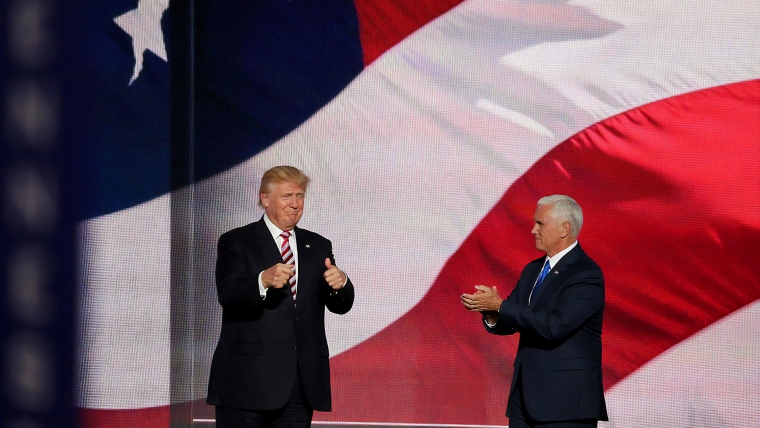
It was hard to sleep on Wednesday night. Donald Trump’s so-called reciprocal tariffs took effect that afternoon and the bond market was reacting poorly.
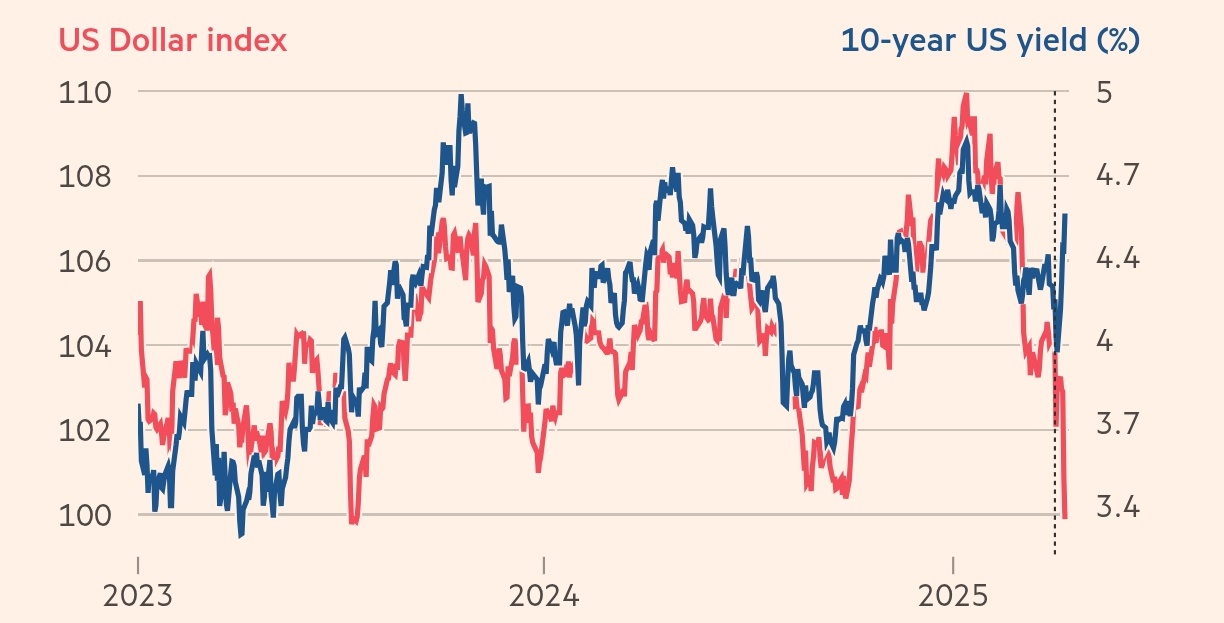
Long-dated yields were surging at record-breaking speeds, despite a similar sell-off in the stockmarket. The US$29 trillion market, which underpins the entire global financial system, was showing signs of stress.
“BE COOL! Everything is going to work out well,” the United States President posted on his own social media platform at about 1.30am, New Zealand time.
This attempt at reassuring the market, in all caps, did not work. Within hours, Trump had announced a 90-day pause on the ‘reciprocal’ tariffs to stave off the risk of financial crisis.
“I thought that people were jumping a little bit out of line. They were getting a little bit yippy, a little bit afraid,” he told reporters, when asked to explain the pause.
Markets rallied out of sheer relief but it was short-lived. Trump had kept the 10% baseline tariff in place and also hiked the base rate for Chinese imports to a staggering 145%.
While some compliant US allies—such as Japan and South Korea—were no longer being unfairly targeted by the White House, the average tariff on imported goods was still higher than any other time in the past century.
Trade stops
Sean Keane, a top strategist at JB Drax Honore, said it doesn’t matter if the China tariffs were 125% or a thousand percent because “trade stops, largely” in either case.
“The genie is out of the bottle and it can’t easily be put back in. Global fund managers … are going to rethink concentration risk in US assets and dollars,” he said in an interview with Madison Malone.
“What we saw [on Wednesday] was the selling of bonds as people tried to realise cash and move out of the United States, to get to safety, and that was very alarming.”
Since the tariff policy was announced: 10-year bond yields have climbed above 4.5%, the US dollar has fallen more than 3% against its trading partners, and the benchmark stock index has dropped some 7%.
Investors aren’t just shifting their money around the American financial system, some are withdrawing it entirely. This loss of confidence isn’t just due to the tariff policy itself, but also the sheer incompetence of its architects.
The White House relied on a flawed economic theory, miscalculated its own formula, sent mixed messages about its goals, announced incorrect tariff rates, and then backtracked on some elements while doubling down on others.
Sitting in stasis
This has frustrated Prime Minister Christopher Luxon, who has plenty of personal insight into how corporate chief executives will be responding to the constant confusion.
“Part of the problem is the instability and uncertainty,” he told reporters on Thursday after waking up to news of the 90-day pause.
“The danger is that everybody's just sitting there in a state of stasis. [Businesses] not wanting to invest, consumers not wanting to purchase or buy, because they don’t know what’s happening next”.
Luxon wants economic growth to kick into gear and foreign investors to pump capital into New Zealand. That might not happen without clarity on how it fits into the new global supply chain.
But the Prime Minister didn’t wait for certainty to suddenly appear. He jumped on the phone with the leaders of the Comprehensive and Progressive Agreement for Trans-Pacific Partnership (CPTPP) nations and the European Union to pitch them a new rules-based trading bloc, which could facilitate free trade between about 30% of the global economy.
Stagflation
By chance, the Reserve Bank was the first central bank in the world to react to the tariff drama, and it agreed with Luxon that it was all bad news for economic activity.
Demand for New Zealand exports were likely to fall as weaker global growth and trade uncertainty reduced investment and spending, it said.
The Monetary Policy Committee mostly thought this would mean less inflation and weaker economic growth prospects, and that there was likely scope to lower interest rates further.
It is a different story in the United States, where individual central bank officials have been emphasizing the risk of inflation and suggesting they wouldn’t vote to cut interest rates.
Online betting platform Polymarket sees a 65% chance that the US will enter a recession this year, which could mean a repeat of the ‘stagflation’ last seen in the 1970s.
It’s always about China
Kelly Eckhold, the chief economist at Westpac NZ, praised the Reserve Bank for not overreacting to the troubled markets. Particularly since the tariff policy was softened just hours later.
“There is really no script out there for how to think about current events,” he said in a video on Friday.
“The biggest downside risk NZ faces is with the exchange rate. The reality that some tariffs are here to stay and our biggest trading partner, China, is likely to be at the center of those”.
Donald Trump’s policy was supposed to be part of a wider competition between the United States and China to determine who gets to have the most influence in the Indo-Pacific.
Stunting China’s export-based economy was likely intended to prevent it from building enough strength to directly challenge the Western alliances. But it may have backfired.
End of an empire?
Martin Whetton, head of financial markets strategy at Westpac Group, said the United States had lost, or at least diminished, its credibility as a financial safe haven and global reserve.
The era of “exorbitant privilege” it had enjoyed since the end of World War II ended this week as investors questioned the credibility of the US administration.
“No other market has had this reserve status in the modern era, and those who had it previously, saw their empires crumble,” he wrote.
The fact that anxious investors didn’t rush to buy treasuries and dollars to protect themselves suggested the US had “flippantly” given up its place as the global financial hegemon.
Superpowers don’t last forever. Great Britain controlled the world for about a hundred years prior to the world wars. Then it became stretched too thin and had to retreat.
By the 1970s, it had lost its status as a world power and joined the European Economic Community in an effort at revitalisation. This pulled the rug from under New Zealand, which had established itself as a farming colony for a British Empire which no longer existed.
What happens if—or when—the United States loses its global dominance? You can hear that question being whispered in the bond market, and it keeps me up at night.
We welcome your comments below. If you are not already registered, please register to comment
Remember we welcome robust, respectful and insightful debate. We don't welcome abusive or defamatory comments and will de-register those repeatedly making such comments. Our current comment policy is here.