
By Anna Whyte and Mandy Te
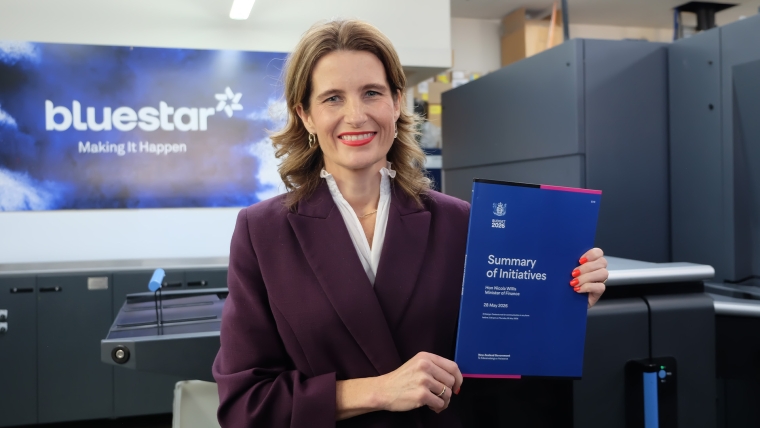
While the government books before the Iran war were in a "much better" shape than what was presented to the public on Budget Day, Treasury's optimistic outlook leans towards the oil shock being painful, but sees the the country's finances improve.
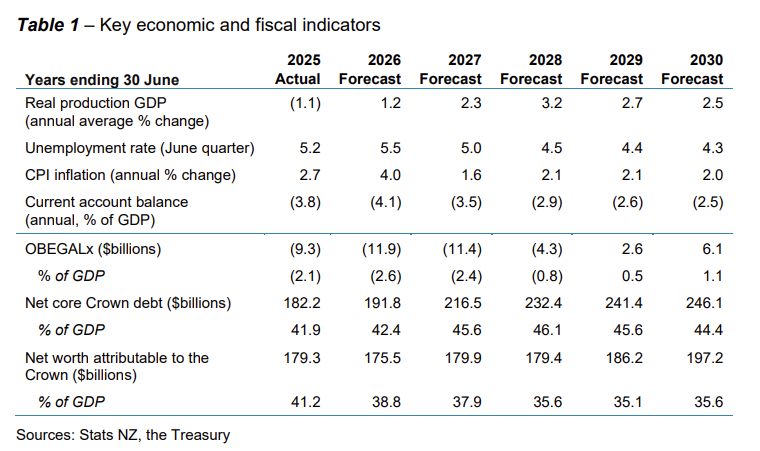
The OBEGALx, the Operating Balance Before Gains and Losses, excluding the revenue and expenses of the Accident Compensation Corporation, was expected to return to surplus a year earlier than previously forecast, Thursday's Budget 2026 revealed.
Economist Cameron Bagrie said the forecasts; "have got us going through an economic shock, which is bad for growth and yet the fiscal forecasts have got the government being better off."
"So I'm scratching my head in regard to how you go from A to B and how that's going to work."
On where Treasury's optimism comes from, Bagrie said if you look at the forward curve for oil prices, it has oil prices lower in 12 months than where they are today.
"So implicitly, markets are sending a bit of a signal that they think this thing is going to end. I guess the big issue at the moment is what's the length of duration? Is it going to be three months, six months, nine months, or 12 months?"
Broccoli
Budget 2026 reminded Bagrie of a Bill English-style budget - “ we call them with the broccoli variety.”
“The thing about broccoli is you might not like it, but it tends to be pretty good for you."
“I think there was a little bit of that flavour that's actually coming through today. Look, no one likes to see clamping down on government expenditure, reductions in headcount across government sector, sinking lid policies - but we need to go from deficit to surplus.”
'I’m worried about the impact it's had on Kiwis'
Finance Minister Nicola Willis told Interest.co.nz before the Iran war, the books were looking “much better.”
“It’s gutting more for me because I’m worried about the impact it's had on Kiwis and the thing that I'm just so conscious of is all of those families and businesses who were just recovering… and then bang, we get hit by this fuel price spike, diesel's up, petrol's up, and it's been really hard on household budgets and businesses.”
Willis said the earlier than previously expected surplus return "means less borrowing, a lower debt track and a stronger fiscal position than previously forecast"
"Treasury also expects net core Crown debt to start reducing as a percentage of GDP in 2028/29, with this turning point occurring a year earlier than previously forecast."
'Little b Budget'
Infometrics Chief Executive Brad Olsen, describing Budget 2026 as the 'little b Budget', said he thought Treasury’s optimism was not necessarily misplaced.
"When you look at the futures curve for oil prices, we don't necessarily look at them, go, you know what, that's bang on. But Treasury had to put a line in the sand somewhere."
"The piece around the uncertainty in their forecast is useful, there's a 50% to 60% chance of the surplus happening, which tells you something."
"Treasury are not normally known to be the most optimistic people. Generally, they are a little bit more on the conservative side. So, if they're showing a more upbeat view, that is telling that something's clearly showing through a little bit more."
Olsen’s read on the forecast is that the hit from the Iran war on the economy; “might not be quite as intense as we first expected, because you look at where fuel prices are at the moment, they're not nearly as high as they were back in April - so if that pathway continues and things continue to ease down, then I think it's reasonable where the forecasts have landed.”
He said Treasury’s central scenario seemed to be of the position the risks tilt to the downside.
“I don't think you get anything better than Treasury's forecast, but you could well get slightly worse.”
ANZ economists, Miles Workman, Matthew Galt and David Croy, said in a statement Treasury’s economic forecasts were much stronger than anticipated.
"That said, while we see downside risk to the Treasury’s forecast, given the degree of uncertainty around everyone’s forecasts at present we certainly wouldn’t say they are outside a plausible range.
“Like our own forecast, the shelf life on the Treasury’s outlook is likely to be short - the global situation is simply too volatile and unpredictable. But in a nutshell, we’d describe them as rosy."
"The Treasury appears to have taken the view that more inflation will drive higher nominal GDP and a higher tax take, while having only a short-lived impact on real activity. We are more cautious in our forecasts about how the oil price shock will hit businesses and the economy," the ANZ economists said.
'Glass half full view'
ASB senior economist Mark Smith said while the election bribes were absent, "the numbers have a glass half full view of the fiscal outlook."
“Treasury also provided longer-term forecasts in the Budget, which should show the eventual return to fiscal surpluses and underscore the prudent fiscal manager message with the rebuilding of fiscal buffers. However, there remains a clear risk that the foreshadowed upswing in economic activity and Crown revenues disappoint, with the frequency of adverse shocks hitting the NZ economy showing few signs of slowing.”
S&P Global Ratings' primary analyst for NZ, Anthony Walker, said it was their view NZ's economy and budget were exposed to the Middle East conflict and its disruptions, with downside risks such as supply challenges and; "elevated prices for both oil and fertilizer could drive the country's inflation and interest rates higher, hindering the country's recovery in the economy, budget, and external accounts".
“While we forecast real GDP growth will pick up to about 2% over 2026, downside risks could see the country's wealth gap and fiscal deficits widen compared with other advanced, highly rated sovereigns. If sustained, this could exert downward pressure on the sovereign rating.”
“New Zealand's monetary policy flexibility, wealthy economy, and strong institutions and governance underpin the sovereign rating. Proactive and generally bipartisan policymaking has long supported sustainable public finances and economic growth in the country. We expect these strengths to remain steadfast.”
We welcome your comments below. If you are not already registered, please register to comment
Remember we welcome robust, respectful and insightful debate. We don't welcome abusive or defamatory comments and will de-register those repeatedly making such comments. Our current comment policy is here.