
Petrol and diesel prices dropped in July but airfares surged, according to Statistics New Zealand’s latest Selected Price Indexes (SPI) figures.
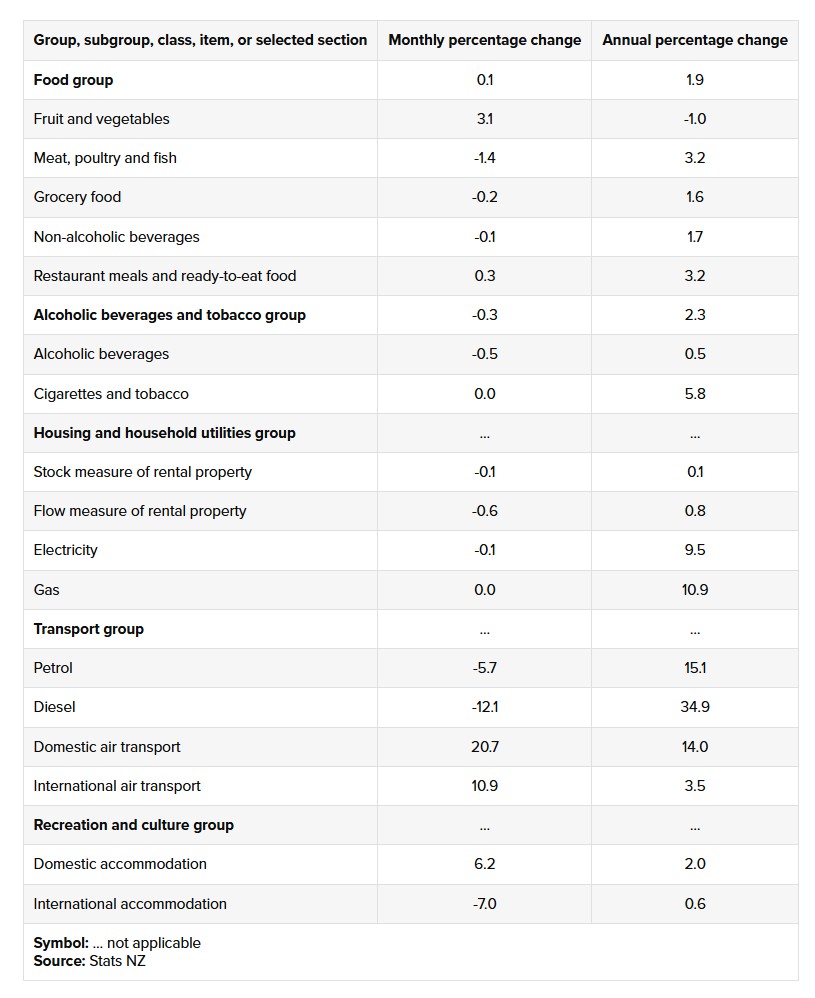
Petrol prices were down 5.7% and diesel dropped 12.1% from June to July, the latest SPI shows.
Stats NZ prices and deflators spokesperson Nicola Growden said fuel prices had decreased for a third consecutive month, following increases in March in April.
“The recent declines mean prices for petrol and diesel are now below levels recorded in March, although they remain higher than in February.”
Increases in fuel prices for most of this year have been driven by conflict in the Middle East, which has impacted fuel supply and caused major supply disruption in the global oil market.
The SPI is a monthly series featuring about 47% of the contributors to the quarterly Consumers Price Index (CPI) - New Zealand's official measure of inflation. The SPI also includes monthly data on things like food, alcoholic beverages and tobacco, rental housing, utilities, transport and accommodation services.
But in the 12 months to July, prices for petrol and diesel had increased. Petrol was up 15.1% annually and diesel was up 34.9%.
Largest monthly increase in domestic airfares in July month since at least 2015
There was a monthly increase in July for domestic and international airfares, with domestic airfares rising 20.7% and international fares increasing 10.9%.
“This is the largest monthly increase in domestic airfares in a July month since we started collecting monthly prices for domestic airfares in 2015.”
“Because many travellers book flights months before they travel, changes in airfares can reflect a range of market conditions over time,” Growden said.
Annually, domestic airfares rose 14.0% and international airfares rose 3.5%.
‘Smallest annual increase in food prices since December 2024’
Food prices increased 1.9% in the year to July. This follows a 2.5% rise in the year to June. Growden said this was the smallest annual increase in food prices since December 2024.
Restaurant meals and the ready-to-eat food group was the largest contributor to the annual increase in food prices, up 3.2%.
This was followed by an annual increase in the grocery food group - up 1.6%.
Meanwhile food and vegetable prices fell 1.0%.
Price increases were recorded for standard two-litre milk, dine-in lunch/brunch, takeaway coffee and white bread while price decreases were recorded for tomatoes and fresh eggs.
Monthly food prices up 0.1% in July
Food prices saw a 0.1% increase between June and July. However the fruit and vegetables group was up 3.1%.
The meat, poultry and fish group decreased by 1.4%.
“Meat and poultry prices recorded their largest monthly fall in more than five years, decreasing 1.7% in July,” Growden said.
“The last time we saw a fall in prices of this size was in November 2020.”
Monthly prices increases were recorded for strawberries, cucumbers, capsicums and standard two-litre milk.
Price decreases were recorded for avocados, oranges, chicken nuggets and large soft drink bottles.
CPI and the Official Cash Rate
In July, the Official Cash Rate (OCR) was raised from 2.25% to 2.50% in the Reserve Bank's July Monetary Policy Review (MPR), marking the first time since May 2023 the central bank had increased the OCR.
The Reserve Bank (RBNZ) noted that although oil prices have fallen, the effects of the oil shock would linger for some time.
“With inflation still above target and economic activity expected to strengthen, some further reduction in monetary stimulus is likely to be required to return inflation to the 2% target midpoint,” the RBNZ said.
Annual inflation, as measured by the CPI increased to 4.1% in the June quarter – the highest annual inflation rate NZ has seen since it hit 4.7% in December 2023.
At the July MPR, the RBNZ lowered its projection for near-term inflation because current oil futures pricing was now significantly lower than previously assumed by its Monetary Policy Committee, with annual headline inflation projected to peak at 3.9% in the June quarter before dropping to 3.3% in the September quarter.
The RBNZ is tasked with maintaining inflation between 1% and 3% based on the CPI, specifically targeting 2%. The OCR is its main tool for doing this.
The OCR will next be reviewed on September 2 and the September quarter CPI is due out on October 22.
Food prices index
Select chart tabs
Here is the detailed SPI information for July as supplied by Statistics New Zealand:
We welcome your comments below. If you are not already registered, please register to comment
Remember we welcome robust, respectful and insightful debate. We don't welcome abusive or defamatory comments and will de-register those repeatedly making such comments. Our current comment policy is here.