
Subscribe to our daily podcast here.
Here's our summary of key events overnight that affect New Zealand, with news of a sharp fall in American consumer credit demand.
But first, yesterday, New Zealand was the centre of interest rate news with its surprise -½% rate cut. But two other central banks also cut rates yesterday as well; India cut theirs from 5.75% to 5.40%, and Thailand's moved down -0.25% to 1.50%. The Indian move was regarded by markets as timid. The Thai move was more of a surprise but taken in the trade and currency war context because they were worried about the 'strength' of the Thai bhat.
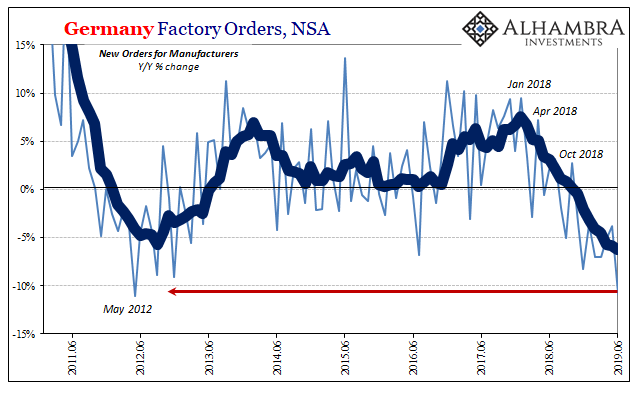
The latest data on world trade is not encouraging.
In the US, orders for new trucks, which were running at record high level since 2018, are now reversing fast. Orders for big-rigs fell in July to their lowest level since 2010 as freight-market demand scales back quickly.
International airfreight demand is falling and the pace of the drop is picking up. The latest data for July shows it is down more than -5% from the same month a year ago, the eighth straight month of declines. In the Asia/Pacific region, this data is almost -6% lower. In North America it is down -7%.
Wall Street is -0.5% weaker today, although overnight European and Asian markets pretty much marked time. The US Administration's attacks on the Fed is being seen as cheap blame-shifting and not dealing with key economic issues they need to address. Bond investors are increasingly concerned and the closely-watched 3m-10yr yield curve is now more negative at -35 bps.
Markets are also getting to understand that the Chinese ability to depreciate their currency is a force the US can't counter. Worse, they now understand that even if the Chinese leave their currency to market forces, as the US insists, the yuan might weaken even faster. Its an own goal by Washington, and it is a tension that will be around for a long time. Markets sense that Trump's trade policy has failed and the consequences for the US won't be positive.
Not only is international trade turning lower, but US consumer credit demand is as well. Their June data has come in unexpectedly weak and a US$1 trillion lower than markets were expecting.
For months we have been reporting the rise and rise of the iron ore price. But overnight it has suddenly turned, and sharply. It is down more than -5% in one day.
In Australia, Chinese Government proxies are getting even more aggressive on campus, using undercover tactics to stifle protest.
And in a sign of the times, insurer Suncorp (Vero and AAInsurance in New Zealand) has raised its provisioning for weather-related events. Climate change costs will first be felt by households in their insurance premiums.
The UST 10yr yield is sharply lower yet again, now at 1.69%, building on the earlier weakness. Their 2-10 curve is flatter at under +10 bps while their negative 1-5 curve is wider at -28 bps. Their 3m-10yr curve is now over a negative -30 bps. The Aussie Govt 10yr is down -9 bps to just 0.94%. The China Govt 10yr is also little-changed and holding at 3.07%, as is the NZ Govt 10 yr which is now at 1.19%, a dive of -14 bps over the last 24 hours.
Gold is now up over US$1,500, in fact up +US$30 today to US$1,502. That is the highest it has been since April 2013 - and in New Zealand dollars it is an all-time new record high of NZ$2,327/oz.
US oil prices are taking another thrashing today on demand fears and are down almost -US$2.50/bbl. They are now just under US$51.50/bbl. The Brent benchmark is now under US$56.50. Both are huge moves overnight and add to recent weakness.
The Kiwi dollar starts today softer at 64.6 USc, more than a -½c drop since this time yesterday. On the cross rates we are down a whole -1c at 95.5 AUc. Against the euro we are similarly softer at 57.6 euro cents. That sets the TWI-5 down to 69.7.
Bitcoin is now at US$11,743 and virtually unchanged from this time yesterday. The bitcoin rate is charted in the exchange rate set below.

The easiest place to stay up with event risk today is by following our Economic Calendar here ».
We welcome your comments below. If you are not already registered, please register to comment
Remember we welcome robust, respectful and insightful debate. We don't welcome abusive or defamatory comments and will de-register those repeatedly making such comments. Our current comment policy is here.