
Here's our summary of key economic events ovnight that affect New Zealand, with news gold hits a new record high as the greenback weakens fast.
But first, the bounceback in durable goods orders in June from May in the US pretty much confirmed what was expected, but it only happened because of large military orders. Overall they were still -10.8% lower than the same month a year ago, and without those defence orders would have been down -12% on the same basis. Non-defence capital goods orders were down -23% year-on-year and in any other circumstance, that is a huge pullback in private sector investment.
The Dallas Fed survey for July is headlined "Texas manufacturing recovery continues" but that is a brave and wishful headline when 26% of their firms are reporting an improvement in business conditions, 45% are reporting no change, and 29% are reporting a deterioration.
The US Fed is meeting this week and decisions will be announced on Thursday (NZT). They face growing doubts about the prospect for a sustained economic rebound in the US due to the pandemic response and officials are saying their economy faces a deeper downturn and more difficult recovery if the country doesn’t take more effective action to slow the spread of infection.
An expected gloomy assessment is one reason the US greenback is weakening (it's at a 2 year low against the euro) and the gold price (in US dollars) is taking off.
The Fed probably feels it is shouldering all the burden of the economic response to the pandemic. Meanwhile the White House and Senate have agreed a US$1 tln extension to the 'temporary' benefits expiring in the next few days. But it is doubtful the House of Representatives will go along with their plan, mainly because it is one that will benefit the 'rich' at the expense of [recently] 'working Americans'.
In China, while activity is rising, profitability isn't, although the rate of its contraction is slowing. Industrial profits of its large enterprises were lower year on year in June by almost -13%. In critical industries like electricity production, they were down -9% and manufacturing by almost -10%. Profits of SOEs fell almost -30% while their turnover fell "only' -6%. None of this declining profitability is helpful of course and the only saving grace is that similar enterprises in other countries are suffering the same, or worse, declines. If there are some industries that are in better shape than a year ago, they are in the computer, plastics, steel, and food manufacturing sectors. Almost everything else is in a decline, some quite steep.
Hong Kong has reported a larger trade deficit in June than May with exports shrinking year-on-year and imports shrinking faster. They are getting rising export demand from Taiwan (+22%) and China (+9%), but substantial declines elsewhere. On the import side, they are buying very much less from the USA (-33%), Japan (-10%), and Korea (‑9%), but much more from Vietnam (+43%), Malaysia (+16%) and Taiwan (+15%).
In Australia, their competition watchdog has launched Federal Court proceedings against Google, alleging Google misled consumers to obtain their consent to expand the scope of personal information that Google could collect and combine about consumers’ internet activity, for use by Google, including for targeted advertising.
In NSW, they are shoring up new home buying demand with targeted reductions in transfer duties (Stamp Duty). From 1 August 2020 the changes will see the stamp duty exemption limit increased from AU$650,000 to AU$800,000 for the purchase of a newly built home. The stamp duty concession will also increase to cover newly built homes from over AU$800,000 up to AU$1 mln in value. The home building industry is cock-a-hoop over this announcement. There are no changes to stamp duties payable for existing homes when they sell.
Australia will report its July CPI rate tomorrow and it is widely picked to show deflation, both quarter-on-quarter and year-on-year.
Wall Street is up to start the week, with the S&P500 up +0.5% in early afternoon trade. Overnight, European markets started their week generally lower by about -0.3%. Yesterday, Shanghai was up a modest +0.3%, while Hong Kong fell -0.4% and Tokyo by -0.2%. The ASX200 was up +0.3% at the close and the NZX50 Capital Index was down -0.4%.
The latest compilation of COVID-19 data is here. The global tally is 16,331,000 and that is up +213,000 since this time yesterday. Global deaths reported now exceed 650,000 (+5,000).
A quarter of all reported cases globally are in the US, which is up +56,600 from this time yesterday to 4,398,200. Louisiana and Tennessee have now joined the states were major spread is occurring. US deaths are now just over 150,000 and a death rate of 453/mln (+1/mln). The number of active infections in the US is up +27,400 to 2,146,800.
In Australia, there have now been 14,935 cases reported, another +532 since this time yesterday, and still concentrated in Victoria but also small pockets in Sydney's suburbs. Their death count is up to 161 (+6). Their recovery rate has slipped back further to 62%. There are now 5463 active cases in Australia (+385) and almost all are community transfer.
The UST 10yr yield is firm at just over 0.61%. Their 2-10 curve is unchanged at +44 bps. Their 1-5 curve is also little-changed at +14 bps, and their 3m-10yr curve is marginally firmer at just under +51 bps. The Aussie Govt 10yr yield is up +2 bps at 0.90%. The China Govt 10yr is little-changed at 2.91%. The NZ Govt 10 yr yield is also stable at about 0.83%.
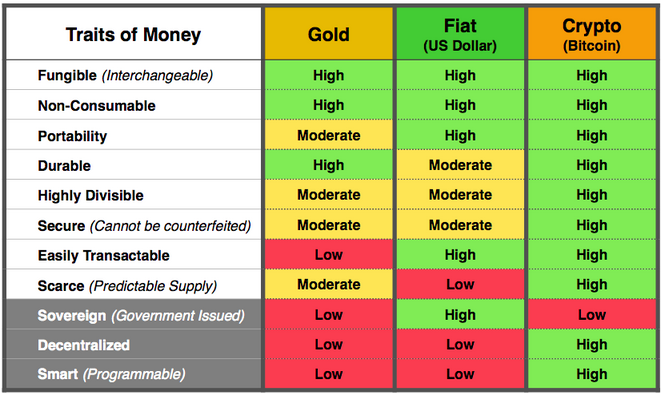
The gold price has pushed on up to a new all-time high of US$1,940/oz and a +US$39/oz gain for the day. That is also very near to its all-time high in New Zealand currency as well.
Oil prices are marginally firmer today. They are just above just on US$41.50/bbl in the US and the international price is just under US$43.50/bbl.
And the Kiwi dollar will also start today marginally firmer at 66.8 USc. Against the Australian dollar we are now also firmish at 93.7 AUc. Against the euro we little-changed at 56.9 euro cents. That means our TWI-5 has at 70.2 and still in the general range we have been in all year.
The bitcoin price has risen sharply again, up +9.4% since this time yesterday to US$10,850. The bitcoin rate is charted in the exchange rate set below.

The easiest place to stay up with event risk today is by following our Economic Calendar here ».
We welcome your comments below. If you are not already registered, please register to comment
Remember we welcome robust, respectful and insightful debate. We don't welcome abusive or defamatory comments and will de-register those repeatedly making such comments. Our current comment policy is here.