
Here's our summary of key economic events overnight that affect New Zealand, with news of more jobs pain.
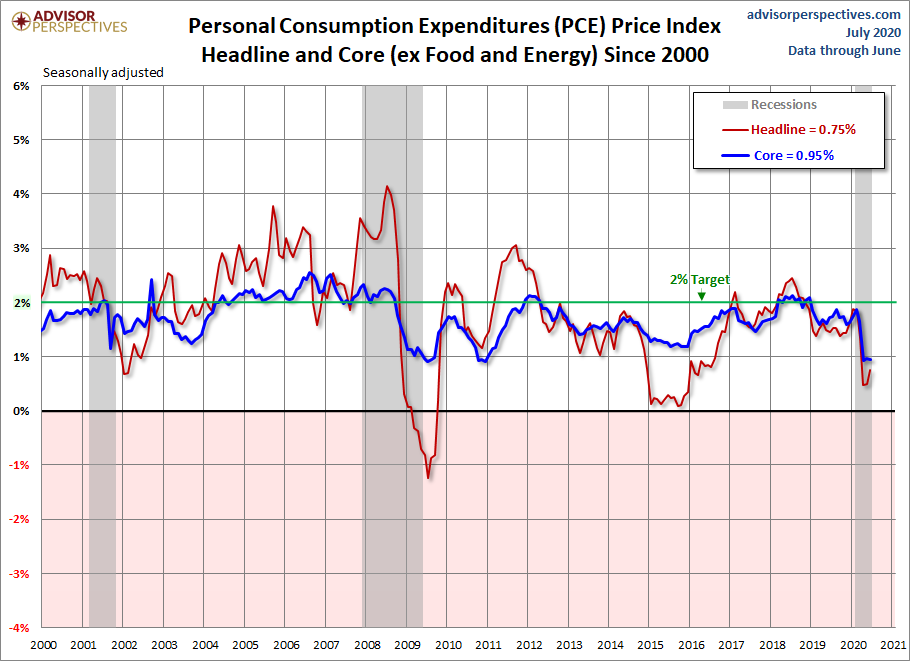
But first in the US, at the virtual Jackson Hole symposium this year the Fed boss has signaled a significant shift in its approach to managing inflation, as it tries to do more to aid the US economy's recovery. Essentially, it is a shift to lower rates for longer. They will now target an "average" of 2% inflation, rather than making 2% a fixed goal, giving it more flexibility to focus on its jobs mandate.
And they do have a real problem there. Last week they reported just over +1 mln new unemployment claims were received - about as expected - but the net number of people on jobless benefits fell by -223,000. So that means more than 1.2 mln people fell off qualification either because the found employment or their qualification for support expired. It is this second reason that worries analysts and will undermine consumer demand.
Meanwhile, personal income fell for a second consecutive month while personal spending rose. It is a trend that can't be sustained.
Meanwhile, the American housing market is taking off and joining the asset price inflation surge. Pending home sales were more than +15% higher in July than the same month in 2019, and median single family home prices rose +8.5% year-on-year.
And we should note that the SEC is looking into a popular practice by large companies of using "supply chain financing" arrangements. Their key concern is that it keeps significant liabilities understated in their books.
In China, industrial profits fell more than -8% in July compared with the same month in 2019. But that was held down by a massive -24% drop by state owned enterprises. Foreign-owned companies did best, down about -3%. Despite all that, July is the 'best' month in 2020.
And China is reporting that electricity consumption levels in August are at record highs, more evidence of a good rebound in their wider economy.
Taiwan consumer confidence improved in August from July but the rise was modest and is still net negative however. Only views that it is "a good time to buy durable goods" enabled the improvement.
In Hong Kong, HSBC seems to have frozen the bank accounts of media executives that don't toe the PRC line.
In Australia, commitments to new capital expenditure, the necessary component of future expansion, fell in the June quarter by more than -11% and for plant and machinery, the components of improving productivity, the fall was -14% compared with the same quarter in 2019.
Back in New York, the S&P500 is up +0.4% today in late trade. They follow Europe where most exchanges were down about -0.7%. Yesterday, Shanghai was up +.06%, while both Hong Kong and Tokyo were lower on the day. The ASX200 also closed up +0.2% while the NZX50 Capital Index also rose +0.2% but was offline early after the cyber attack extended to a third day.
The latest global compilation of COVID-19 data is here. The global tally is 24,267,000, up +288,000 since when we last checked this time yesterday. Global deaths reported now exceed 827,000 (+6,000 in a day).
Just under a quarter of all reported cases globally are in the US, which is up +48,000 since yesterday to 6,020,000 and a relentless rise. US deaths are now just over 184,000 and a death rate of 556/mln (+4/mln). The net number of people actively infected in the US fell overnight to 2,514,000, so back to slightly more recoveries than new infections.
In Australia, there have now been 25,322 COVID-19 cases reported, another +117 overnight, and mostly in Victoria. Australia's death count is up to 572 (+23). Their recovery rate is up to just over 80%. There are 4389 active cases in Australia (-172) indicating a turned tide and more recoveries than new infections.
The UST 10yr yield is +6 bps higher today at 0.75% continuing its volatility. Their 2-10 curve is steeper at +58 bps. Their 1-5 curve is up marginally at +18 bps, while their 3m-10yr curve is also steeper at +66 bps. The Aussie Govt 10yr yield is up +3 bps at 0.96%. The China Govt 10yr is also up and by +1 bp at 3.08%. But the NZ Govt 10 yr yield has slipped -1 bp to 0.57%.
The price of gold has fallen back solidly overnight, down -US$19 to US$1,928/oz and essentially reversing all of yesterday's gain.
Oil prices are softer today at just under US$43/bbl in the US while the international price is just on US$45/bbl.
And the Kiwi dollar is firmer again this morning, up to 66.4 USc. Against the Australian dollar we are a little firmer too, at 91.5 AUc. Against the euro we are up to 56.2 euro cents. That means our TWI-5 is up to 69.4 and back to where it was in early August.
The bitcoin price is down -2.6% from this time yesterday at US$11,171. The bitcoin rate is charted in the exchange rate set below.

The easiest place to stay up with event risk today is by following our Economic Calendar here ».
We welcome your comments below. If you are not already registered, please register to comment
Remember we welcome robust, respectful and insightful debate. We don't welcome abusive or defamatory comments and will de-register those repeatedly making such comments. Our current comment policy is here.