
By Bernard Hickey
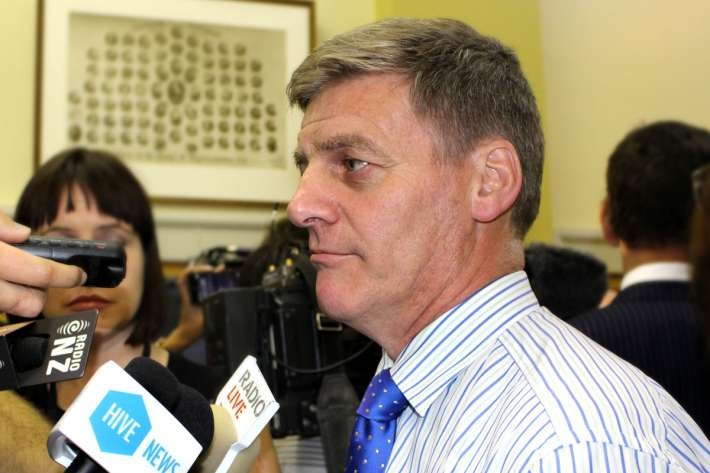
Finance Minister Bill English has quietly ramped up the pressure on Reserve Bank Governor Graeme Wheeler to meet his Policy Targets Agreement by moving to send the Chairman of the Reserve Bank, Rod Carr, an annual letter of expectations for the first time and requiring six monthly meetings with the Chairman to discuss the Governor's performance.
The Reserve Bank confirmed that English had sent the board the first letter late last year and it would be published with the bank's annual Statement of Intent in June.
Letters of expectation from the Minister to the boards of State Owned Enterprises are a regular occurrence, but the Reserve Bank's special status as a statutorily independent body with a special Policy Targets Agreement between the Minister and a single decision maker in the Governor has meant there has previously been no such letter. The letters to other SOEs often include detail about expected dividends and can be quite prescriptive.
The decision to draft and send the letter suggests English wanted to toughen up the scrutiny by the board of the Governor's performance at a time when he has come under sustained criticism over the eventually-reversed rate hikes in 2014, over inflation being below the bank's target range, and over the politically controversial LVR controls in 2013. The papers could be read as English putting the board on notice over Wheeler's performance and rebuking it for not assessing Wheeler's performance in 2014 toughly enough.
Documents released under the Official Information Act to Bloomberg and then more widely show Treasury recommending English send the board a formal statement of expectations in a letter, including around the areas of whether the Governor's performance on monetary policy was meeting the Policy Targets Agreement.
Bloomberg interview a trigger
English has commented with various degrees of frustration over the last year about inflation being below the 2% midpoint in the PTA for more than four years, which has coincided with the Reserve Bank's short-lived hike in interest rates in 2014 and the currency's stubborn strength despite slumping dairy prices.
English commented in May last year that inflation had been below the target for a "wee while" and that he was having discussions with the bank. English was more direct in an interview with Bloomberg in June last year when he said Wheeler needed to return inflation back to the target.
Unbeknownst to anyone outside the Reserve Bank and Treasury at the time, the documents from mid 2015 show English was working on drafting the letter and pushing for six monthly meetings with the board, rather than annual meetings.
The first document was a briefing note for a meeting between English and Reserve Bank Chairman Rod Carr on July 22 last year, which Treasury said had been requested by Carr and Wheeler to "discuss your expectations for the board." This meeting would have followed the Bloomberg interview, which was much more publicly critical of Wheeler than anything before or since.
Board didn't discuss Wheeler's performance in 2014
This note included details of annual board reports assessing the Governor's performance, although parts were redacted. It included quotes from the board reports to the extent that the board thought the bank's decision to hike in 2014 was appropriate and the LVR controls introduced in 2013 helped reduce potential financial stability risks. It also noted there was no specific discussion of Wheeler's performance in the 2014 report.
Treasury recommended the letter of expectations include an assessment of monetary policy performance in meeting the PTA and an assessment of the bank's performance in maintaining financial stability. It also said one area of the letter should focus on an assessment of the Governor's performance and it suggested more regular meetings with the board that focus on the Governor's performance.
"These meetings could be enhanced to ensure that they are focussed on the performance of the Bank and Governor. For example, these meetings could be structured around an agreed agenda and supporting briefing," Treasury noted.
The second paper released under the OIA, which is also heavily redacted, was from November 16 last year and included an attached draft letter of expectations from English to Carr.
"The purpose of the letter is to define your interests for the focus of the Board’s monitoring activities, and set your expectations for greater visibility of the Board’s activities," it said.
"The letter will be helpful to the Chair and the rest of the Board in undertaking their statutory duties, and should open up a broader conversation about how they can assess the Bank’s performance," Treasury advised.
"The letter will also build on your letter of expectations for the Governor, which you provided this year in March – and for the first time copied to the Chair, in order to support the Board in its monitoring role," it said.
The draft letter to the board said English relied on the board to advise him on whether the Governor had been successful in meeting his responsibilities, specifically monitoring monetary policy performance relative to the PTA.
"I expect the Board to provide me with a clear sense of its judgements and the basis for them in assessing performance in meeting the PTA, recognising that the policy targets have evolved to be flexible and forward looking," it said.
It also asked for an assessment of the bank in maintaining a sound an efficient financial system.
"I am particularly interested in how the objectives of soundness and efficiency are promoted and balanced," English was quoted as saying in the draft letter.
It also asked the board to monitor the bank's relationships with various stakeholders, including English, the Treasury, Australian regulators, the banks themselves and the wider public.
"The duties of the Board include keeping under review the performance of the Governor. I would expect to discuss your assessment of the Governor’s performance from time to time," the draft letter said.
"I would not expect you to limit your communications on the performance of the Governor or the Bank to the narrow criteria set out in section 53(3), as I hope those circumstances would apply rarely if ever," it said.
'More than just the Act's fail safes'
Section 53(3) of the Act sets out the conditions under which the board could recommend that the Minister remove the Governor from office. They include conditions such as serious neglect of duty or conflicts of interest.
"The annual Board report, as required under the Act, is the formal document that sets out the Board's assessment of performance. I expect this to provide enough detail to enable me and the wider public to understand how the Board has undertaken its review role."
The letter then asked for greater visibility of the board's activities through the year and asked for six monthly meetings with Carr.
Read together, the two papers suggest English has not been happy with the board's scrutiny of Wheeler through 2014 at least.
The publication of the Bloomberg article on the papers saw the New Zealand dollar fall a third of a cent immediately afterwards to 70.1 USc. It subsequently fell through the night to be 69.7 USc this morning.
'More contemporary context'
The Bank’s Board Secretary and Head of Communications, Mike Hannah, said by email that the Board received its first Letter of Expectations from the Minister late last year, "following discussions initiated by the Board seeking more detailed context of their role as the Minister’s agent."
“The Board’s role is described in high-level terms in the Reserve Bank Act. The Letter of Expectations provides more contemporary context, just as the Minister’s Letter of Expectations to the Governor does each year," Hannah said.
"It covers all the Bank’s functions, and the Board reports publicly on its assessment of the Bank’s performance in the Bank’s Annual Report at the end of September. The Bank will publish the Minister’s Letter to the Governor along with our annual Statement of Intent in June," he said.
We welcome your comments below. If you are not already registered, please register to comment
Remember we welcome robust, respectful and insightful debate. We don't welcome abusive or defamatory comments and will de-register those repeatedly making such comments. Our current comment policy is here.