
Here's my summary of the key events overnight that affect New Zealand, with news there are no surprises from the US central bank.
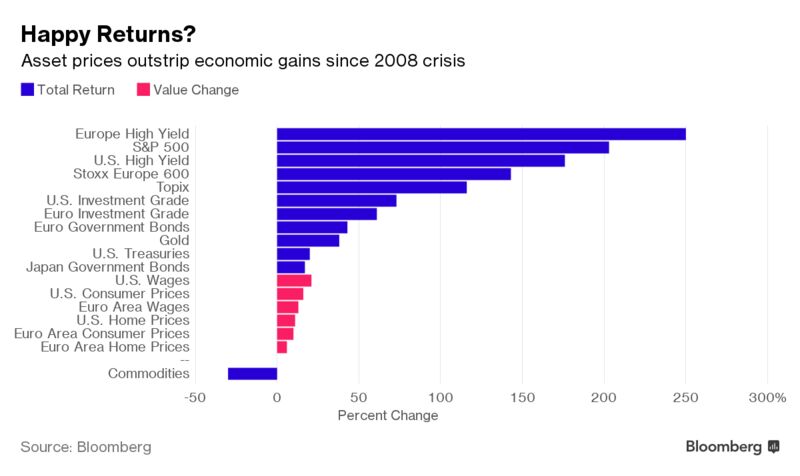
The US Federal Reserve delivered its well-signaled +0.25% rate increase today as expected. It is now 1.00% at the upper bound. Their dot plot guidance now shows they expect three increases in 2017, including today's one. They plot another three rises in 2018, and more in 2019 taking their policy rate then to 3%. They are showing heightened concern about inflation risks, a sudden, new exposure for policy makers who have been more concerned about employment levels for the past decade. The Fed has yet to start winding back the quantitative easing money they have poured into financial markets, however. Recall, American QE ended in October 2014 after the tap added US$4.5 tln into the system over six years, or an average rate of 4.4% of annual GDP over that time.
American consumer inflation is now up to +2.7% pa in February according to data out today. That puts the 'real' official benchmark rate deep in negative territory. It is also undermining real earnings growth.
Across the Atlantic the Dutch are voting in a key election. The early turnout is sharply higher than their last election in 2012 as immigration and economy dominate contest. Results will start to be known in mid afternoon New Zealand time, although it could be a cliffhanger.
In Chile, all the other signatories of the TPP met earlier today and vowed to push ahead without the US.
In Australia, analysts are warning that 'property investors' face significant interest rate risk in the immediate future. While rate premiums on loans to them and interest-only loans have started, JP Morgan analysts say that much more is to come, perhaps as much as 3% more. Sydney is where the largest risk exists.
And staying in Australia, ANZ and Westpac have both entered into enforceable undertakings with the Australian Securities and Investments Commission (ASIC) following the regulator's probe into spot foreign exchange trading between January 2008 and June 2013. ANZ says it accepts aspects of its supervision and monitoring of the spot FX business weren't good enough, has taken responsibility and apologises. Interestingly ASIC's statement thanks NZ's FMA, among others, for its assistance in dealing with both banks.
In New York, the UST 10yr yield slipped to 2.58% before the announcement, and then fell to 2.54%. At the same time investment grade CDS spreads narrowed sharply.
Oil prices are up US$1 today and now just over US$48.50 for the US benchmark, while the Brent benchmark is just over US$51.50 a barrel.
The gold price is also up +US$6 on the Fed decision to US$1,210/oz.
And the New Zealand dollar was marginally firmer at 69.6 USc perior to the Fed announcement, and then jumped to over 70 USc. On the cross rates the Kiwi dollar is at 91.5 AU¢, and against the euro is at 65.5 euro cents. The NZ TWI-5 index at 75.4.
If you want to catch up with all the changes yesterday, we have an update here.
The easiest place to stay up with event risk today is by following our Economic Calendar here ».

We welcome your comments below. If you are not already registered, please register to comment
Remember we welcome robust, respectful and insightful debate. We don't welcome abusive or defamatory comments and will de-register those repeatedly making such comments. Our current comment policy is here.